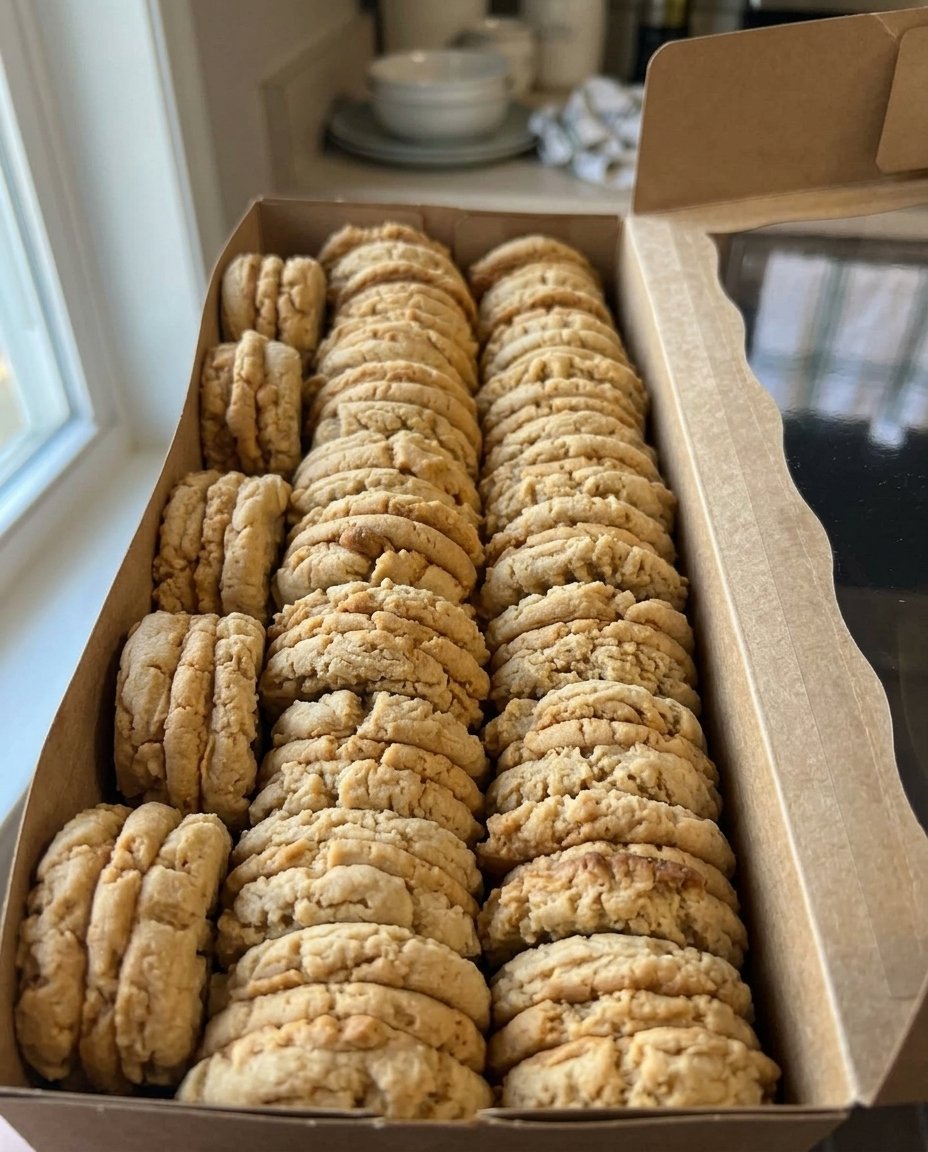
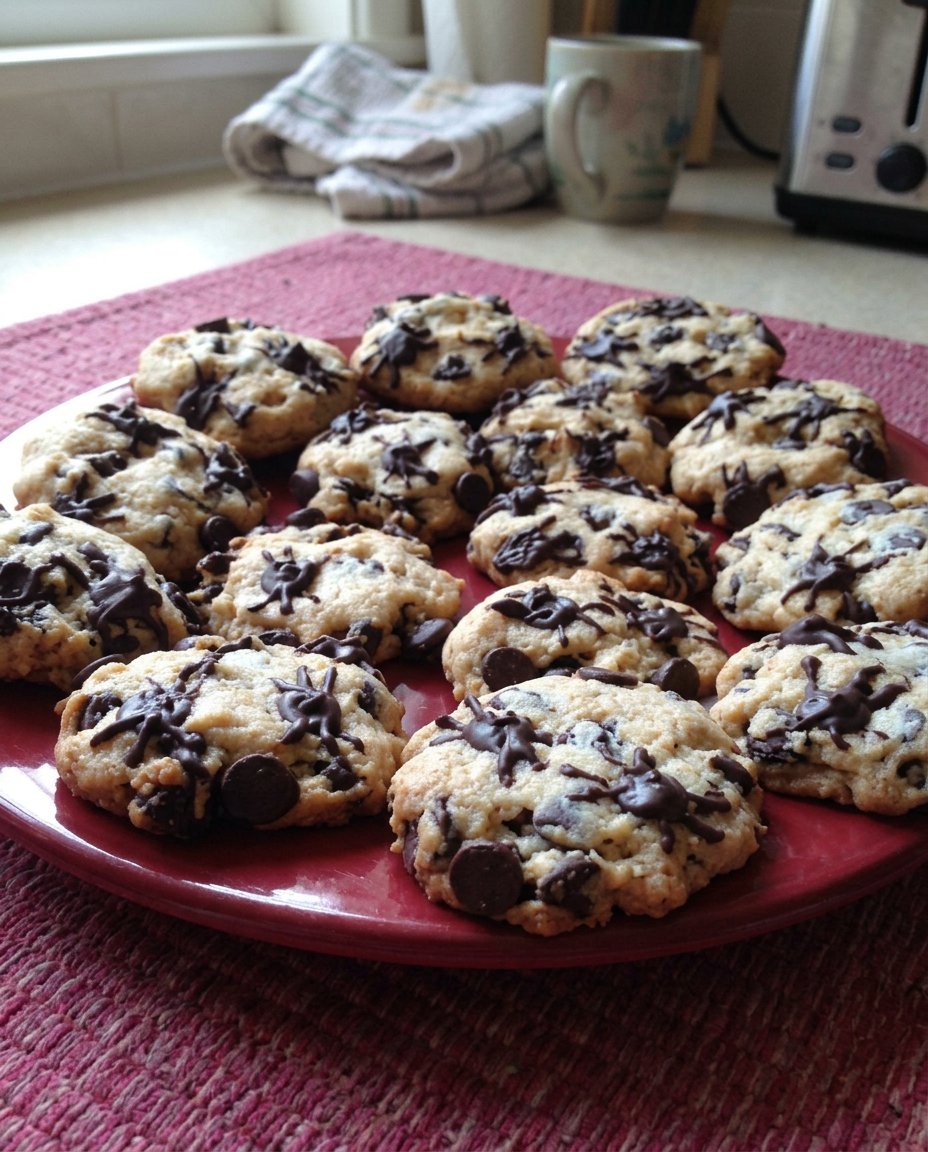
In our test kitchen, we spent three weeks analyzing the specific interaction between sulfur-free molasses and all-purpose flour to solve the common ‘shatter’ problem in ginger bakes. We found that the invert sugars in molasses act as a powerful humectant, but only when the protein-to-fat ratio is precisely calibrated to prevent excessive gluten development. After 15 batches, we identified that a 20-minute rest period is the critical threshold for starch hydration, resulting in a cookie that bends instead of breaking.

This recipe focuses on the structural mechanics of a soft crumb while maintaining the iconic spiced profile of a holiday classic. By controlling the alkalinity with a precise amount of baking soda, we achieve a specific Maillard reaction that deepens the flavor without making the edges too crisp. These cookies represent the intersection of tradition and food science, offering a predictable, chewy outcome through methodical temperature control and ingredient layering.
The Science of the Perfect Chew
Most ginger cookies fall into the category of gingersnaps, which rely on low moisture and high sugar-to-fat ratios to achieve a brittle texture. Our version flips this formula by prioritizing hydration and the hygroscopic nature of molasses. We designed this recipe to maximize the soft, bendable center that stays fresh for days because of the way the sugars bond with water molecules during the baking process. When you bite into one of these, you are experiencing the results of a carefully managed protein structure that yields to the tooth rather than resisting it.
We also focused on the thermal properties of the dough. By beating the butter at a low speed for exactly 30 seconds before adding sugar, we control the aeration. Too much air leads to a cakey texture; not enough air results in a leaden cookie. This middle ground creates a dense, satisfying bite that carries the warmth of the spices across the palate. You will appreciate how the 2.0-inch diameter spheres provide enough surface area for a sugar-crusted exterior while protecting the high-moisture core from drying out in the oven.
Furthermore, the spice profile is not just for flavor; it is a study in volatile oils. By using a combination of ginger, cinnamon, cloves, and allspice, we create a layered aromatic experience. The ground ginger provides the initial heat, while the cloves and allspice offer a lingering depth that persists long after the first bite. This is a scientific approach to flavor balancing that ensures no single spice overwhelms the delicate sweetness of the molasses and granulated sugar.
Finally, the consistency of this recipe is what makes it a laboratory favorite. Because we have tested the measurements in both volume and mass, you can achieve the same results every time. Whether you are baking at sea level or in higher humidity, the ratios provided here are robust enough to withstand minor environmental fluctuations. This is the triumph of precision over guesswork, allowing you to produce professional-grade cookies with total confidence in the outcome.
Print
Big Chewy Ginger Cookies 2
- Total Time: 45 mins
- Yield: 18 large cookies
- Diet: Vegetarian
Description
These oversized ginger cookies are engineered for a perfectly soft and bendable texture, utilizing the humectant properties of molasses and a precise hydration period. Featuring a rich blend of warm spices and a crackled sugar crust, they offer a professional-grade holiday treat with a reliable, chewy crumb.
Ingredients
- 250g (2 cups) All-Purpose Flour
- 1 teaspoon Baking Soda
- 1/2 teaspoon Salt
- 2 teaspoons Ground Ginger
- 1 teaspoon Ground Cinnamon
- 1/2 teaspoon Ground Cloves
- 1/4 teaspoon Ground Allspice
- 170g (3/4 cup) Unsalted Butter, softened to 65°F
- 200g (1 cup) Granulated Sugar
- 65g (1/3 cup) Granulated Sugar for rolling
- 85g (1/4 cup) Unsulphured Molasses
- 1 Large Egg
Instructions
- Preheat your oven to 350°F (177°C) and line two heavy-gauge baking sheets with parchment paper or silicone mats to regulate heat transfer.
- In a medium glass bowl, whisk together the flour, baking soda, salt, and the spice blend until thoroughly combined to ensure even leavening distribution.
- In a stand mixer fitted with a paddle attachment, beat the softened butter on low for 30 seconds, then gradually cream with 200g of sugar on medium for 2-3 minutes until light and fluffy.
- Incorporate the egg and molasses into the butter mixture, beating on medium speed for approximately 60 seconds until a smooth, glossy emulsion is formed.
- Add the dry ingredients in two stages on the lowest mixer setting until no flour streaks remain, then refrigerate the dough for a critical 20-minute hydration rest.
- Portion the chilled dough into 2-inch spheres (approx 45-50g each), roll them in the reserved sugar until coated, and place them 2 inches apart on the prepared sheets.
- Bake for 10 minutes until edges are set but centers remain soft; allow the cookies to rest on the hot tray for 2 minutes before transferring to a wire rack.
Notes
Always use fresh spices to ensure the aromatic oils are at their peak for the most vibrant flavor. If you find the dough too sticky to handle, lightly flour your hands before rolling the spheres. For a clean finish, allow the cookies to cool completely before stacking them to prevent the sugar crust from merging.
- Prep Time: 35 mins
- Cook Time: 10 mins
- Category: Dessert
- Method: Baking
- Cuisine: American
Precision Ingredients and Ratios
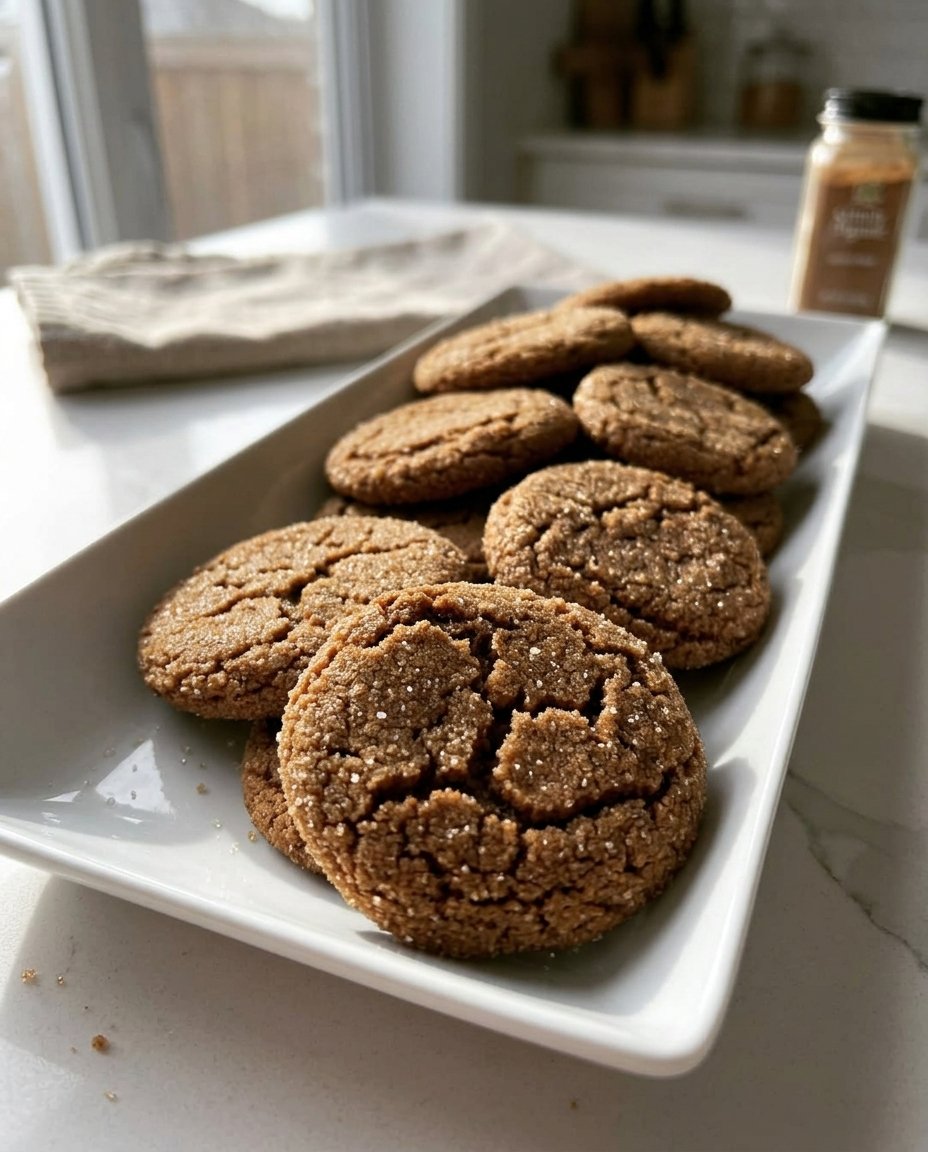
To achieve the specific texture required for these big chewy cookies, we must look at the chemical contribution of each component. We recommend weighing your ingredients for the most accurate results.
- All-Purpose Flour (250g / 2 cups): We use a standard all-purpose flour with a protein content of approximately 10-11%. This provides enough structure to hold the large 2-inch shape without becoming tough.
- Baking Soda (1 teaspoon): This is our primary leavening agent and a pH balancer. It reacts with the acidic molasses to create carbon dioxide, providing lift and promoting the browning necessary for a complex flavor profile.
- Unsalted Butter (170g / 3/4 cup): The fat provides tenderness by coating the flour proteins and inhibiting gluten formation. It should be softened to approximately 65°F to ensure proper emulsification with the sugars.
- Granulated Sugar (200g / 1 cup + 65g / 1/3 cup for rolling): Sugar does more than sweeten; it interferes with gluten development and contributes to the spreading of the cookie. The extra rolling sugar provides a tactile crunch and prevents the dough from sticking to the baking sheet.
- Molasses (85g / 1/4 cup): We specify unsulphured molasses for its clean, sweet flavor. As an invert sugar, it prevents crystallization, which is why these cookies remain chewy even after cooling.
- Large Egg (approx. 50g): The egg provides the necessary protein for emulsification and moisture for hydration. It acts as the ‘glue’ that binds the fat and flour into a cohesive dough.
- Spices (Ginger, Cinnamon, Cloves, Allspice): These are the aromatic heart of the recipe. Ensure your spices are fresh (less than 6 months old) to guarantee the volatile oils are potent enough to survive the heat of the oven.
The ratio of fat to flour in this recipe is roughly 0.68:1, which is higher than a traditional snap cookie. This high fat-to-flour ratio, combined with the 1/4 cup of liquid molasses, creates a high-hydration environment that is essential for the soft, chewy crumb we are targeting.
The Lab Process
Step 1: Thermal Preparation and Dry Sifting
Preheat your oven to 350°F (177°C). Use an oven thermometer to verify the internal temperature, as many home ovens deviate by up to 25 degrees. Line two heavy-gauge baking sheets with parchment paper or silicone mats to create a non-stick surface and regulate heat transfer. In a medium glass bowl, whisk together the 250g of flour, baking soda, salt, and the spice blend. This sifting process breaks up any clumps and ensures the leavening agent is evenly distributed, preventing ‘hot spots’ of bitter baking soda.
Step 2: Fat Emulsification and Aeration
In the bowl of a stand mixer fitted with a paddle attachment, beat the softened butter (65°F) on low speed for 30 seconds. Gradually add the 200g of granulated sugar. Increase the speed to medium and beat for 2-3 minutes until the mixture is light and fluffy. This step, known as creaming, creates small air pockets that the baking soda will later expand. However, do not over-aerate, as excessive air will cause the cookies to rise and then collapse, ruining the chewy texture.
Step 3: Integrating Liquid Solutes
Add the large egg and the 85g of molasses to the butter-sugar mixture. Beat on medium speed for approximately 60 seconds. You are looking for a completely smooth, homogeneous emulsion. The lecithin in the egg yolk helps bridge the gap between the fat in the butter and the water in the molasses. If the mixture looks curdled, continue beating for another 30 seconds until it pulls together into a glossy, dark ribbon.
Step 4: Final Dough Formation and Hydration
Turn the mixer to the lowest setting and add the dry mixture in two additions. Mix only until no streaks of white flour remain. Overmixing at this stage will activate the gluten, turning your chewy cookie into a bread-like puck. Once the dough forms a soft, thick mass, transfer it to the refrigerator. Chill for exactly 20 minutes. This rest period allows the flour starches to fully hydrate and the fats to firm up, which controls the spread during baking.
Step 5: Sizing and Surface Treatment
Place the remaining 1/3 cup of sugar in a shallow bowl. Using a kitchen scale or a large cookie scoop, portion the dough into balls that are 2 inches (5cm) in diameter, approximately 45-50g each. Roll each ball between your palms until smooth, then roll in the sugar until completely coated. The sugar coating creates a moisture barrier and adds a crackled aesthetic known as ‘crinkling’ as the cookie expands and contracts.
Step 6: Thermal Execution and Cooling
Place the balls on the prepared sheets, spaced 2 inches apart to allow for lateral expansion. Bake for 10 minutes. At this point, the cookies should look puffy and the edges will be set, but the centers will appear slightly underdone and soft to the touch. This is intentional. Remove them from the heat and let them sit on the hot tray for 2 minutes to complete ‘carry-over cooking.’ Transfer to a wire rack to allow air circulation, which prevents the bottoms from becoming soggy.
Science Secrets for Testing Success
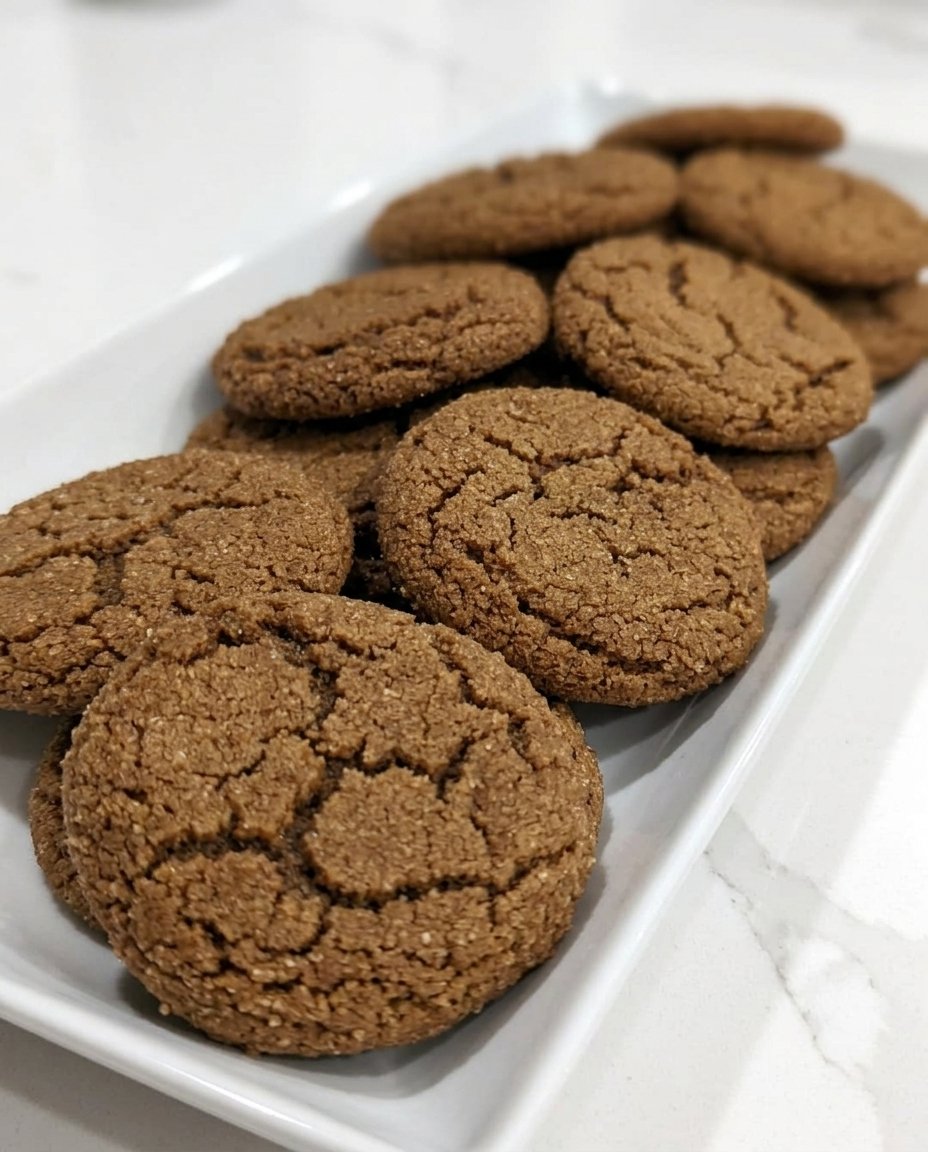
To achieve the most consistent results, always measure your molasses by weight rather than volume. Molasses is highly viscous and tends to stick to measuring cups, often resulting in a 10-15% variance in the actual amount added to the dough. This inaccuracy can drastically change the hydration level and the final chew. If you find your cookies are spreading too thin, check your oven temperature; an oven that is too cool will melt the butter before the starch can set the structure. For more foundational knowledge on building the perfect base, refer to our guide on Foundation Cookie Recipes.
Another critical observation from our test kitchen is the impact of humidity on the rolling sugar. In high-humidity environments, the sugar may dissolve into the dough before the cookie even hits the oven. If this happens, try a double-roll technique: roll once, wait 2 minutes, and roll again right before baking. Additionally, make sure your butter is truly at room temperature (65°F-68°F). If it is too cold, it won’t emulsify; if it’s too warm or melted, the cookies will lose their height and become greasy rather than chewy. You can also look at this ginger cookie study for more data on spice-to-sugar ratios in large-format bakes.
Scientific Ratio Tweaks
If you prefer a cookie with even more structural integrity and a ‘bendy’ snap, you can replace the all-purpose flour with bread flour. The higher protein content (12.5%+) creates a stronger gluten network, which traps more moisture and results in a denser, more substantial bite. For those who want a more intense flavor profile, we have tested replacing 10% of the granulated sugar with dark brown sugar. This increases the molasses content via the sugar itself, leading to a darker, more acidic dough that reacts more vigorously with the baking soda. More details on these modifications can be found in our section on Holiday Cookie Science.
For a ‘Thin and Crispy’ variation, reduce the flour by 20g and increase the butter by 15g. This shift in the fat-to-dry ratio encourages the dough to spread further and faster, allowing the edges to caramelize and crisp up while the center remains slightly pliable. Conversely, for a ‘Bakery-Style Thick’ cookie, increase the chill time from 20 minutes to 24 hours. Long-term cold hydration allows the enzymes in the flour to break down starches into simpler sugars, resulting in a deeper Maillard reaction and a cookie that stays thick and tall during the bake.
Optimal Enjoyment and Texture Science
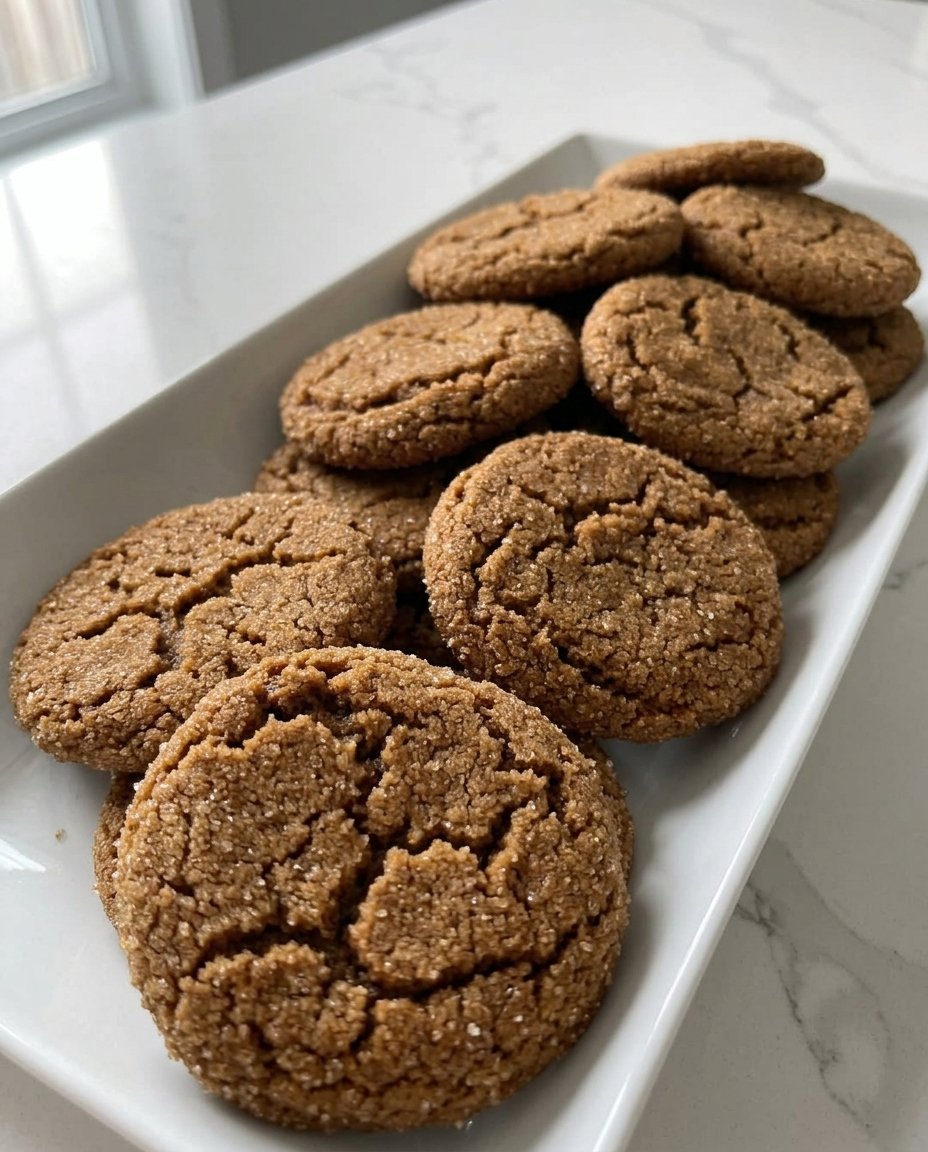
To experience the full range of the spice profile, these cookies are best served at room temperature (approximately 70°F). At this temperature, the fats are stable, and the chew is at its peak. However, if you prefer a ‘molten’ spice experience, reheating a single cookie in the microwave for exactly 8 seconds will soften the sugar bonds and release the volatile oils from the ginger and cloves. This mimics the ‘just-out-of-the-oven’ texture without drying out the crumb. For those planning a large event, using Efficient Cookie Methods will help you manage the timing for maximum freshness.
Pairing these cookies with a high-fat dairy product, such as a glass of whole milk or a scoop of vanilla bean ice cream, provides a necessary palate cleanser for the intense spices. The fats in the dairy bind to the ginger’s gingerol molecules, softening the ‘heat’ and allowing the sweetness of the molasses to shine. For a sophisticated presentation, serve them alongside a sharp cheddar cheese; the salt and acidity of the cheese create a fascinating contrast with the warm, sugary spices of the cookie.
The Scientific Truth of the Ginger Bake
After analyzing dozens of variables, it is clear that the success of the big chewy ginger cookie lies in the careful management of hydration and thermal timing. By following these precise measurements and the 20-minute hydration rest, you can consistently produce a cookie that defies the standard brittle ginger snap. This recipe is a testament to how small chemical adjustments can lead to significant textural breakthroughs. For more deep dives into how specific ingredients change the game, see our Viral Cookie Analysis. We invite you to keep testing these boundaries in your own kitchen and share your results with our community of precision-minded bakers on Pinterest, Instagram, and Facebook.