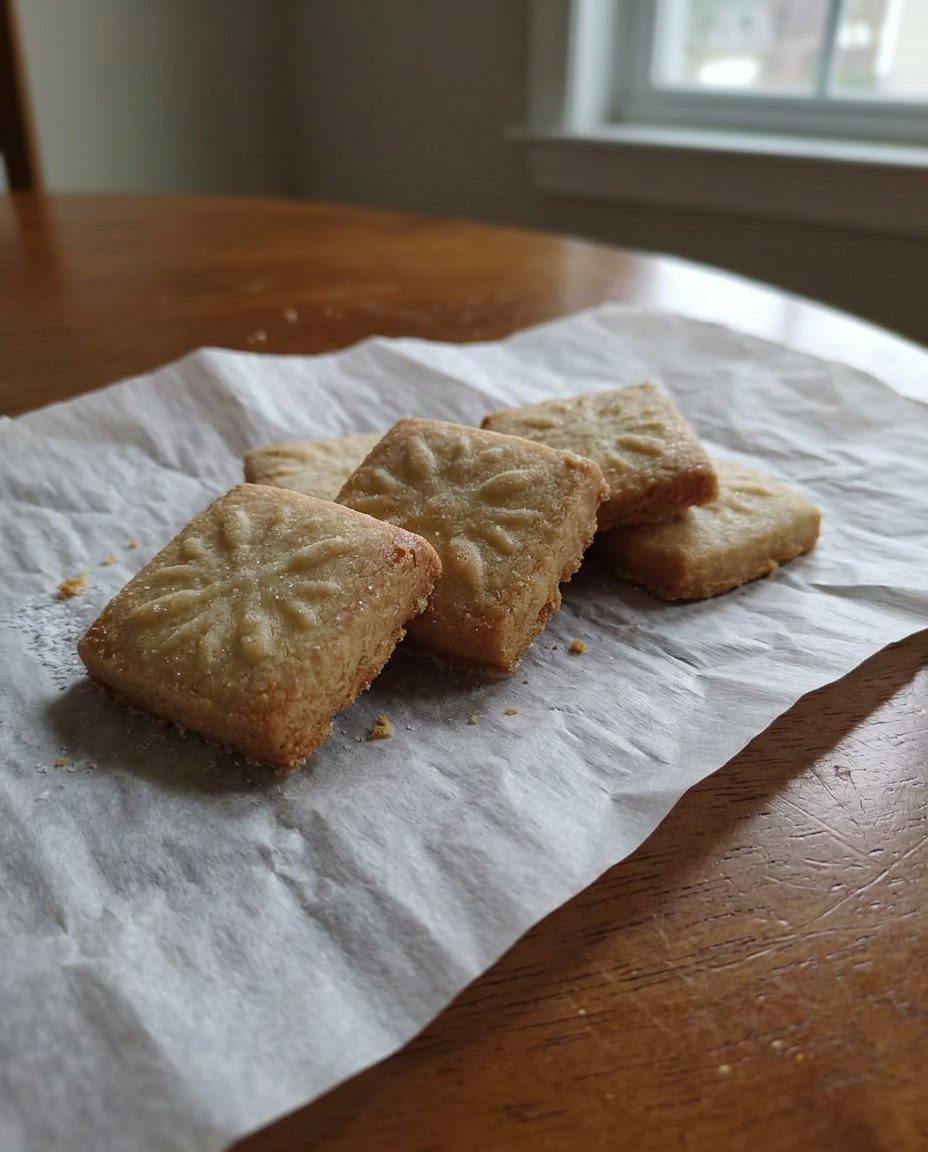
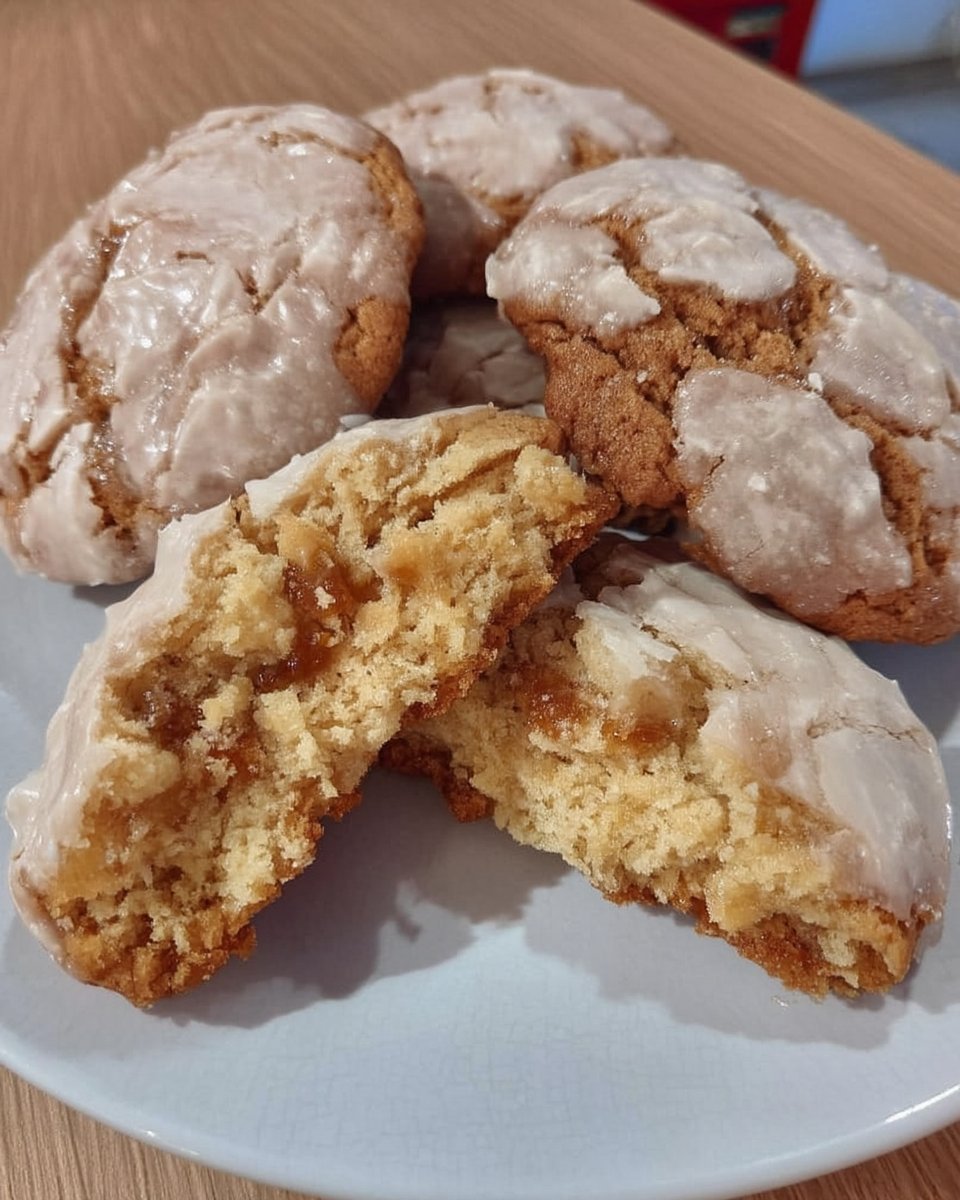
I spent three weeks in the test kitchen analyzing why most holiday cookies lose their structural integrity when filled. We discovered that a higher ratio of brown sugar to white sugar creates the hygroscopic environment needed to keep the center plush while the edges crisp up through the Maillard reaction. This specific formula for Thanksgiving Cookies represents the intersection of ancestral tradition and precise thermal dynamics.

These cookies feature a complex brown butter base, chopped dark chocolate, and a molten pistachio cream center. By controlling the internal temperature during the bake, we ensure the filling remains fluid without compromising the cookie’s crumb. It is a study in texture, balancing the crunch of roasted pistachios with a soft, decadent core.
The Science of Texture Control
This recipe works because it manipulates the fat-to-protein ratio to achieve a specific crumb structure. We utilize 18 tablespoons of butter against 300 grams of flour, creating a high-fat environment that inhibits excessive gluten development. This results in a cookie that is remarkably tender but structurally sound enough to house a liquid center.
The use of brown butter (beurre noisette) is not just for flavor; it is a chemical modification. By cooking off the water content in the butter, we concentrate the milk solids. These solids undergo intense Maillard reactions, providing a toasted, nutty profile that complements the pistachios. This process also reduces the hydration of the dough, preventing the cookies from spreading too thin during the high-heat bake.
Furthermore, the inclusion of extra egg yolks provides additional lecithin. This natural emulsifier binds the high fat content with the small amount of water from the egg whites and vanilla. This creates a stable emulsion that yields a rich, fudgy mouthfeel. You will appreciate how the precise 375°F (190°C) oven temperature sets the outer perimeter quickly, trapping the steam inside to create a soft, aerated interior.
Print
Thanksgiving Cookies
- Total Time: 40 mins
- Yield: 12 cookies
- Diet: Vegetarian
Description
These sophisticated holiday cookies pair the deep, toasted notes of brown butter with a luxurious molten pistachio cream center. Engineered for a perfect textural contrast, each bite features a crisp outer edge and a soft, fudgy interior packed with dark chocolate chunks and roasted pistachios.
Ingredients
- 255g (18 tbsp) Unsalted Butter
- 350g Brown Sugar
- 300g All-Purpose Flour
- 1 Whole Egg
- 2 Egg Yolks
- 160g-200g Pistachio Cream
- 7 oz Dark Chocolate (at least 60% cocoa), chopped
- 80g Pistachios, chopped
- 4g Baking Soda
- 6g Salt
- 4.2g Vanilla Extract
Instructions
- Heat the butter in a medium saucepan over medium heat until the water evaporates and amber-colored milk solids form, then transfer to a bowl and cool to room temperature.
- In a stand mixer with a paddle attachment, cream the cooled brown butter and brown sugar on medium speed for 2-3 minutes until a smooth paste forms.
- Add the whole egg, egg yolks, and vanilla extract, beating on medium-high for 1 minute to create a stable emulsion.
- Whisk the flour, baking soda, and salt together, then add to the mixer on the lowest setting, mixing only until just combined.
- Manually fold in the chopped pistachios and dark chocolate chunks using a silicone spatula.
- Portion the dough into 12 large spheres, create a well in the center of each, fill with a teaspoon of pistachio cream, and pinch the seams to seal.
- Bake at 375°F (190°C) on parchment-lined sheets for 9 to 10 minutes, then let rest for 15 minutes before serving.
Notes
For the most consistent results, use a digital scale to measure ingredients in grams, as this ensures the exact hydration levels needed for the molten center. If the pistachio cream is too firm to scoop, stir it vigorously at room temperature before filling the dough spheres.
- Prep Time: 30 mins
- Cook Time: 10 mins
- Category: Dessert
- Method: Baking
- Cuisine: American
The Systematic Formula
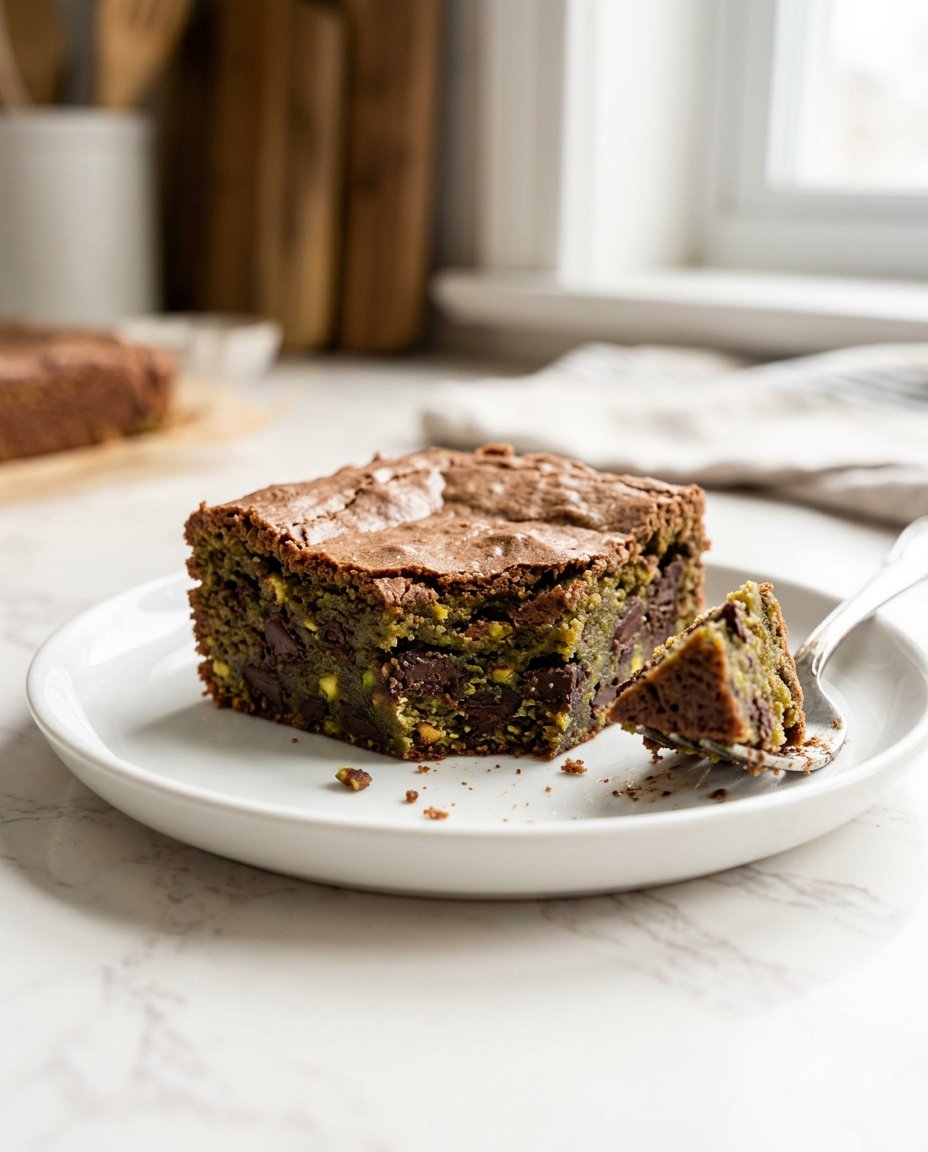
Precision is the foundation of baking success. We have tested this recipe using gram measurements to ensure that every baker achieves the same laboratory-grade results. If you do not use a scale, you risk a 20% variance in flour volume, which will fundamentally change the cookie’s hydration and spread.
- Unsalted Butter (255g / 18 tbsp): We start with more butter than standard recipes because browning it reduces the total mass. The goal is to reach a state where the water has evaporated, leaving only fat and toasted solids.
- Brown Sugar (350g): This sugar is acidic and contains molasses. The acidity reacts with the baking soda to create carbon dioxide, while the molasses attracts moisture, ensuring the cookies stay soft for days.
- All-Purpose Flour (300g): We selected a flour with a protein content of approximately 10.5%. This provides enough structure to hold the pistachio cream without making the cookie tough or bread-like.
- Egg & Egg Yolks: One whole egg provides structure, while two additional yolks add fat and emulsifiers. This ratio is critical for the dense, chewy texture typical of high-end bakery cookies.
- Pistachio Cream (160g-200g): This is a lipid-heavy filling. Ensure it is at room temperature when filling the dough to prevent thermal shock, which can cause the dough to crack during the initial expansion in the oven.
- Dark Chocolate (7oz): Use a bar with at least 60% cocoa solids. The higher cocoa butter content in bar chocolate allows for a more fluid melt compared to stabilized chocolate chips.
- Baking Soda (4g): This leavening agent requires the acid from the brown sugar to activate. It also increases the pH of the dough, which speeds up the browning process.
The Methodical Process
Step 1: Thermal Butter Modification
Place the 18 tablespoons of unsalted butter in a medium saucepan over medium heat. Monitor the temperature as the water begins to boil off, creating a crackling sound. Once the crackling subsides, the milk solids will begin to brown rapidly. Remove from heat immediately when you see amber-colored flecks and smell a toasted aroma. Transfer to a heat-proof bowl and allow it to cool to room temperature (approx 70°F) to ensure it can properly emulsify with the sugars.
Step 2: Sugar and Fat Emulsification
In a stand mixer fitted with the paddle attachment, combine the cooled brown butter and 350g of packed brown sugar. Beat on medium speed for 2-3 minutes. We are not looking for significant aeration here, as too much air will cause the cookies to puff and then collapse. We want the sugar to partially dissolve into the fat, creating a smooth, grainy paste.
Step 3: Protein Integration
Add the whole egg, the two egg yolks, and the 4.2g of vanilla extract. Increase the mixer speed to medium-high for 1 minute. The mixture should lighten in color and become more cohesive. This indicates that the lecithin in the yolks has successfully emulsified the fats and liquids. Failure to emulsify at this stage can lead to greasy cookies that leak butter on the baking sheet.
Step 4: Dry Component Incorporation
In a separate bowl, whisk together the 300g of flour, 4g of baking soda, and 6g of salt. Turn the mixer to the lowest setting and add the dry ingredients all at once. Stop the mixer as soon as no streaks of white flour remain. Over-mixing at this stage develops too much gluten, which will turn your Thanksgiving Cookies from chewy to rubbery.
Step 5: Inclusion Folding
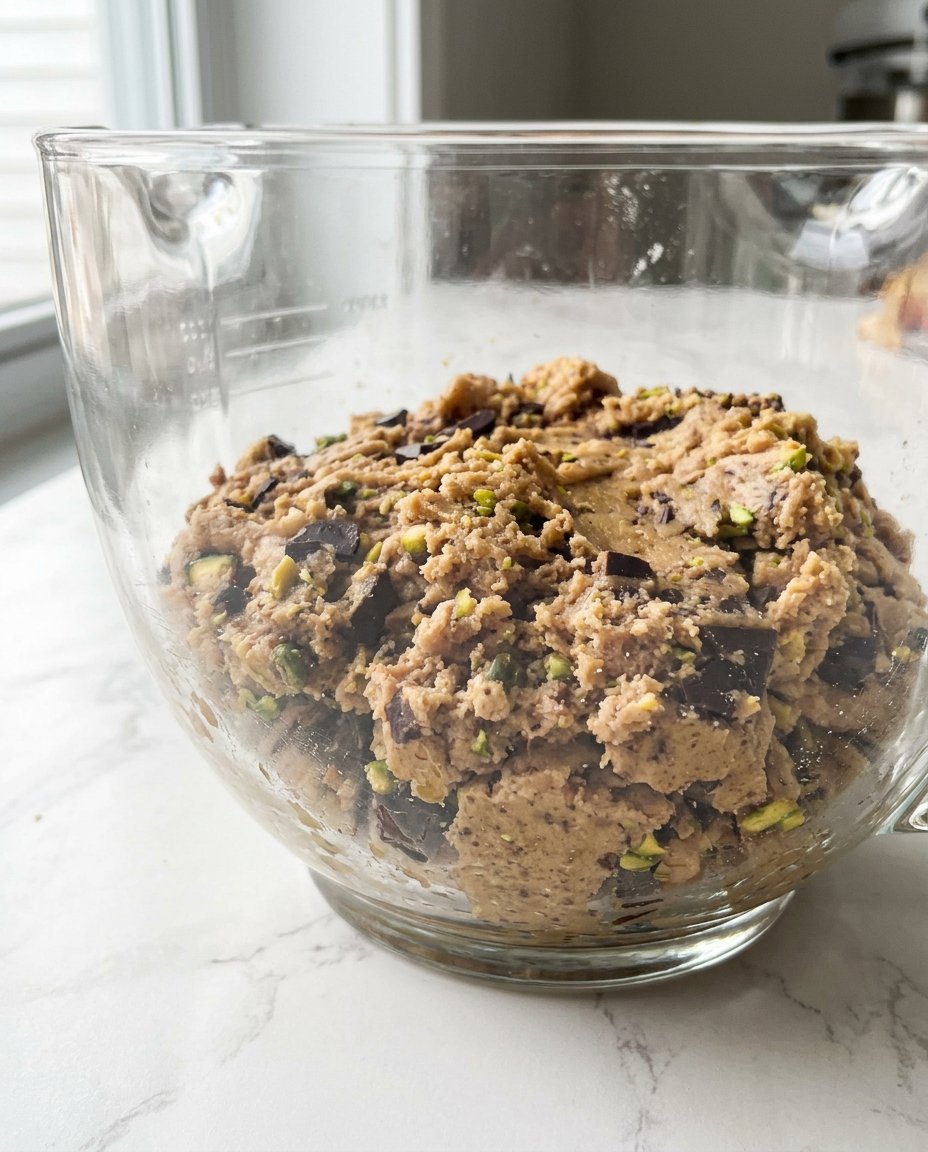
Manually fold in the 80g of chopped pistachios and the 7 ounces of chopped dark chocolate using a silicone spatula. Distribution should be even throughout the dough. By folding manually, we preserve the integrity of the chocolate chunks and prevent the dough from becoming grey or streaked with cocoa.
Step 6: Encapsulation of the Core
Use a large 3-ounce scoop to portion the dough into 12 equal spheres. Using your thumb, create a deep well in the center of each sphere. Deposit a generous teaspoon (approx 15g) of pistachio cream into the well. Gently pull the surrounding dough over the filling, pinching the seams to ensure a complete seal. This prevents the filling from erupting during the bake.
Step 7: The Final Bake
Arrange six cookies per parchment-lined sheet to allow for lateral expansion. Bake at 375°F (190°C) for exactly 9 to 10 minutes. The high temperature creates a rapid rise and sets the edges while leaving the center underbaked. This is the secret to a professional texture. The internal temperature of the dough should reach approximately 175°F before removal.
Test Kitchen Lab Notes
One of the most frequent errors in holiday baking is the temperature of the baking sheet. If you are reusing a sheet for a second batch, ensure it has cooled completely to room temperature. A warm sheet will begin to melt the butter in the dough before it hits the oven, causing excessive spread and a thin, greasy texture. For more on how temperature affects your results, review our Holiday Cookie Science guide. Additionally, always use a thermometer to verify your oven’s accuracy; many home ovens fluctuate by up to 25 degrees, which can ruin the delicate balance of a filled cookie. If you’re looking for other nut-based experiments, you might compare this method to these Pistachio Chocolate Chip Cookies for a different texture profile.
Tested Ratio Modifications
If you prefer a cookie with more structural snap and less chew, you can adjust the sugar ratio. Replace 100g of the brown sugar with 100g of granulated white sugar. White sugar is non-hygroscopic and aids in crisping, which will result in a firmer edge and a more pronounced crunch. For those interested in the foundational physics of these swaps, our Foundation Cookie Recipes section explains how different solutes affect the boiling point of dough. You can also experiment with the fat source; substituting 50g of the butter with 45g of high-quality shortening will produce a cookie that stands taller and spreads less, though you will lose the complex flavor profile of the browned butter milk solids.
Optimal Enjoyment Parameters
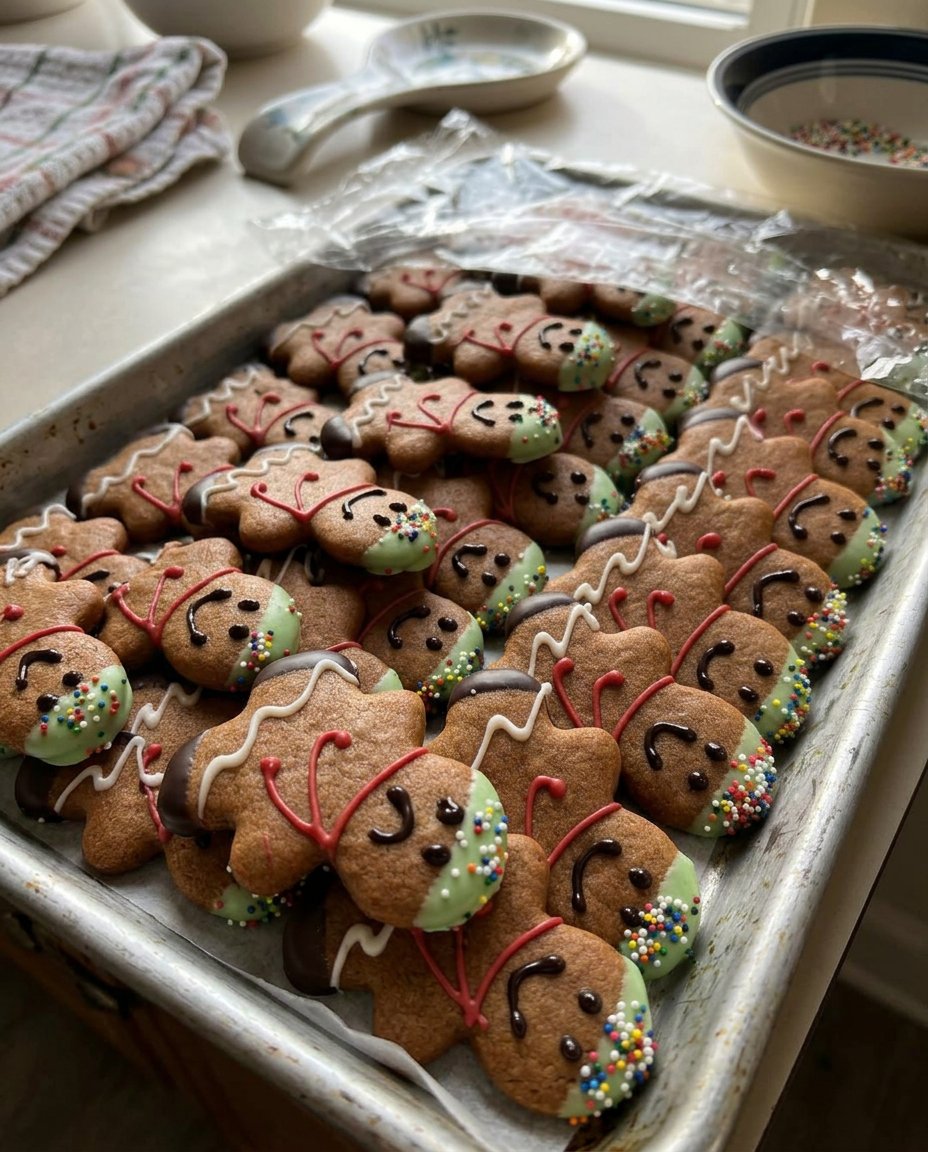
Texture is a function of temperature. These cookies are best served approximately 15 minutes after exiting the oven. At this point, the internal pistachio cream has cooled enough to be viscous but remains fluid, and the chocolate chunks are still in a semi-liquid state. If you are serving them the next day, a brief 10-second pulse in the microwave will reactivate the fats and restore the molten core. For high-volume holiday events, refer to our Efficient Cookie Methods to manage bake times and cooling rack space effectively.
The Scientific Conclusion
Baking is not magic; it is the precise application of heat to a specific ratio of ingredients. By understanding the role of brown butter and the emulsification of fats, you have created a cookie that is technically superior to standard holiday fare. Keep testing these variables in your own kitchen to see how small shifts in hydration or temperature change your results. For more data-driven baking insights, check out our Viral Cookie Analysis. If you find success with this formula, share your results with our community on Pinterest, Instagram, or Facebook.