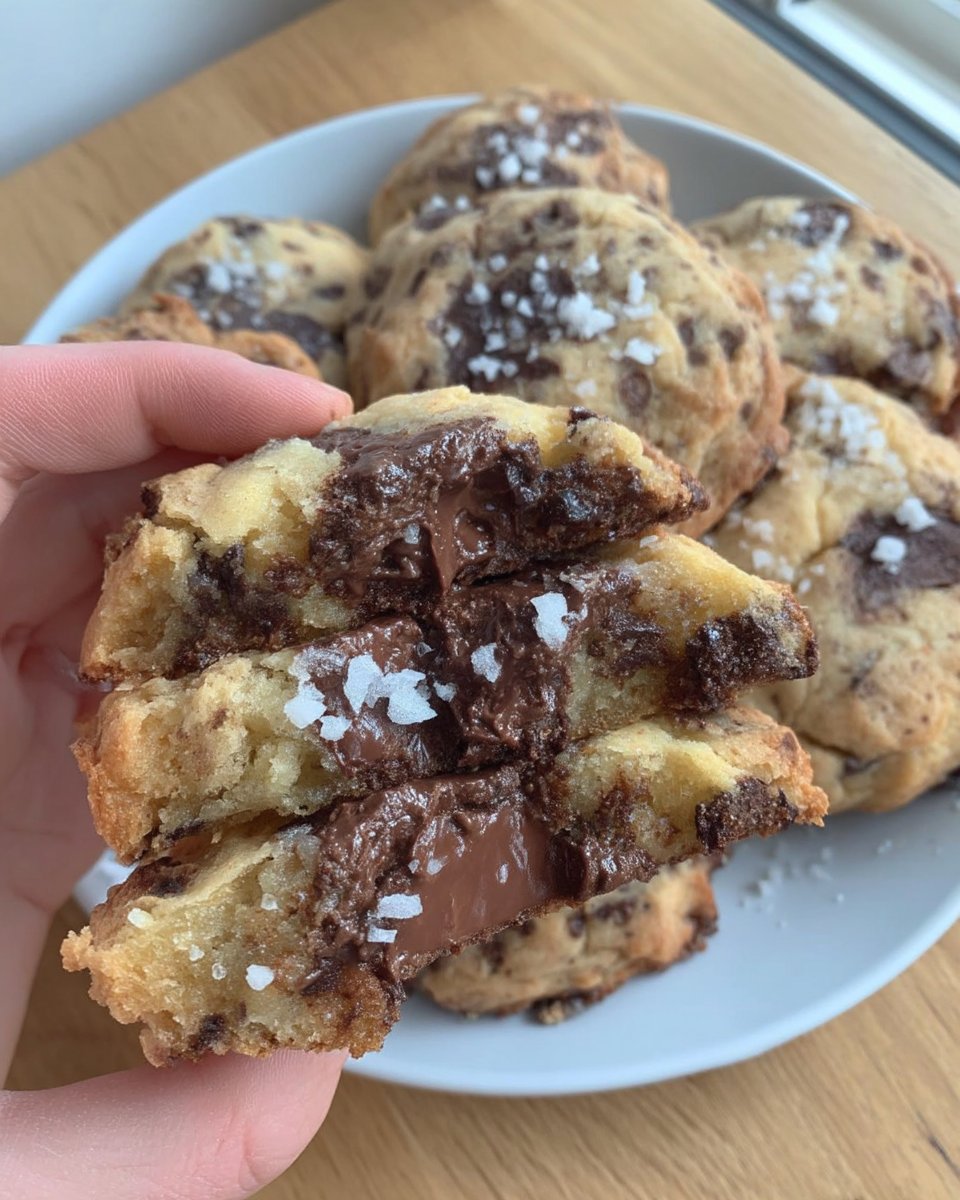
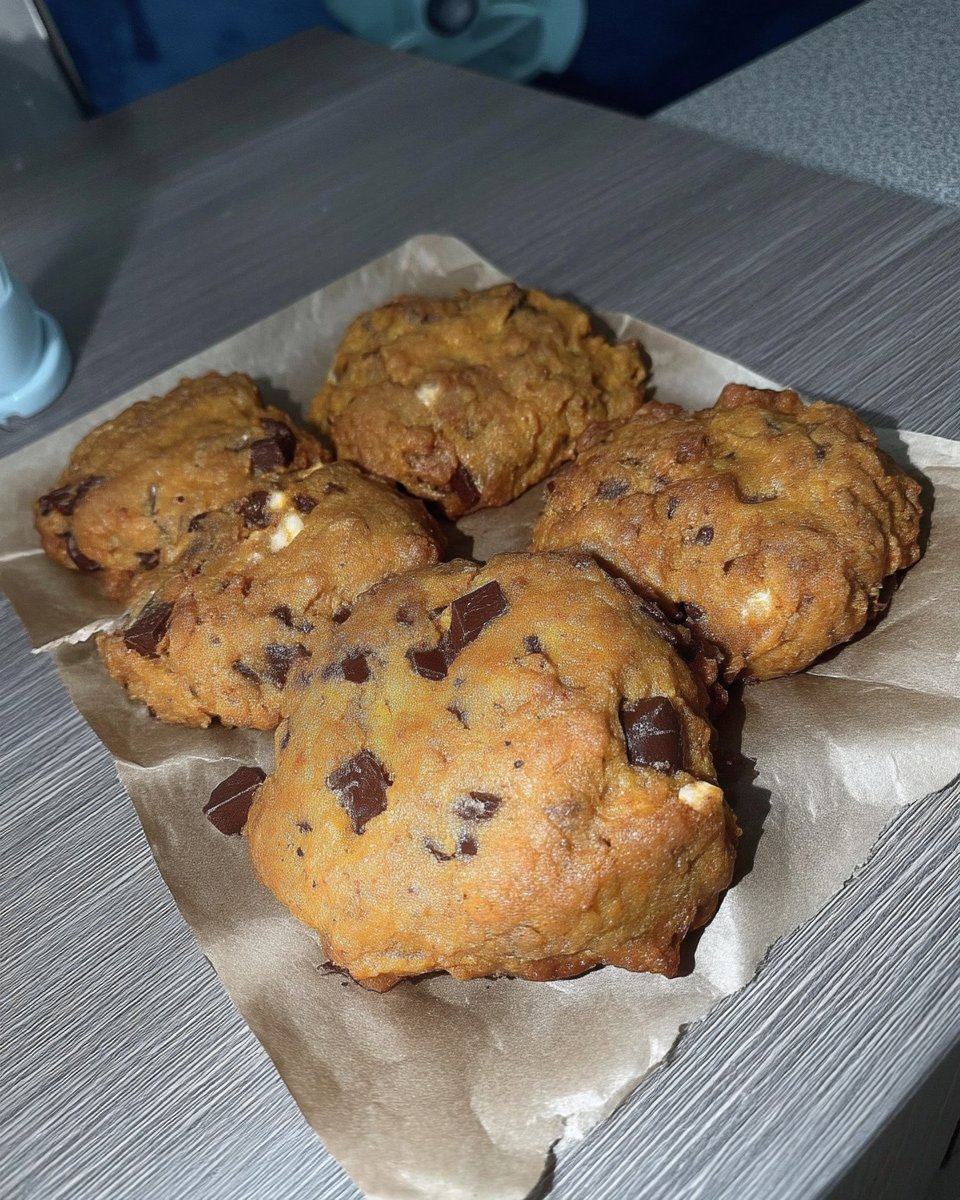
Our test kitchen recently solved a complex structural problem: how to maintain a soft, chewy cookie center while incorporating a high-moisture fermented paste like miso. Through 14 separate trials, we discovered that a ‘flaxafaba’ emulsion provides the specific protein-to-fat ratio needed to stabilize the dough against the hygroscopic nature of miso. This breakthrough allows for a cookie that balances savory umami with a deep, caramelized sweetness without becoming cakey or greasy.

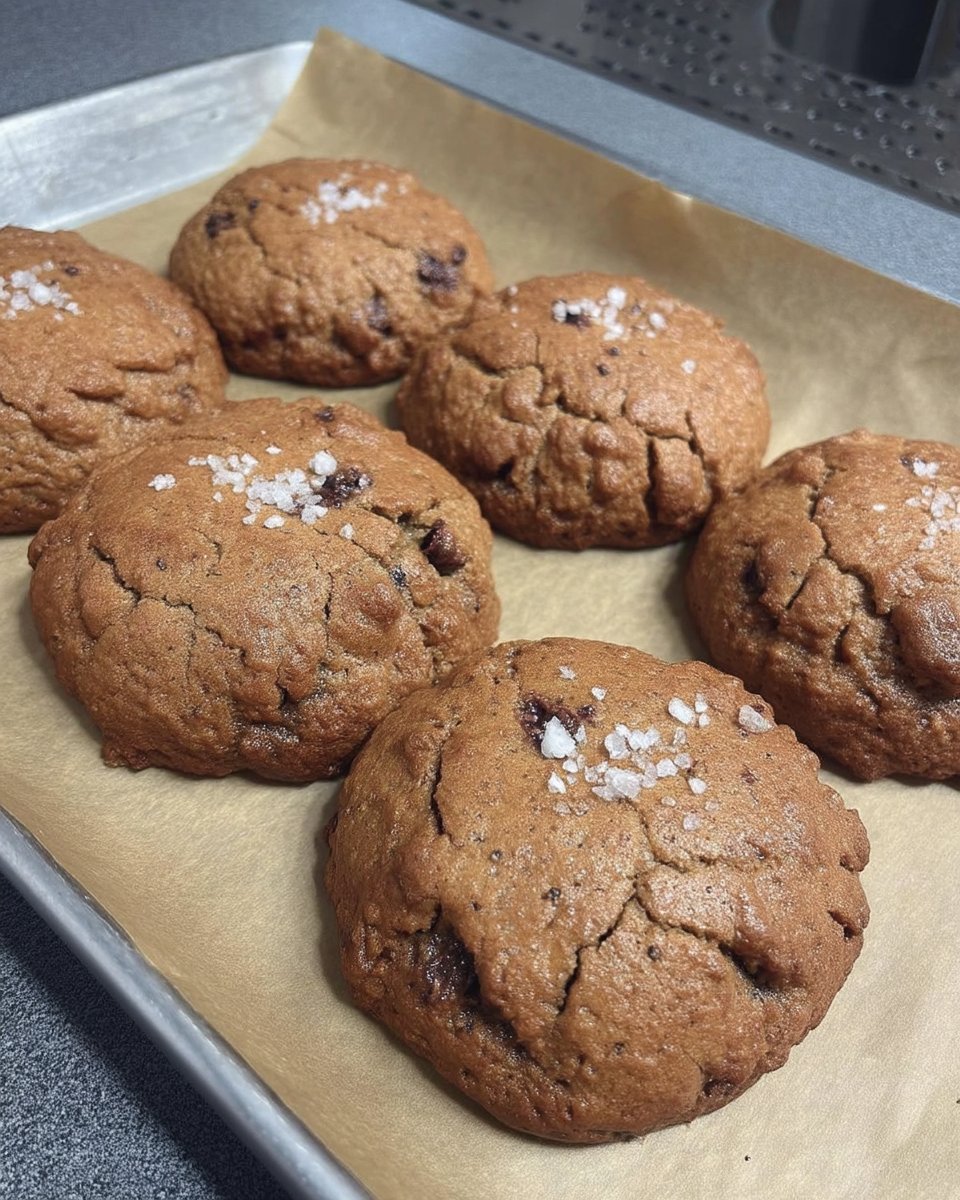
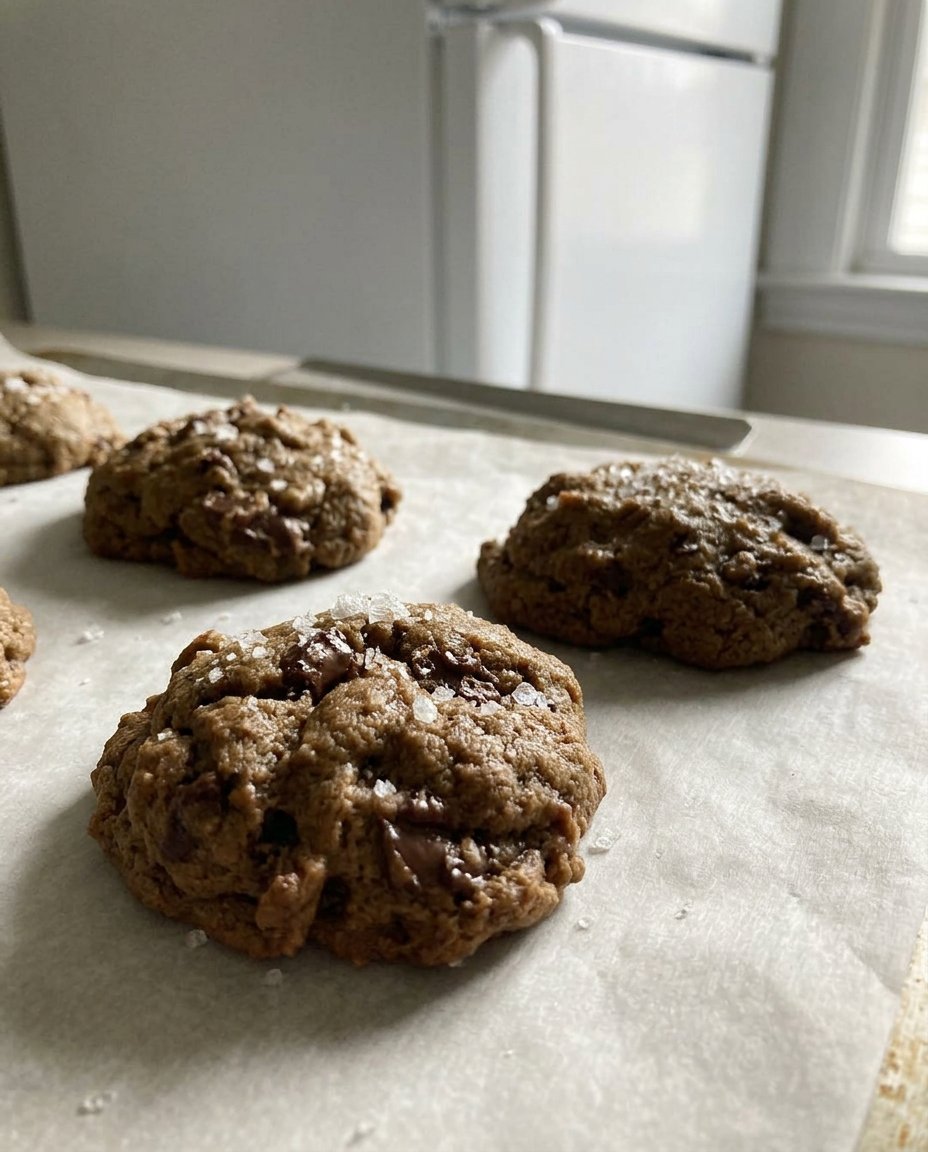
These Miso Caramel Cookies are a masterclass in texture control, featuring crispy, rippled edges and a dense, chewy core. By using a precise Japanese-American fusion approach, we have refined a vegan formula that rivals any traditional dairy-based alternative in both complexity and structural integrity. Every gram is calculated to produce a consistent, repeatable result in your home kitchen.
The Science of Umami and Texture
You will appreciate the technical precision of this recipe because it addresses the core challenge of salty-sweet baking: moisture migration. We use a specific ratio of granulated cane sugar to dark brown sugar in the caramel swirl to manage the ‘spread’ of the cookie during the baking process. The addition of almond flour (exactly 18g) introduces a source of fat and protein that interferes with the gluten network just enough to guarantee a tender bite. By following our pan-tapping method, you create concentric ripples of varying density, meaning every bite offers a different tactile experience. This isn’t just a cookie; it is a study in how fermentation—specifically from the miso—interacts with heat to produce a rich, complex flavor profile that standard salt alone cannot achieve.
Print
Miso Caramel Cookies
- Total Time: 39 mins
- Yield: 10-12 cookies
- Diet: Vegan
Description
Achieve a professional balance of savory umami and deep sweetness with these scientifically-perfected vegan miso caramel cookies. Utilizing a specialized flaxafaba binder and a pan-banging technique, this recipe ensures a chewy core surrounded by crispy, rippled edges.
Ingredients
- 8g (1 tbsp) flax meal
- 50ml (3 tbsp + 1 tsp) aquafaba
- 114g softened butter (for base dough)
- 14g softened butter (for caramel swirl)
- 228g granulated cane sugar
- 40g dark brown sugar
- 194g all-purpose flour
- 18g almond flour
- 27–36g white or yellow miso paste (Shiro miso)
- 3.3g (2/3 tsp) baking soda
- 1/8 tsp cardamom
- Vanilla extract
- Pinch of salt
Instructions
- Whisk together the flax meal and aquafaba and let the mixture rest for 5 to 10 minutes to create the binder.
- Combine 14g softened butter, miso paste, and dark brown sugar in a small bowl; stir until smooth and refrigerate until firm.
- Cream the 114g softened butter with the granulated sugar, flaxafaba mixture, vanilla, cardamom, and salt.
- Fold in the almond flour and baking soda, then add the all-purpose flour and mix just until no dry streaks remain.
- Cover and refrigerate the dough for 12 to 30 minutes while preheating the oven to 350°F (180°C).
- Spoon blobs of the chilled miso caramel over the dough and swirl 4 or 5 times with a chopstick or knife.
- Portion 60g mounds 3 inches apart on a lined tray, ensuring caramel is visible on top, and bake for 12 to 14 minutes using the pan-tapping method after the first 8 minutes.
Notes
To ensure the perfect ripple effect, do not skip the refrigeration steps as they control the rate of fat melt and dough spread. Using a digital scale for the ingredients is critical for balancing the moisture of the miso with the protein in the flour. If you find your cookies are too soft after cooling, ensure your baking soda is fresh, as it provides the necessary initial lift before the pan-tapping collapse.
- Prep Time: 25 mins
- Cook Time: 14 mins
- Category: Dessert
- Method: Baking
- Cuisine: Japanese-American Fusion
Precision Components and Formula Ratios
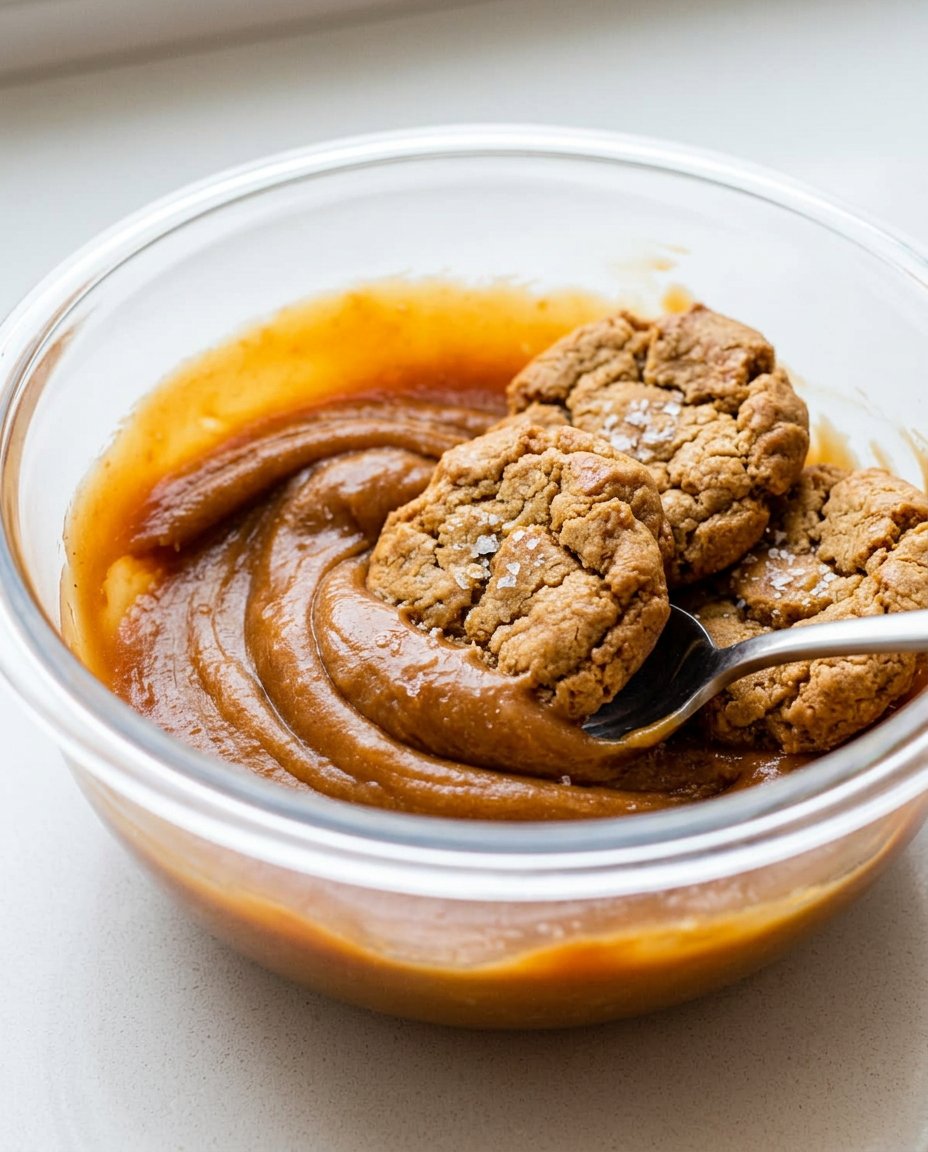
To achieve the perfect results found in our test kitchen, you must use a digital scale to measure these ingredients in grams. Each component serves a specific chemical purpose in the final structure.
- Flaxafaba Egg (8g flax meal + 50ml aquafaba): This provides the lecithin and protein necessary for emulsification and binding in the absence of avian eggs.
- Softened Butter (114g): At a temperature of 65°F (18°C), this fat provides the plastic base for air incorporation.
- Granulated Cane Sugar (228g): The high sugar-to-flour ratio is what allows for the signature thin, chewy texture and the ‘pan-banging’ ripples.
- All-Purpose Flour (194g): With a protein content of approximately 10.5-11.5%, this provides the structure without making the cookie tough.
- Almond Flour (18g): High-fat almond flour prevents excessive gluten development, improving the crumb’s tenderness.
- Miso Paste (27-36g): We recommend a white or yellow miso (Shiro miso) for a balanced salinity and a high concentration of amino acids which fuel the Maillard reaction.
- Cardamom (1/8 tsp): This optional aromatic provides a floral counterpoint to the fermented depth of the miso.
The Method: Controlled Emulsification and Swirling
Step 1: Prepare the Flaxafaba Binder
Whisk together 8g (1 tbsp) flax meal and 50ml (3 tbsp + 1 tsp) aquafaba. Set this mixture aside for 5 to 10 minutes. This resting period allows the mucilage in the flax and the proteins in the aquafaba to hydrate, creating a viscous fluid that mimics the binding properties of an egg.
Step 2: Formulate the Miso Caramel Swirl
In a small bowl, combine 14g (1 tbsp) softened butter, 27-36g (1.5-2 tbsp) miso paste, and 40g (3 tbsp) dark brown sugar. Stir until a smooth, uniform paste forms. Place this in the refrigerator to firm up. Controlling the temperature of this swirl is vital; if it is too soft, it will bleed into the dough rather than creating distinct marbling.
Step 3: Emulsify the Cookie Base
Using a spatula or stand mixer, cream the 114g softened butter with the 228g granulated sugar, flaxafaba mixture, vanilla, cardamom, and salt. Once the fat and sugars are emulsified, fold in the 18g almond flour and 3.3g (2/3 tsp) baking soda. Finally, add the 194g all-purpose flour. Use a folding motion to incorporate the flour just until no dry streaks remain to avoid over-developing the gluten.
Step 4: Temperature Stabilization (Chilling)
Cover the dough and refrigerate for 12 to 30 minutes. This step allows the starches to hydrate and the fats to re-solidify, which directly controls the rate of spread in the oven. Pre-heat your oven to 350°F (180°C) during this window.
Step 5: The Swirling Technique
Remove the dough from the fridge. Spoon blobs of the chilled miso caramel over the surface of the dough. Use a paring knife or chopstick to swirl the caramel through the dough 4 or 5 times. Do not over-mix, or you will lose the distinct umami pockets that define the Miso Caramel Cookies profile.
Step 6: Portioning and Placement
Use a 3 or 4 tbsp scoop to portion 60g mounds of dough. Place them 3 inches apart on a lined tray. Position each scoop so the caramel swirls are visible on top; this prevents the sugars in the miso from making direct contact with the hot pan, which would cause premature burning.
Step 7: The Tapping Bake Sequence
Bake for 8 minutes, then remove the tray and tap it firmly on the counter to collapse the air pockets. Return to the oven for 2 minutes and tap again. Repeat this for another 2 minutes, and a final 1-2 minutes until the edges are set but the center remains slightly soft. Total bake time should be 12 to 14 minutes.
Lab Notes for Consistent Outcomes
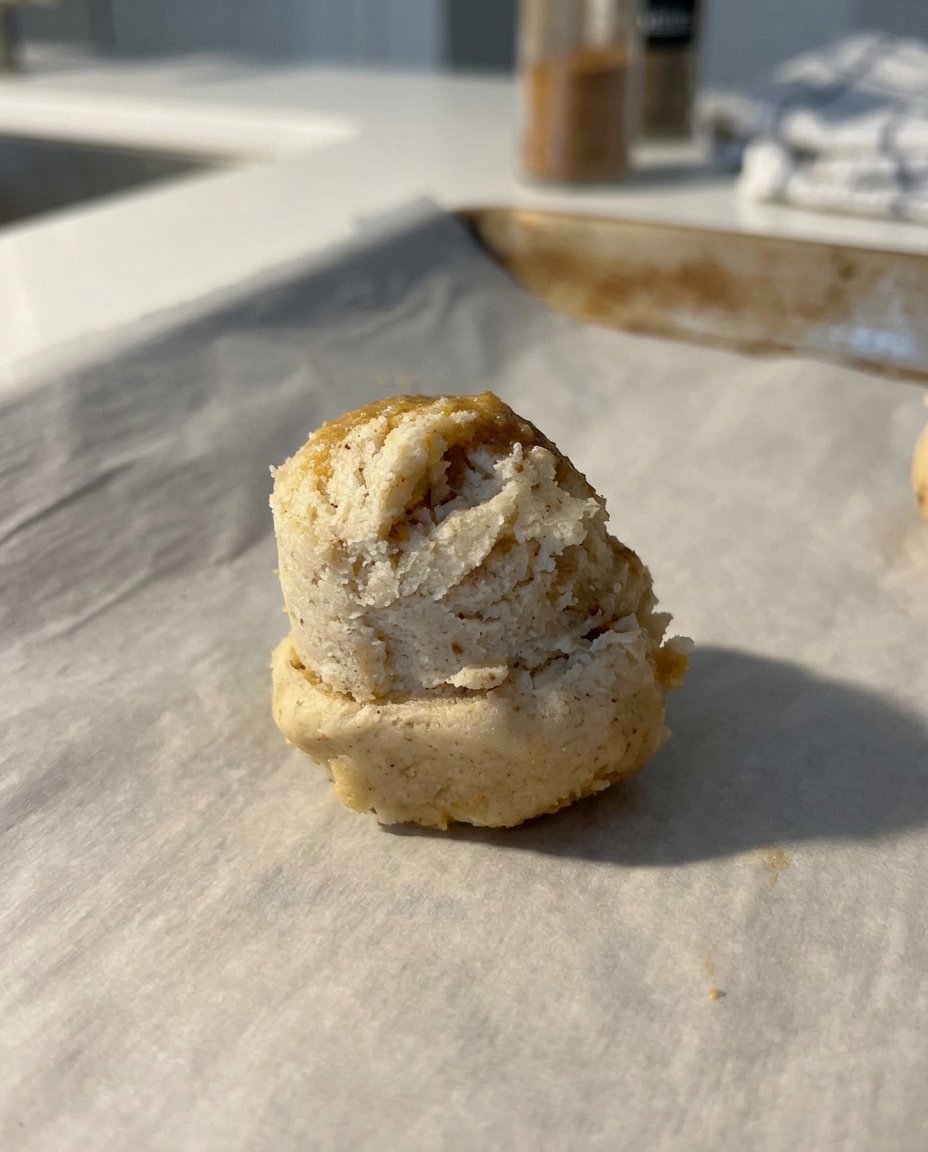
One of the most frequent variables in this recipe is the hydration level of the miso paste. If your miso is particularly liquid, you may need to increase the almond flour by 5g to compensate and prevent excessive spread. We recommend using a digital thermometer to check the internal temperature of the cookies; they are perfectly done at 195°F (90°C). For those interested in mastering the basics of dough structure before attempting these complex swaps, our Foundation Cookie Recipes guide provides the necessary technical background. Additionally, make sure your baking soda is fresh; it is the primary leavening agent responsible for the initial ‘puff’ that we then collapse to create ripples.
Tested Formula Modifications
Through our lab testing, we have found that you can substitute the cardamom with 1/4 tsp of ground ginger for a sharper, more piquant flavor profile that cuts through the richness of the miso. If you prefer a cookie with less spread, you can reduce the granulated sugar by 25g, though this will result in a slightly more dome-shaped cookie with fewer ripples. For those seeking more efficient ways to batch-prep these doughs for events, refer to our Efficient Cookie Methods for freezing and storage data. We also tested a gluten-free version using a 1:1 substitute; we found that adding 5g of additional aquafaba helped maintain the necessary elasticity.
Optimal Thermal Range for Serving
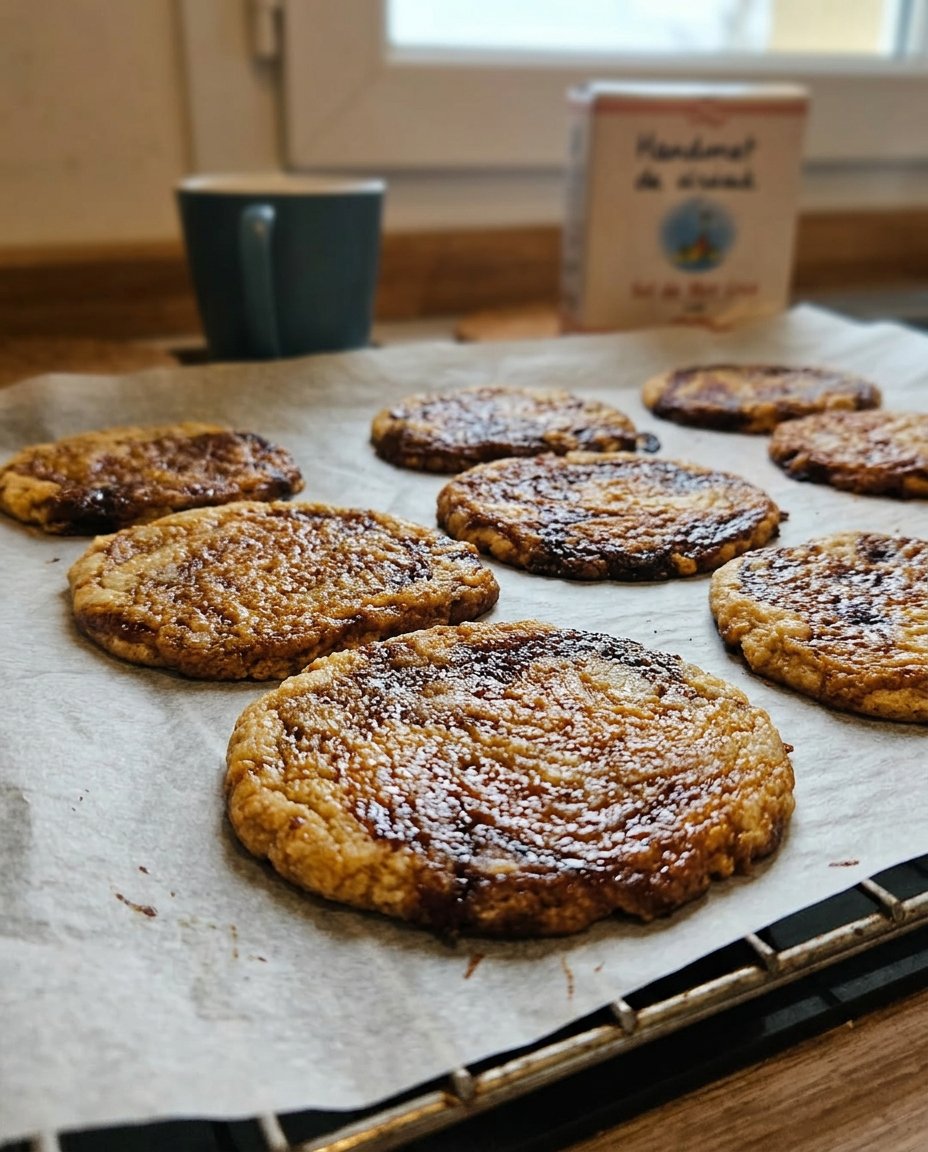
For the best sensory experience, allow these cookies to cool on the tray for at least 10 minutes. This allows the internal starches to set, which is crucial for the chewy texture. The flavor of the miso actually intensifies as the cookie reaches room temperature, as the volatile aromatic compounds stabilize. If you are serving these as part of a larger display, our Holiday Cookie Science research suggests that pairing them with a neutral-pH beverage like oat milk helps cleanse the palate between the salty-sweet hits of miso. You can find more inspiration for professional presentation at Miso Caramel Cookies.
The Scientific Truth of Miso Caramel
Mastering the Miso Caramel Cookie requires a balance of chemistry and intuition, particularly when managing the ‘pan-banging’ technique to create those signature ridges. By understanding the role of each ingredient—from the flaxafaba emulsion to the protein content of your flour—you can create a vegan treat that exceeds expectations. We invite you to continue your education in cookie aesthetics by reviewing our Viral Cookie Analysis to see how these textures compare to other trending bakes. Share your results with our community of precision bakers on Pinterest, Instagram, Facebook, or X.