The use of savory elements in sweet biscuits is a practice that dates back to the Victorian era, when bakers intuitively understood that salt served as a primary flavor corrector. While those early artisans lacked the convenience of modern snacks, the principle of balancing rich fats with sharp saline notes remains a cornerstone of British baking tradition. This recipe represents the scientific meeting of American snack culture and historical culinary methodology.

These cookies utilize the structural integrity of the wavy potato chip to provide a contrast that standard chocolate chip cookies often lack. By following a methodical approach to creaming and hydration, we achieve a result that is both technically sound and remarkably satisfying. It is a testament to how traditional techniques can support even the most unconventional modern ingredients.
The Scientific Paradox of Salt and Sugar
There is a specific reason why the Potato Chip Chocolate Chip combination remains a favorite among those who appreciate complex flavor profiles. It relies on the biological phenomenon of nutritional hedging, where our palates seek out multiple energy sources simultaneously. The inclusion of potato chips provides a unique starch profile that interacts with the gluten in the flour, creating a crumb that is both tender and surprisingly crisp. Unlike standard salt additions, the chips offer a physical barrier that prevents the dough from becoming too dense during the baking process.
From a technical standpoint, the wavy chips act as structural reinforcement. The ridges create small pockets of air within the dough, which aids in heat distribution as the cookies bake. This results in a more even cook and a texture that changes slightly with every bite. When you combine this with the richness of semi-sweet chocolate, you create a cookie that satisfies the need for sweetness while providing the savory depth required to prevent the palate from becoming overwhelmed. It is a professional approach to what many consider a simple snack cookie.
Print
Potato Chip Chocolate Chip
- Total Time: 1 hour 22 mins
- Yield: 36 cookies
- Diet: Vegetarian
Description
This sophisticated bake combines the nostalgic crunch of wavy potato chips with rich semi-sweet chocolate, utilizing a traditional creaming method for a superior texture. The result is a perfectly balanced sweet and salty treat that honors historical baking techniques while embracing modern snack culture.
Ingredients
- 1 cup unsalted butter, room temperature
- 1 cup light brown sugar
- 1 cup white sugar
- 2 large eggs
- 1 teaspoon vanilla extract
- 2.5 cups self-rising flour
- 2 cups semi-sweet chocolate chips
- 2 cups wavy potato chips, crushed
Instructions
- In a large mixing bowl, beat the unsalted butter with both the light brown and white sugars on medium speed until pale and creamy.
- Add the eggs and vanilla extract to the mixture and continue beating until fully emulsified, scraping the sides of the bowl.
- Slowly incorporate the self-rising flour on low speed just until the white streaks disappear, being careful not to overwork the dough.
- By hand or on the lowest mixer setting, gently fold in the chocolate chips and crushed wavy potato chips until evenly distributed.
- Cover the dough and refrigerate for at least one hour to ensure proper hydration and prevent excessive spreading.
- Preheat the oven to 350°F and scoop the dough onto lined baking sheets, baking for 10 to 12 minutes until edges are light golden brown.
Notes
For the most consistent texture, aim for bite-sized chip fragments rather than a fine dust when crushing your potato chips. To achieve the perfect professional finish, allow the cookies to rest on the baking sheet for five minutes after removal from the oven to let the centers set completely.
- Prep Time: 1 hour 10 mins
- Cook Time: 12 mins
- Category: Dessert
- Method: Baking
- Cuisine: American
Technical Components and Historical Ratios
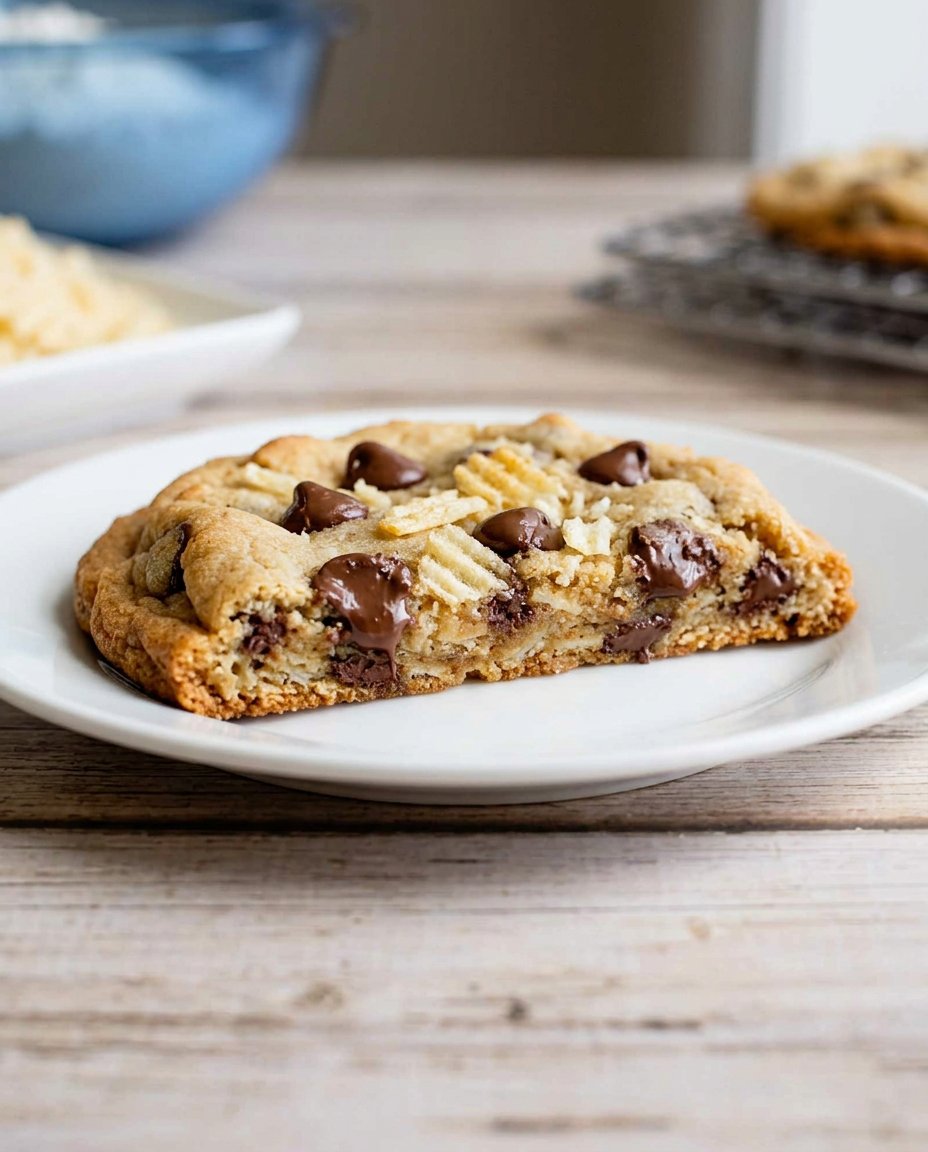
To achieve the perfect balance in these cookies, every ingredient must be selected with precision. The following components are essential for maintaining the structural integrity and flavor profile of the final bake.
- Unsalted Butter (1 cup): It is vital to use unsalted butter at room temperature. This allows the baker to maintain absolute control over the sodium content, which is especially important given the inherent saltiness of the potato chips. Historically, the creaming of butter and sugar was a manual labor of love, designed to incorporate air before chemical leaveners were common.
- Sugar Ratio (1 cup Brown, 1 cup White): The equal parts of light brown and white sugar provide a balance of hygroscopy and structure. The brown sugar offers molasses for moisture and a deeper flavor, while the white sugar ensures the edges achieve a proper crispness.
- Self-Rising Flour (2.5 cups): This historical shortcut includes a pre-measured amount of leavening and salt. It ensures a consistent lift throughout the dough, which is necessary to support the weight of the heavy mix-ins.
- Semi-Sweet Chocolate Chips (2 cups): High-quality chocolate with a high cocoa butter content will melt more predictably and provide a sophisticated bitterness to offset the sugar.
- Wavy Potato Chips (2 cups): The choice of wavy chips is not accidental. The increased surface area and thickness compared to thin-cut chips ensure they remain recognizable after the folding process.
The Methodical Baking Process
Step 1: The Aeration Phase
In a large mixing bowl, combine the unsalted butter with both the light brown and white sugars. Using an electric mixer, beat the mixture on medium speed until it is pale and creamy. This step is a modern version of the Victorian creaming method; it is essential for creating the initial air pockets that will expand in the oven. Do not rush this process, as proper aeration is the foundation of a cookie that is soft rather than leaden.
Step 2: Incorporating Emulsions
Add the two eggs and the vanilla extract to the creamed mixture. Continue to beat until the eggs are fully emulsified into the fats. Scrape down the sides of the bowl to ensure no pockets of unmixed butter remain. A consistent emulsion ensures that the flour will be hydrated evenly in the next step, preventing tough spots in the finished bake.
Step 3: Integrating the Dry Base
Slowly add the self-rising flour to the wet ingredients. Mix on low speed just until the white streaks of flour disappear. Overworking the dough at this stage will develop excess gluten, leading to a bread-like texture rather than a tender cookie. Historically, bakers would have folded this in by hand to preserve the delicate air bubbles created during the creaming phase.
Step 4: The Inclusion Technique
Carefully fold in the semi-sweet chocolate chips and the crushed wavy potato chips. It is important to do this by hand or on the lowest mixer setting to avoid pulverizing the chips into a fine dust. You want discernible pieces of chip throughout the dough to provide the signature texture. The goal is a uniform distribution that maintains the structural integrity of the inclusions.
Step 5: The Hydration Rest
Cover the dough and refrigerate it for at least one hour. This step is a vital piece of cookie science. During this rest, the flour fully hydrates, and the fats solidify. This prevents the cookies from spreading too thin in the oven and allows the flavors of the molasses and vanilla to deepen. Victorian bakers practiced this resting period out of necessity in cooler larders, but we now know it is the secret to a professional-grade cookie.
Step 6: Precision Baking
Preheat your oven to 350 degrees Fahrenheit. Using a standard cookie scoop, place portions of dough two inches apart on a lightly greased or parchment-lined baking sheet. Bake for 10 to 12 minutes. Remove the cookies when the edges are just beginning to show a light golden brown. The centers should still look slightly underdone, as they will continue to set on the hot pan through residual heat.
Technical Wisdom for the Home Laboratory
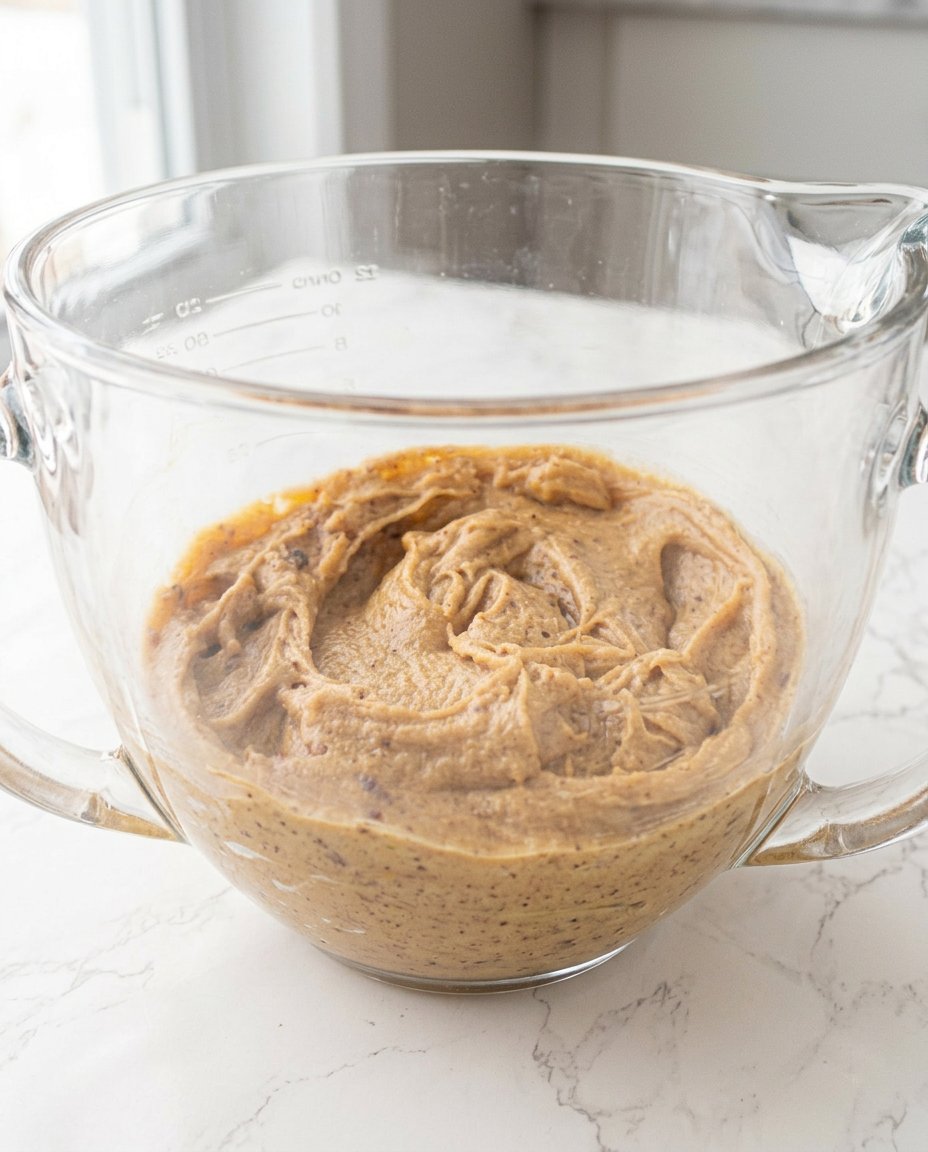
Achieving the perfect Potato Chip Chocolate Chip cookie requires more than just following steps; it requires an understanding of thermodynamics and ingredient behavior. Ensure your eggs are at room temperature before starting to maintain a stable emulsion. If the eggs are too cold, they can cause the butter to seize, resulting in an uneven crumb. For those interested in mastering the basics of cookie chemistry, our guide on Foundation Cookie Recipes provides excellent context for these variables. Additionally, consider weighing your flour rather than using volume measures to ensure the most consistent results. The moisture content of your kitchen can also affect the dough; if it feels particularly tacky, an extra 15 minutes of chilling can help.
Regional and Textural Adaptations
While the classic recipe is a triumph of balance, there are several ways to adapt this method for different preferences or occasions. For a more intense savory experience, some bakers prefer to use kettle-cooked chips, which offer a harder crunch and stand up better to long hydration rests. If you are baking for the holidays, you might consider replacing half of the chocolate chips with white chocolate for a different aesthetic. Understanding how these changes affect the bake is part of the fun in Holiday Cookie Science, where we examine how different inclusions interact with dough stability. Another popular variation is the addition of a pinch of Maldon sea salt on top of each cookie immediately after they leave the oven, further emphasizing the saline-sweet contrast.
Traditional Service and Pairing
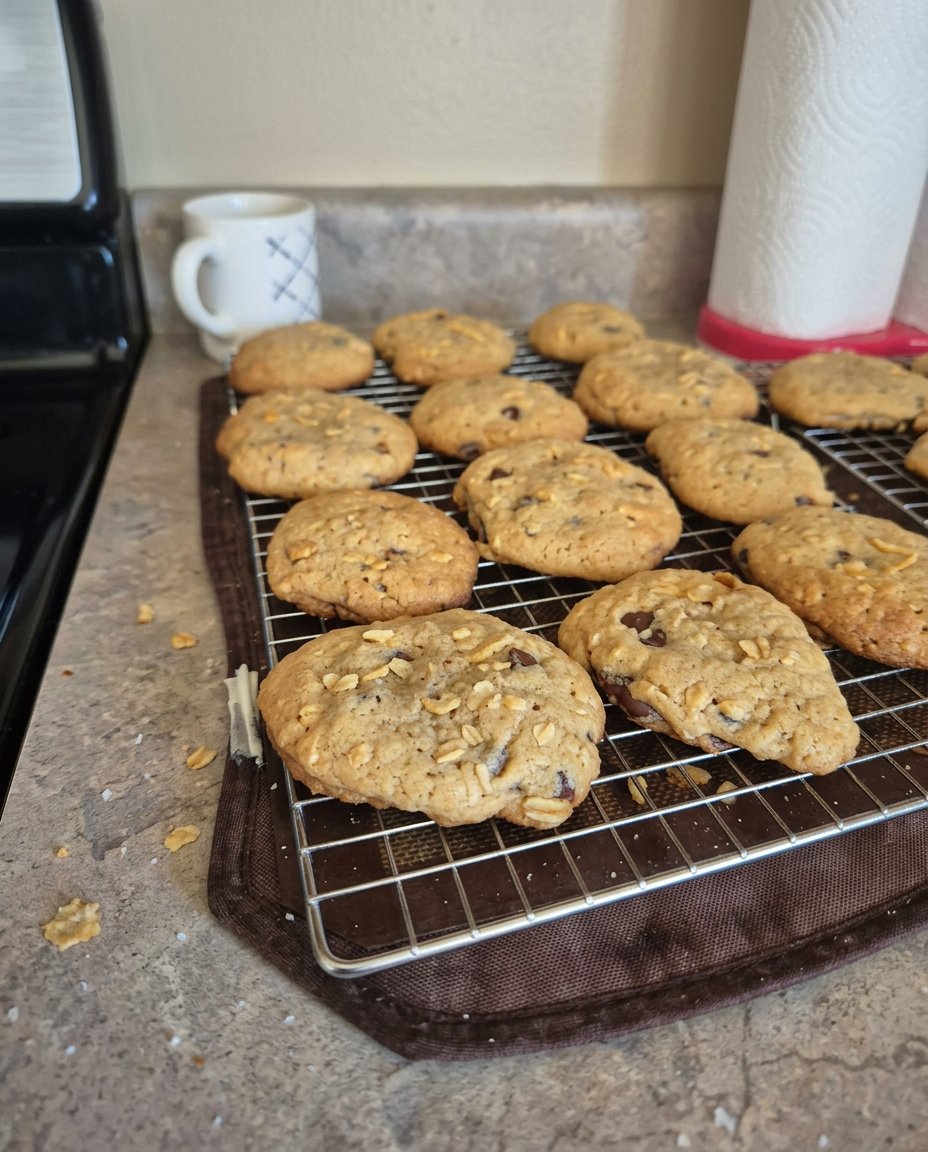
These cookies are best enjoyed shortly after they have cooled to room temperature, allowing the chocolate to set but remain soft. For a traditional British service, pair these with a robust black tea like Earl Grey; the tannins in the tea cut through the richness of the butter and chocolate beautifully. If you are serving these at a gathering, they look wonderful on a tiered stand. For those who want to take their presentation to the next level, our resources on Precision Cookie Decorating offer insights into how to make every batch look as professional as it tastes. For a more modern American approach, a cold glass of whole milk provides a nostalgic and scientifically sound pairing, as the milk fats help carry the chocolate flavor across the tongue.
The Technical Truth of the Modern Cookie
The Potato Chip Chocolate Chip cookie is a fascinating example of how modern ingredients can be treated with historical respect. By applying the principles of aeration, hydration, and temperature control, we transform a simple snack into a technically superior bake. As we have seen in our Viral Cookie Analysis, the most successful recipes are those that balance tradition with a willingness to test new boundaries. I hope you find this recipe as reliable and remarkable as I do. Please share your results with our community of methodical bakers on Pinterest, Instagram, or Facebook. Happy baking.