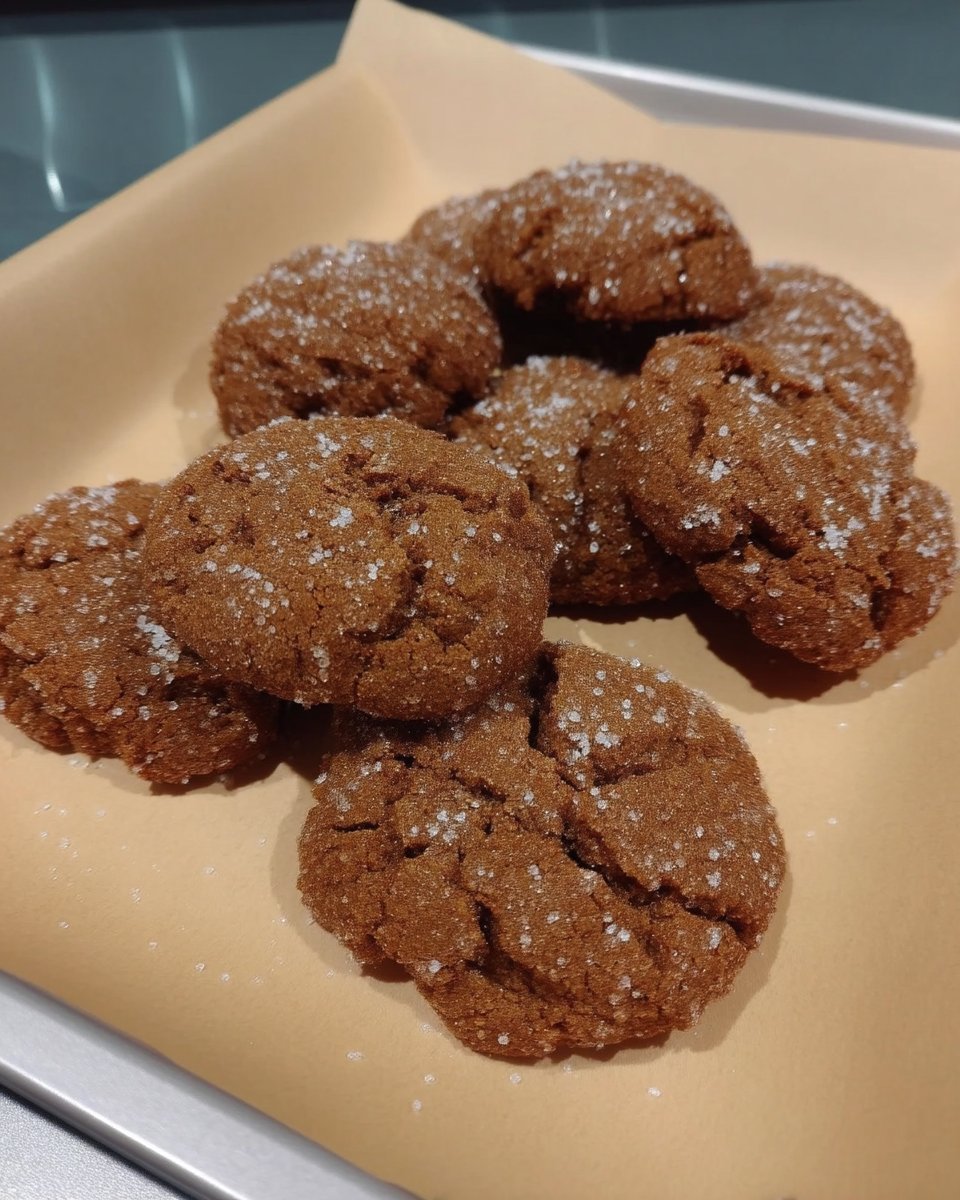
Nussecken, or German nut corners, are a triumph of structural engineering from the German baking repertoire. These triangular bars rely on a precise ratio of buttery shortcrust to caramelized nut topping, “glued” together by a tart layer of apricot jam. It is a technique that balances moisture migration, ensuring the base remains crisp while the topping stays chewy for weeks.

This recipe refines the classic method by roasting the hazelnuts and almonds beforehand to deepen their flavor profile before they meet the caramel. We finish each corner in dark chocolate, not just for aesthetics, but to seal the porous edges against staling. It is a perfect study in texture contrasts.
The Engineering of Taste
I treasure this recipe because it demonstrates how Victorian-era bakers understood food chemistry long before modern labs confirmed it. The success of a Nussecken lies in the interplay of three distinct textures: the friable shortcrust, the sticky, caramelized nut layer, and the snap of tempered chocolate. The apricot jam is not merely a flavor addition; it provides the necessary acidity to cut through the richness of the nuts and butter.
From a practical standpoint, these are “Dauerbackwaren”—long-lasting baked goods. Because the moisture content is controlled and the edges are sealed, they improve after a day or two, making them an intelligent choice for shipping or preparing ahead of holidays. The precision required to cut the geometry is immensely satisfying for the methodical baker.
Print
Nussecken
- Total Time: 1 hour 15 mins
- Yield: 64 triangles
Description
These classic German nut corners feature a buttery shortcrust base topped with a luscious layer of apricot jam and caramelized roasted hazelnuts and almonds. Finished with a signature dip in dark chocolate, they offer a sophisticated balance of crunch, chew, and tang.
Ingredients
- Room-temperature butter
- Granulated sugar
- All-purpose flour
- Salt
- Baking powder
- Eggs
- Smooth apricot jam
- Raw hazelnuts
- Raw almonds
- Brown sugar
- Vanilla extract
- Water
- Dark chocolate (72% cocoa solids)
Instructions
- Preheat oven to 350°F (177°C) and roast raw almonds and hazelnuts for 10–15 minutes until golden; cool and process into a mix of meal and small pieces.
- In a stand mixer, cream butter and granulated sugar, then mix in flour, salt, and baking powder before adding eggs to form a dough.
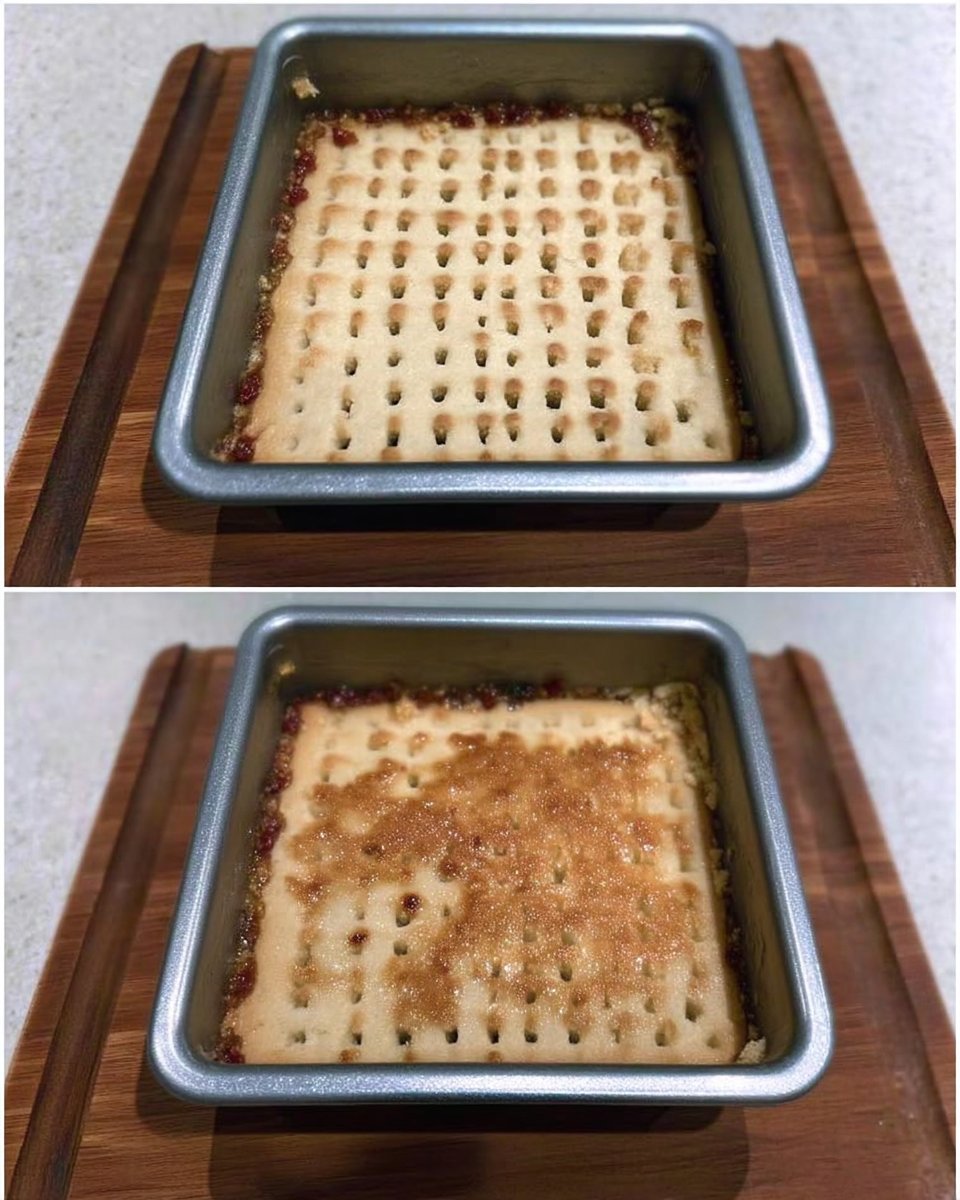
- Press the dough into a parchment-lined 10×15-inch pan, prick with a fork, and spread a thin layer of apricot jam over the top before chilling.
- In a saucepan, melt butter, brown sugar, vanilla, salt, and water, then stir in the processed nuts and spread the mixture over the chilled jam layer.
- Bake at 350°F (177°C) for 30 minutes until golden brown; allow to cool completely in the pan.
- Slice the slab into 32 rectangles and halve diagonally into 64 triangles.
- Melt dark chocolate in a double boiler and dip the corners of each triangle, then let set on a wire rack.
Notes
For the cleanest cuts, use a long, hot knife and wipe it between every few slices to prevent the jam and caramel from sticking. If you prefer a more intense nut flavor, ensure you rub the skins off the hazelnuts after roasting for a smoother texture in the topping.
- Prep Time: 30 mins
- Cook Time: 45 mins
- Category: Dessert
- Method: Baking
- Cuisine: German
Proper Components for Structure
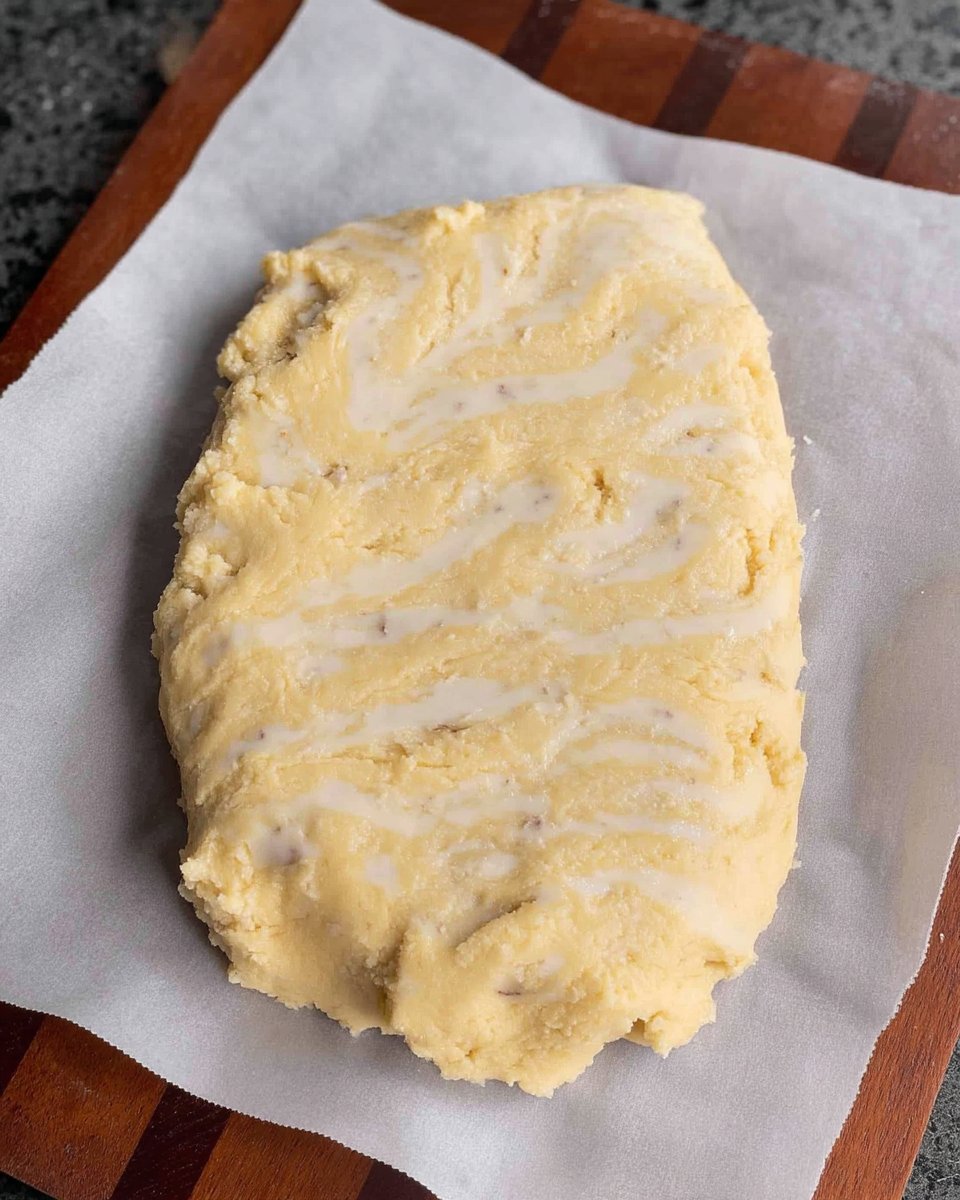
To achieve the authentic texture, we must respect the function of each ingredient. The ratios here are calculated to prevent the base from becoming soggy under the weight of the caramel.
- Shortcrust Base: Unlike a pie crust, we use a creaming method here (butter and sugar first) before adding the flour. This creates a sturdier, cookie-like crumb that can support the heavy topping.
- Apricot Jam: This acts as the adhesive layer. It must be smooth; pass it through a sieve if your preserve is chunky.
- Hazelnuts and Almonds: We use raw nuts and roast them ourselves. This step is non-negotiable for depth of flavor. The mixture of ground and chopped nuts creates the necessary density.
- Dark Chocolate: Use a 72% cocoa solid chocolate. The bitterness is required to balance the sweet caramel layer. High-quality couverture will offer the best viscosity for dipping.
The Methodical Process
Step 1: Roasting the Nuts
Preheat your oven to 350°F (177°C). Spread the raw almonds and hazelnuts onto a rimmed sheet pan. Roast for 10–15 minutes, stirring at the 5-minute mark to ensure even heat distribution. You are looking for a golden hue and a toasted aroma. Watch closely, as nuts can burn rapidly. Allow them to cool completely before processing.
Step 2: Constructing the Shortcrust Base
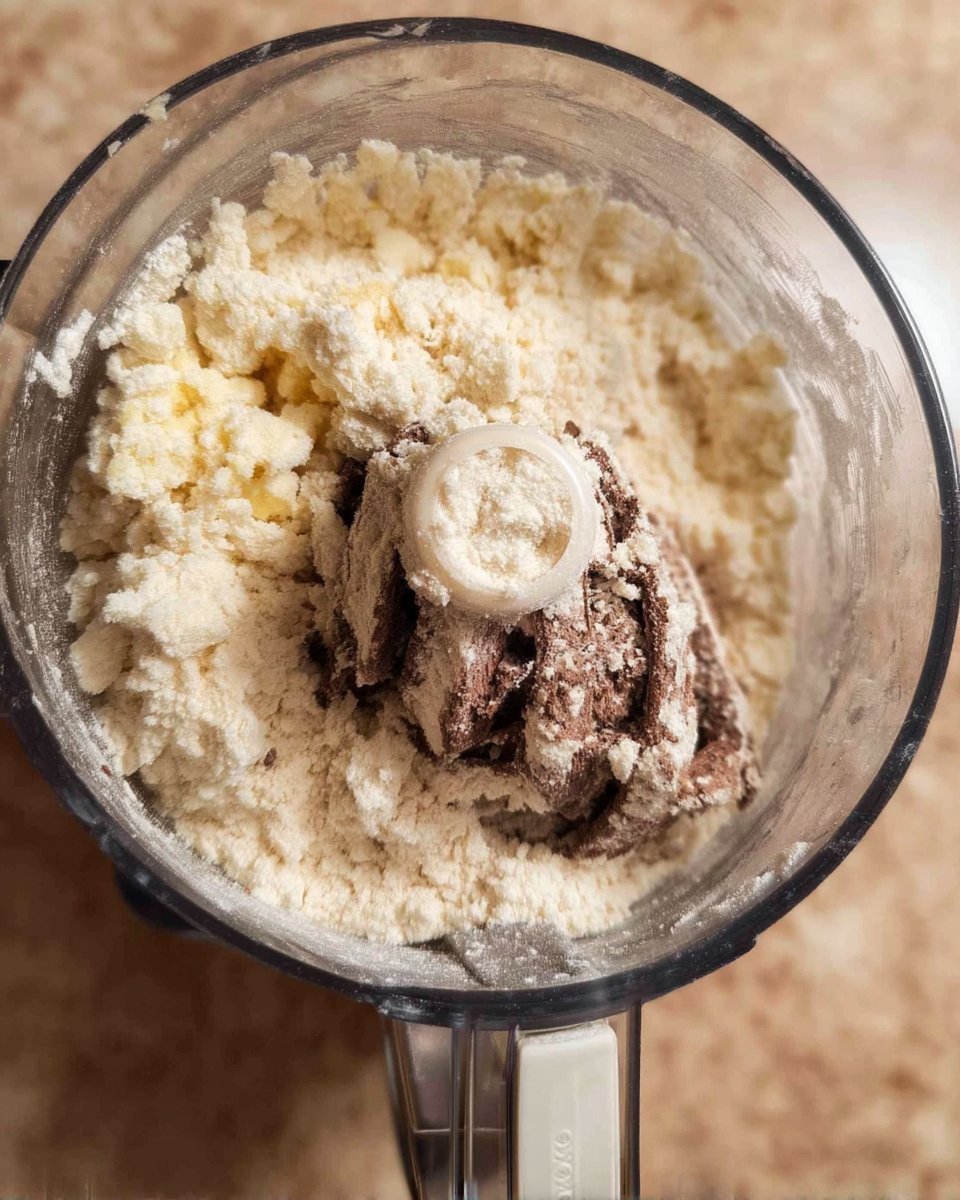
Line a 10×15-inch jelly roll pan with parchment paper. In a stand mixer, cream the room-temperature butter and granulated sugar on medium speed until well combined. Add the flour, salt, and baking powder, mixing on low until the texture resembles fine sand. Add the eggs last, mixing only until the dough coheres. Press this dough evenly into your prepared pan, using a small roller or bottle to ensure a level surface. Prick with a fork to prevent blistering.
Step 3: The Jam Interface
Spread the apricot jam in a thin, even layer across the entire surface of the raw dough. Place the pan in the refrigerator. Chilling the base now helps maintain distinct layers during baking.
Step 4: The Caramelized Nut Layer
In a saucepan, combine the butter, brown sugar, vanilla, salt, and water. Heat over medium until melted and smooth—do not let it boil vigorously, or you will alter the sugar structure, making the topping too hard. Process your cooled nuts until you have a mix of meal and small pieces, then stir them into the warm butter mixture. Spread this hot mixture over the chilled jam layer.
Step 5: Baking and Cutting
Bake at 350°F (177°C) for 30 minutes. The top should be golden brown and the edges caramelized. Allow to cool in the pan. Once cool, slide the slab onto a cutting board. Using a sharp chef’s knife, cut into 32 rectangles, then halve each diagonally to create 64 triangles. Precision here ensures uniform baking if you choose to re-crisp them, though we serve them as is.
Step 6: The Chocolate Finish
Melt the dark chocolate in a double boiler. Dip the two pointed corners (or all three, if you prefer) of each Nussecke into the chocolate. Shake off excess and place on a wire rack to set. This chocolate seal preserves the crumb’s moisture.
Jordan’s Precision Notes
- Temperature Control: When making the nut topping, ensure the butter mixture is warm but not scalding when you add the nuts. If it is too hot, it may begin to cook the oils out of the nut meal, resulting in a greasy topping.
- The Cutting Technique: If you struggle with the nut layer shattering when you cut the cooled bars, try cutting them when they are barely warm to the touch. The caramel will be more pliable. However, be gentle, as the shortcrust is more fragile when warm.
- Chocolate Tempering: For a professional snap that doesn’t bloom (turn white) at room temperature, consider tempering your chocolate rather than just melting it. This aligns the crystal structure of the cocoa butter.
For more on achieving the perfect structural base for bar cookies, see our guide on Foundation Cookie Recipes.
Regional and Modern Adaptations
While the hazelnut-apricot combination is the Rhineland classic, history offers us room for experimentation.
- The Bavarian Twist: Swap the apricot jam for raspberry preserves and use walnuts instead of hazelnuts. The tannin in walnuts pairs beautifully with red fruit.
- Spiced Corners: For a holiday version, add a teaspoon of cinnamon and a pinch of ground cloves to the flour mixture. This aligns well with the principles we discuss in Holiday Cookie Science.
- Vegan Adaptation: The shortcrust responds well to plant-based block butter, and the egg can be replaced with a flax egg, though the crumb will be slightly denser.
For another perspective on this German classic, you can compare techniques with The Floured Table’s Nussecken, which uses a similar structural approach.
Traditional Service
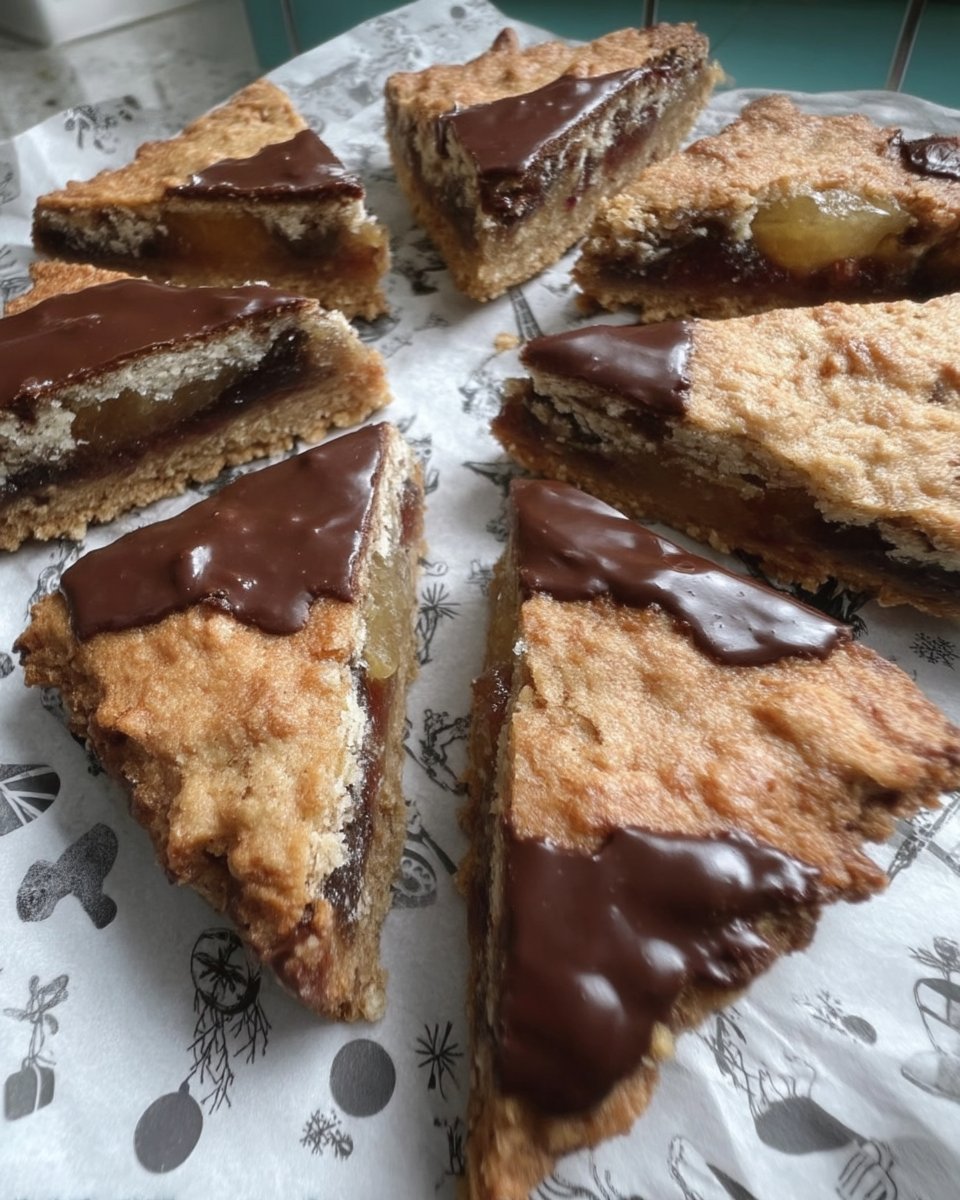
In Germany, Nussecken are a staple of *Kaffee und Kuchen* (coffee and cake) time. They are substantial enough to stand alone without accompaniment.
- Storage: Keep them in a tin, separated by parchment paper. They do not require refrigeration.
- Presentation: Serve on a white platter to let the dark chocolate and golden nuts contrast visually. They are structurally sound, making them excellent for stacked displays.
If you are preparing these for a large gathering, review our methods for Efficient Cookie Methods to streamline the dipping process.
Final Thoughts on Technique
The Nussecken is more than a sweet treat; it is a lesson in edible architecture. By respecting the cooling times and the roasting process, you achieve a biscuit that is historically authentic and texturally superior. It proves that the old methods—roasting nuts, setting layers, and precise cutting—are still the most reliable ways to achieve excellence in baking.
If you are interested in why certain cookies stand the test of time while others fade, read our Viral Cookie Analysis.
Share your bake with us: