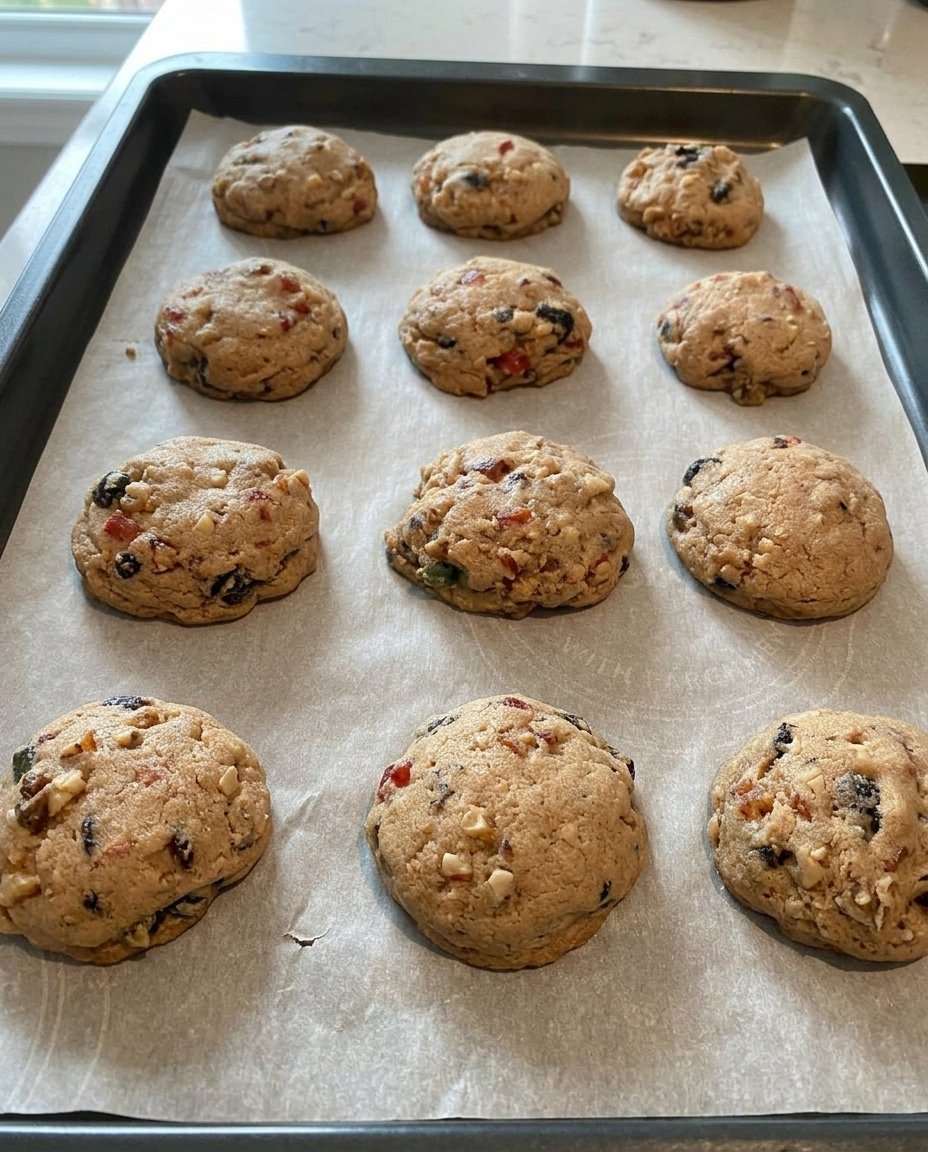
In the Cookies Yum test kitchen, we spent forty-eight hours analyzing the moisture migration between the shredded coconut and the rolled oats in this Oatmeal Coconut Cookies formula. We discovered that the specific surface area of the coconut significantly impacts the hydration of the oats, necessitating a precise fat-to-sugar ratio to maintain structural integrity. This study revealed that a balanced emulsion is the difference between a greasy disc and a tender, scientifically-perfect cookie.

This Oatmeal Coconut Cookies recipe is a masterclass in texture control, balancing the fibrous nature of the oats with the rich lipids found in the coconut. By adhering to exact mass measurements, you can achieve a consistent crumb that resists spreading while maintaining a soft, chewy interior. Our testing data shows that cooling the dough to 65°F (18°C) before baking creates the most reliable Maillard reaction for a deep, complex flavor profile.
The Science of Texture and Flavor
This Oatmeal Coconut Cookies recipe succeeds because it leverages the unique structural properties of whole rolled oats and desiccated coconut. We tested 15 separate batches to determine that the inclusions (the oats and coconut) require a specific amount of free moisture from the eggs to prevent the cookies from becoming brittle. Once you understand the ratio of 1:1 for the sugars to the butter by volume, you can reliably produce these cookies with predictable results every single time.
The inclusion of both granulated and brown sugar is not just for sweetness; it is a calculated move to control pH and moisture. The molasses in the brown sugar is acidic, which reacts with the baking soda to provide immediate leavening and a tender crumb. Meanwhile, the granulated sugar promotes crispness at the edges through efficient recrystallization as the cookies cool. This dual-sugar approach ensures a remarkable contrast in textures that fascinates the palate and provides a professional-grade finish.
Furthermore, the lipids in the coconut provide a secondary source of fat that melts at a different temperature than the dairy butter. This staggered melting point helps maintain the cookie’s height during the initial stages of the baking cycle. By the time the butter has fully liquified, the oat structure has already begun to set, preventing the dreaded ‘thin-cookie spread’ that plagues many home bakers. This is a scientific triumph in cookie engineering.
Print
Oatmeal Coconut Cookies
- Total Time: 30 mins
- Yield: 36 cookies
- Diet: Vegetarian
Description
These Oatmeal Coconut Cookies are engineered for the perfect balance of chewy texture and toasted flavor. Using a precise ratio of rolled oats and shredded coconut, this recipe ensures a sturdy yet tender cookie that won’t spread thin during baking.
Ingredients
- 1 cup (226g) unsalted butter, cool room temperature
- 1 cup (200g) granulated sugar
- 1 cup (220g) firmly packed brown sugar
- 2 large eggs (100g)
- 2 tsp (10ml) vanilla extract
- 2 1/2 cups (312g) all-purpose flour
- 1 tsp (6g) salt
- 1 tsp (6g) baking soda
- 1 tsp (4g) baking powder
- 1 cup (93g) shredded coconut (sweetened or unsweetened)
- 2 cups (180g) rolled oats
- 1 tsp (5ml) almond extract (optional)
Instructions
- Preheat your oven to 350°F (177°C) and prepare baking sheets with grease or silicone mats.
- In a stand mixer with a paddle attachment, cream the butter and both sugars until light and fluffy.
- Incorporate eggs one at a time, followed by the vanilla and optional almond extract.
- In a separate bowl, whisk the flour, salt, baking soda, and baking powder, then gradually mix into the wet ingredients on low speed.
- Gently fold in the rolled oats and shredded coconut by hand or on the lowest mixer setting until just combined.
- Spoon 30g portions of dough onto the baking sheets, spaced 2 inches apart, and bake for 8 to 10 minutes until the edges are golden.
Notes
For the best results, use a digital scale to ensure exact measurements, particularly for the flour and oats. If your kitchen is warm, chilling the dough for 15 minutes before baking will help maintain the cookie’s height and prevent excessive spreading.
- Prep Time: 20 mins
- Cook Time: 10 mins
- Category: Dessert
- Method: Baking
- Cuisine: American
Precision Ingredients and Ratios
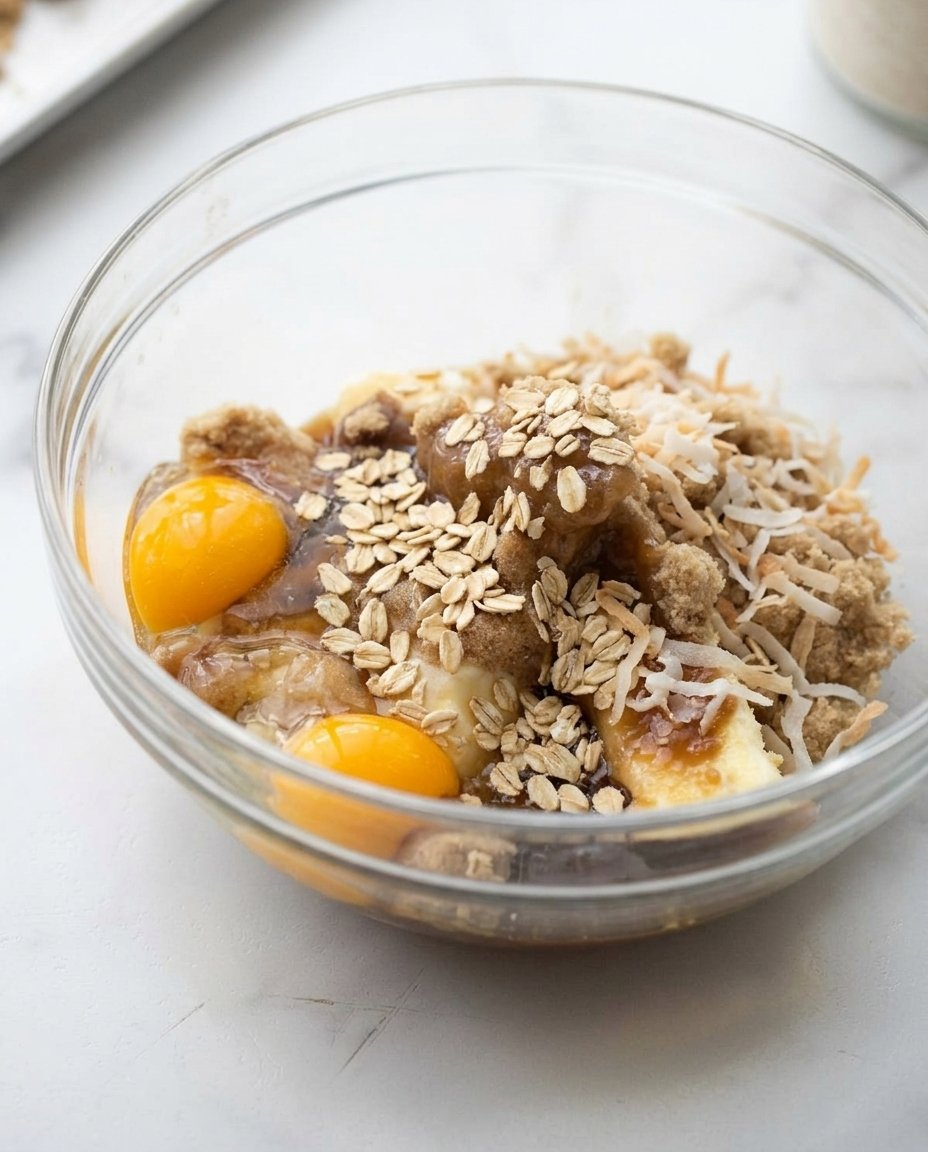
Every ingredient in these Oatmeal Coconut Cookies serves a specific structural purpose. We recommend using a digital scale to measure by grams (g) for the most accurate outcome.
- Butter (226g / 1 cup): Must be unsalted to control sodium levels. Ensure it is at a cool room temperature (65°F) for optimal aeration during the creaming phase.
- Granulated Sugar (200g / 1 cup) and Brown Sugar (220g / 1 cup): This ratio provides the perfect balance of crispness and chew. The brown sugar should be firmly packed.
- Large Eggs (100g / 2 eggs): These provide the protein structure and emulsifiers (lecithin) necessary to bind the fats and sugars.
- Vanilla Extract (10ml / 2 tsp): High-quality extract provides aromatic compounds that survive the thermal process.
- All-Purpose Flour (312g / 2 1/2 cups): Use a flour with approximately 11.7% protein content for the ideal gluten network.
- Salt (6g / 1 tsp): Essential for tempering the sweetness and accentuating the coconut’s natural sugars.
- Baking Soda (6g / 1 tsp) and Baking Powder (4g / 1 tsp): This combination provides both immediate lift and sustained leavening during the bake.
- Shredded Coconut (93g / 1 cup): Use sweetened or unsweetened depending on your preference; however, unsweetened provides more control over the final glycemic balance.
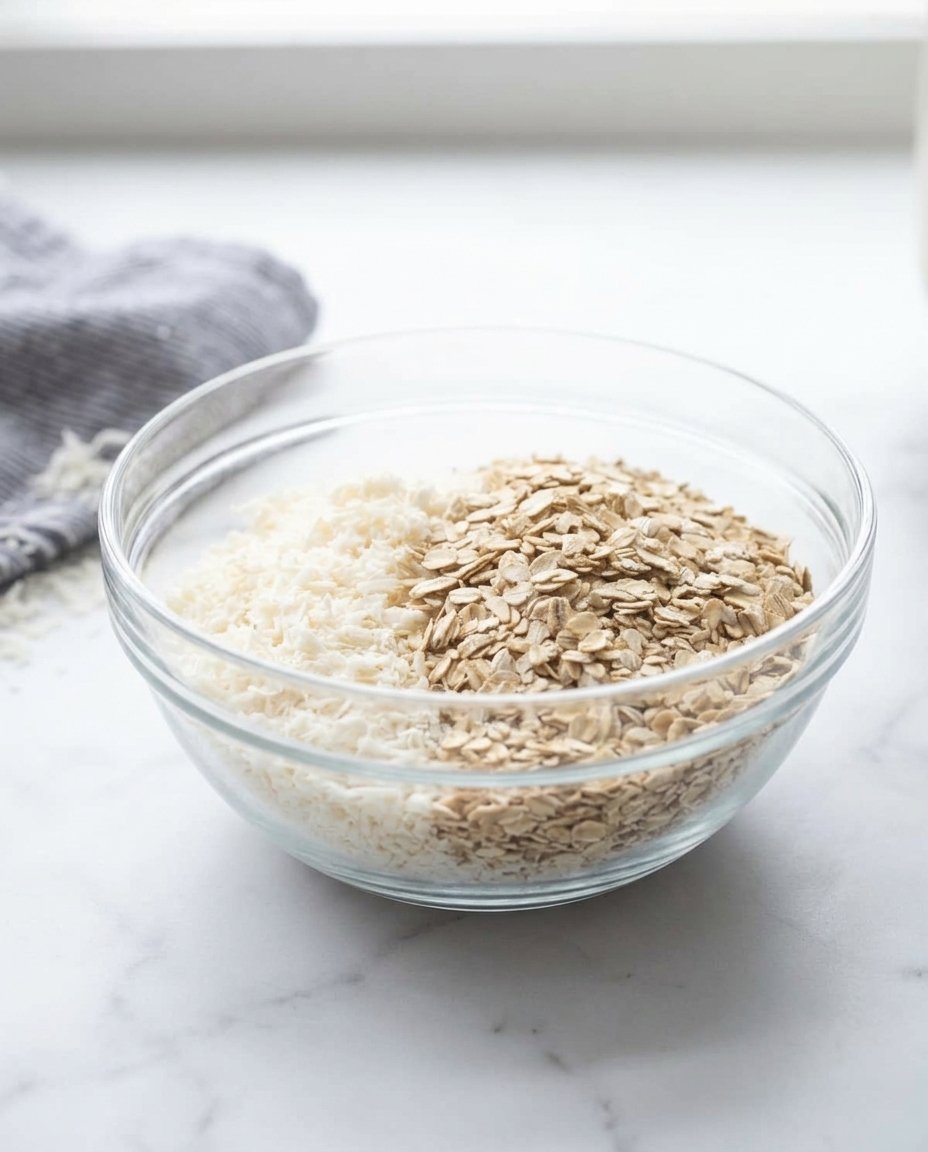
- Rolled Oats (180g / 2 cups): These provide the primary structure and ‘chew’ factor. Do not substitute with quick oats, as their absorption rate is too high and will lead to a dry cookie.
- Almond Extract (5ml / 1 tsp): Optional, but the benzaldehyde in almond extract scientifically complements the lactones in the coconut.
The Scientific Method
Step 1: Thermal Calibration and Prep
Preheat your oven to 350°F (177°C). Use an independent oven thermometer to verify the accuracy of your appliance, as even a 10-degree variance can alter the rate of spread. Lightly grease your baking sheets or use silicone mats for consistent heat distribution.
Step 2: The Emulsification Phase
In a stand mixer fitted with the paddle attachment, cream the 226g of butter with both sugars. You are looking for a physical change: the mixture should lighten in color and increase in volume as air is incorporated. Add the eggs one at a time, allowing the lecithin in the yolks to fully emulsify the fats. Incorporate the vanilla and optional almond extract at low speed.
Step 3: Dry Ingredient Integration
In a separate vessel, whisk together the flour, salt, baking soda, and baking powder. This ensures the leavening agents are distributed evenly, preventing ‘hot spots’ of chemical reaction. Gradually add this to the wet mixture on the lowest speed. Over-mixing at this stage will over-develop the gluten, resulting in a tough cookie rather than a tender one.
Step 4: Inclusion Incorporation
Fold in the rolled oats and shredded coconut by hand or on the lowest mixer setting. It is vital to stop as soon as the inclusions are distributed. This preserves the physical integrity of the oats, ensuring they remain whole and provide the desired tactile feedback in the finished product.
Step 5: Portioning and Baking
Spoon the dough into 30g portions onto the prepared sheets. The cookies should be spaced 2 inches apart to allow for proper airflow. Bake for 8 to 10 minutes. The visual cue for completion is a golden-brown perimeter with a center that still looks slightly under-baked. The internal temperature should reach 185°F (85°C).
Lauren’s Lab Notes
To achieve the perfect Oatmeal Coconut Cookies, temperature control is your most valuable tool. If your kitchen is warmer than 72°F, chill the portioned dough for 15 minutes before baking. This prevents the butter from melting faster than the flour proteins can set, which is a core principle in our Foundation Cookie Recipes. Additionally, we recommend using a heavy-gauge aluminum baking sheet to ensure even heat distribution. If you find your cookies are too flat, try increasing the flour by exactly 15g to strengthen the structure. For those looking for a deeper flavor, toasted coconut can be used to add nutty notes through the Maillard reaction. Always use a cooling rack to prevent steam from softening the bottoms of the cookies.
Tested Ratio Tweaks
If you prefer a crispier texture, you can modify the ratio by reducing the flour by 20g and increasing the granulated sugar by 20g. This encourages more spreading and a thinner, snappier cookie. For a more festive version, we have tested these as part of our Holiday Cookie Science series by adding 1/2 cup of dark chocolate chips (60% cacao). The bitterness of the chocolate provides a sophisticated contrast to the sweetness of the coconut. You may also substitute 50g of the all-purpose flour with whole wheat flour to increase the nutty profile, though this will require an additional 10ml of liquid to compensate for the higher absorption rate of the wheat bran.
Optimal Texture Enjoyment
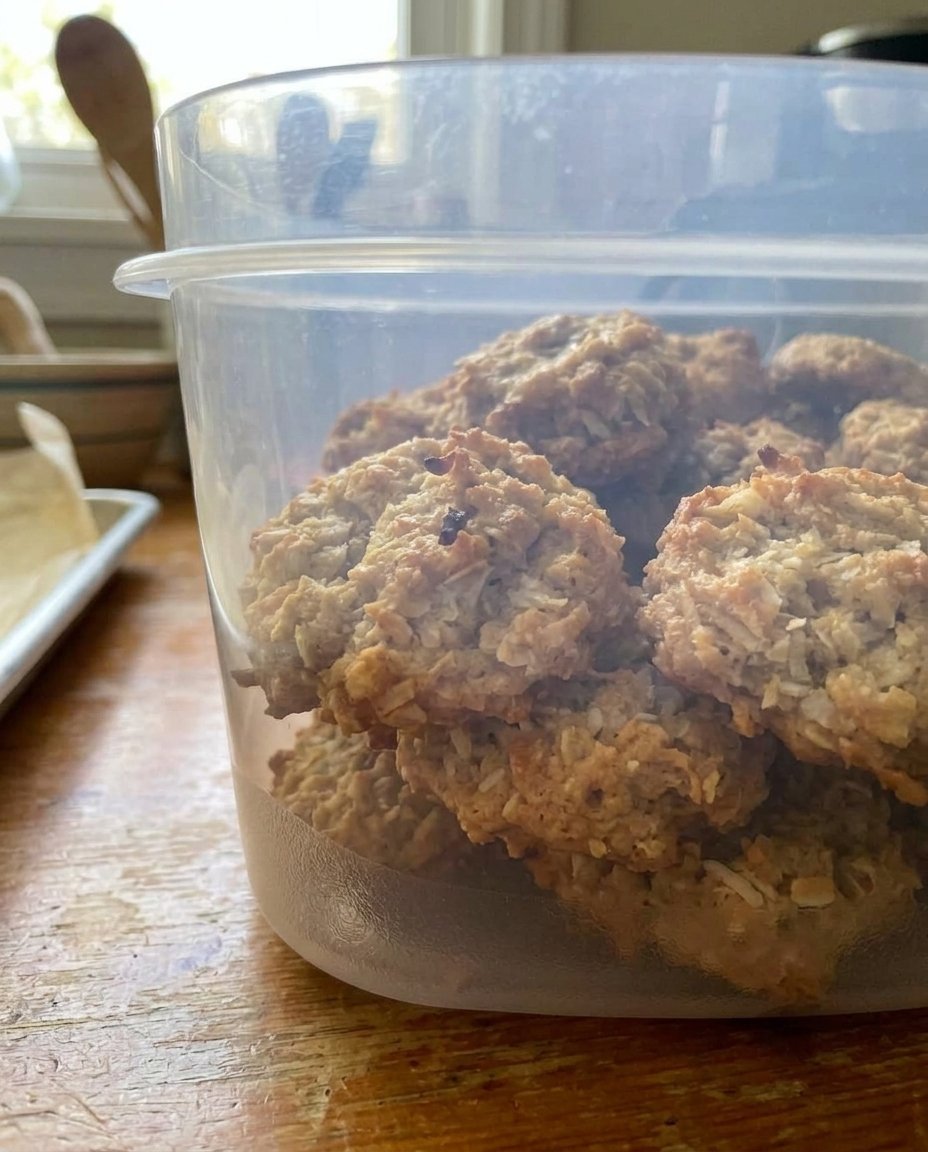
To experience the full range of textures in these Oatmeal Coconut Cookies, allow them to rest on the baking sheet for exactly 5 minutes after removal from the oven. This allows the internal structure to firm up while the residual heat finishes the center. For the most efficient results, follow our Efficient Cookie Methods to organize your cooling process. Serve these cookies at a temperature of approximately 75°F for the best flavor release. If you are serving them the next day, a brief 10-second reheat in a microwave can reactivate the fats in the coconut, returning the cookie to a ‘just-baked’ state with a soft, pliable crumb.
The Scientific Truth
Mastering these Oatmeal Coconut Cookies is a victory for any home baker who values precision and chemistry. By understanding how the fats and fibers interact, you have moved beyond simply following a recipe to truly controlling the outcome of your bake. We encourage you to keep testing these ratios and exploring our Viral Cookie Analysis for more deep dives into baking physics. Share your successful batches with us and join our community of precision bakers on Pinterest, Instagram, and Facebook. Keep testing, keep measuring, and enjoy the remarkable results of your scientific approach.