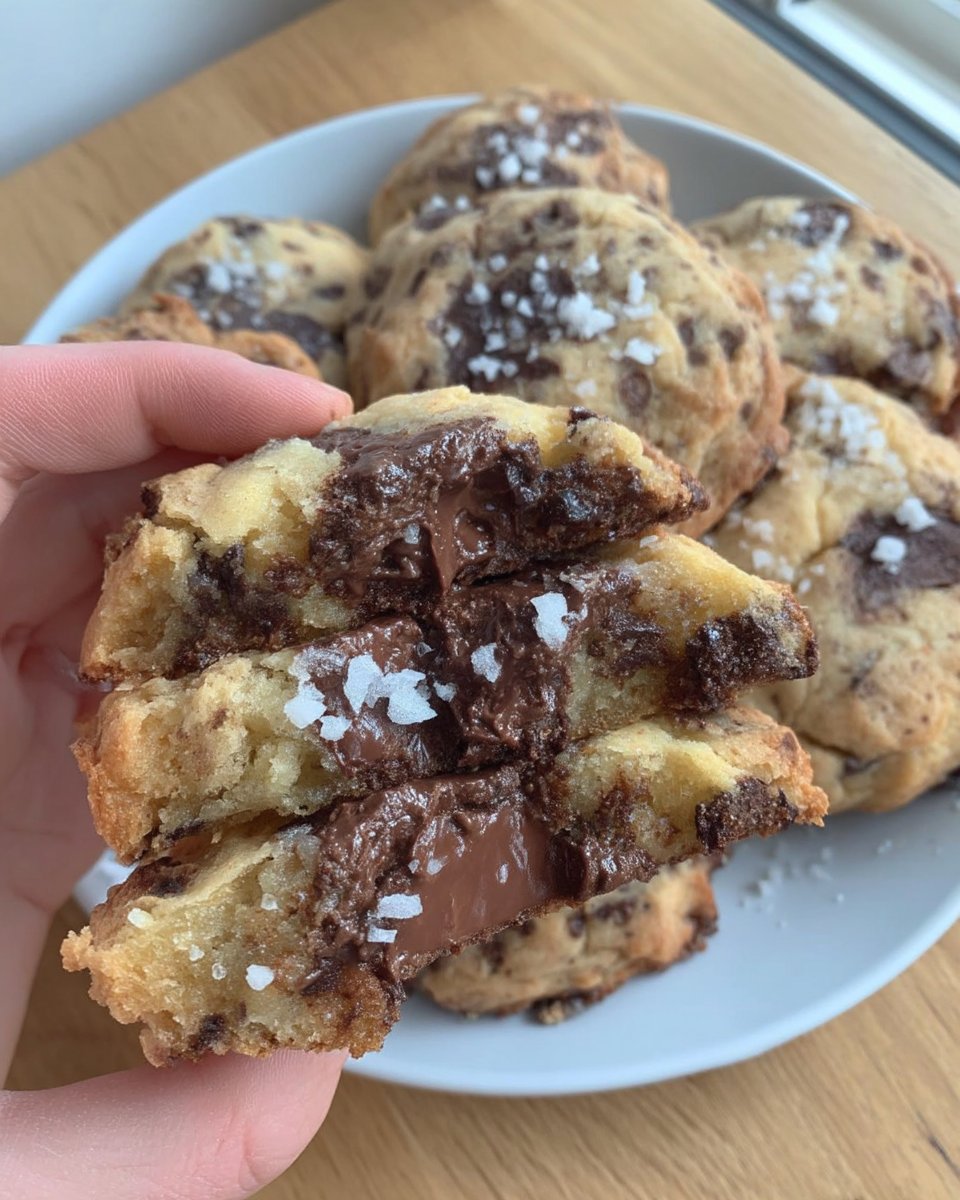
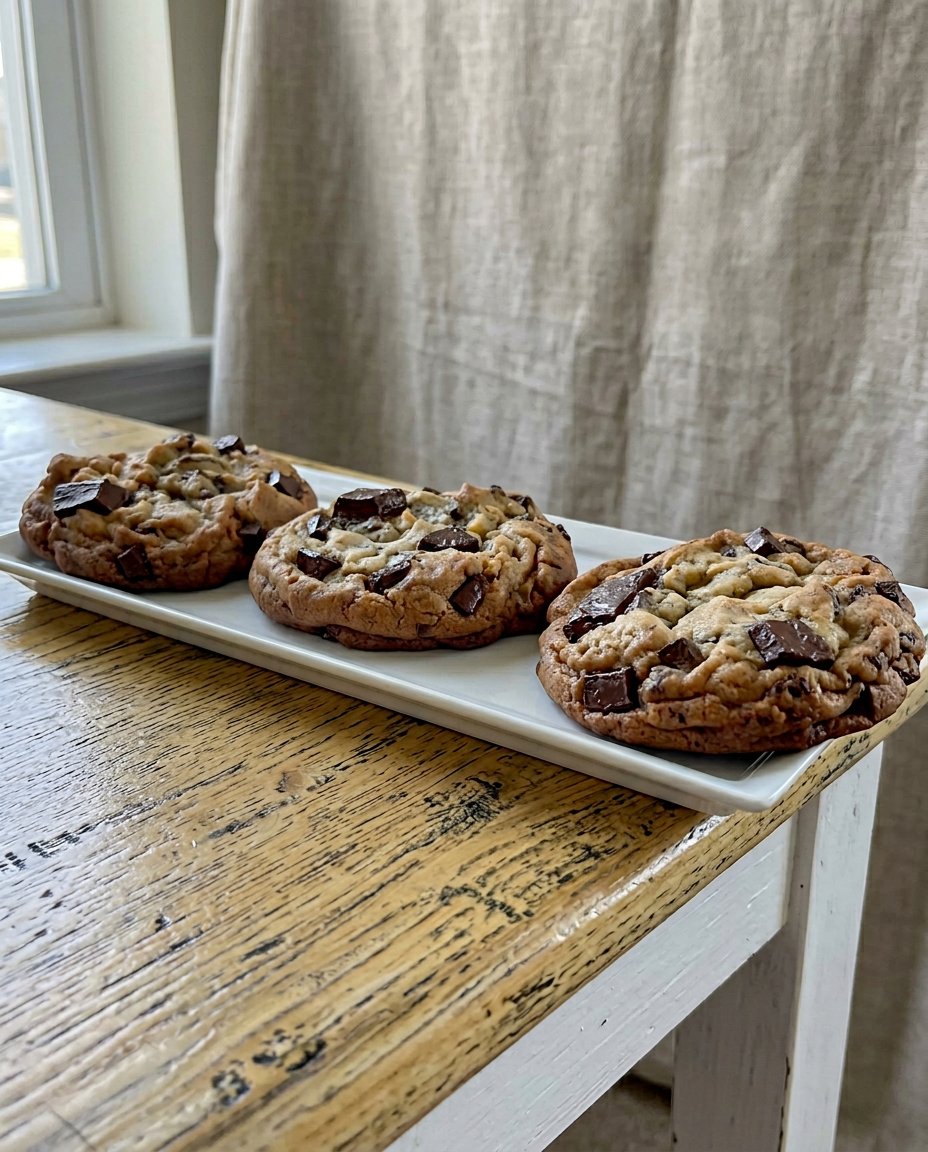
Victorian bakers in the North of England frequently relied on oats for their structural integrity and nutritional density in damp climates. They understood through intuition what modern science confirms: the beta-glucan in oats creates a unique moisture-binding property that results in a remarkably tender crumb when treated correctly. This recipe honors that tradition of grain-based excellence while applying the precise standards of a professional test kitchen.

These soft-baked oatmeal cream pies offer a sophisticated take on the American lunchbox classic. By utilizing unsulphured molasses and a specific creaming method, we achieve a texture that is both chewy and yielding without the need for a lengthy dough rest. The result is a sandwich biscuit that balances the rustic nature of toasted oats with a refined, airy cream filling.
The Tradition of the Perfect Sandwich Biscuit
You will appreciate this recipe because it moves beyond the sugary simplicity of store-bought snacks and focuses on the technical marriage of spice and texture. The inclusion of dark molasses provides a complexity of flavor that echoes the historical parkin cakes of Yorkshire, while the high ratio of brown sugar maintains a soft, pliable structure. Unlike many modern iterations, these cookies do not become brittle or dry after a single day.
The scientific reason this recipe succeeds lies in the hydration of the quick oats. Because quick oats have a greater surface area than whole rolled oats, they absorb moisture from the butter and egg more efficiently during the short bake time. This prevents the cookies from becoming “toothy” or overly fibrous, yielding a melt-in-the-mouth quality that is rare in oatmeal-based bakes. It is a triumph of ingredient selection meeting methodical execution.
Furthermore, the absence of a chilling step is not a shortcut but a calculated choice. The immediate baking at a higher temperature of 375°F (191°C) encourages a rapid set of the edges while the center remains underbaked. This creates a gradient of texture within a single cookie, providing a sturdy perimeter to hold the cream filling and a soft interior that merges with the frosting upon the first bite. It is a nostalgic treat treated with the respect of a grand patisserie.
Print
Oatmeal Cream Pies
- Total Time: 1 hour 45 mins
- Yield: 12 sandwich pies
- Diet: Vegetarian
Description
These soft-baked oatmeal cream pies feature a chewy, molasses-infused cookie paired with a light and airy buttercream filling. Utilizing quick oats and a precise creaming method, this recipe recreates a nostalgic lunchbox favorite with professional-grade texture and depth.
Ingredients
- 1 cup unsalted butter, softened
- 1 cup dark brown sugar, packed
- 1/2 cup granulated sugar
- 1 large egg, room temperature
- 1 teaspoon vanilla extract
- 1 tablespoon dark unsulphured molasses
- 1 1/2 cups all-purpose flour
- 1 teaspoon baking soda
- 1/2 teaspoon salt
- 1 teaspoon ground cinnamon
- 1/4 teaspoon ground cloves
- 3 cups quick oats
- 1/2 cup unsalted butter, softened (for filling)
- 2 cups confectioners’ sugar
- 2 tablespoons heavy cream, room temperature
- 1 teaspoon vanilla extract
- 1 pinch salt
Instructions
- Preheat your oven to 375°F (191°C) and line baking sheets with parchment paper.
- In a large bowl, cream together the softened butter, dark brown sugar, and granulated sugar on medium-high speed for approximately 3 minutes until well aerated.
- Add the room temperature egg, vanilla extract, and dark molasses, then beat on high speed for exactly 1 minute to create a stable emulsion.
- In a separate bowl, whisk together the all-purpose flour, baking soda, salt, cinnamon, cloves, and quick oats.
- Turn the mixer to the lowest setting and slowly add the dry ingredients to the wet mixture, mixing only until no streaks of flour remain.
- Scoop the dough into heaping 2-tablespoon portions (approximately 45 grams each) and arrange them 3 inches apart on the prepared baking sheets.
- Bake for 10 to 13 minutes until the edges are just turning golden brown while the centers remain remarkably soft.
- Allow the cookies to rest on the baking sheet for 10 minutes before moving them to a wire rack to cool completely.
- For the filling, beat the butter until pale and voluminous, then gradually add confectioners’ sugar, heavy cream, vanilla, and a pinch of salt; beat on high for 3 minutes.
- Once cookies are completely cool, pipe or spread the filling onto the flat side of one cookie and press another on top to form the sandwich.
Notes
To ensure your oatmeal cream pies have the perfect ‘yielding’ bite, allow the assembled sandwiches to rest for at least four hours before eating; this allows the moisture from the filling to soften the cookies. Always use quick oats rather than rolled oats to maintain the delicate structure required for a sandwich biscuit, and ensure your heavy cream is at room temperature to avoid breaking the buttercream emulsion.
- Prep Time: 20 mins
- Cook Time: 13 mins
- Category: Dessert
- Method: Baking
- Cuisine: American
Historical Ingredients and Proper Components
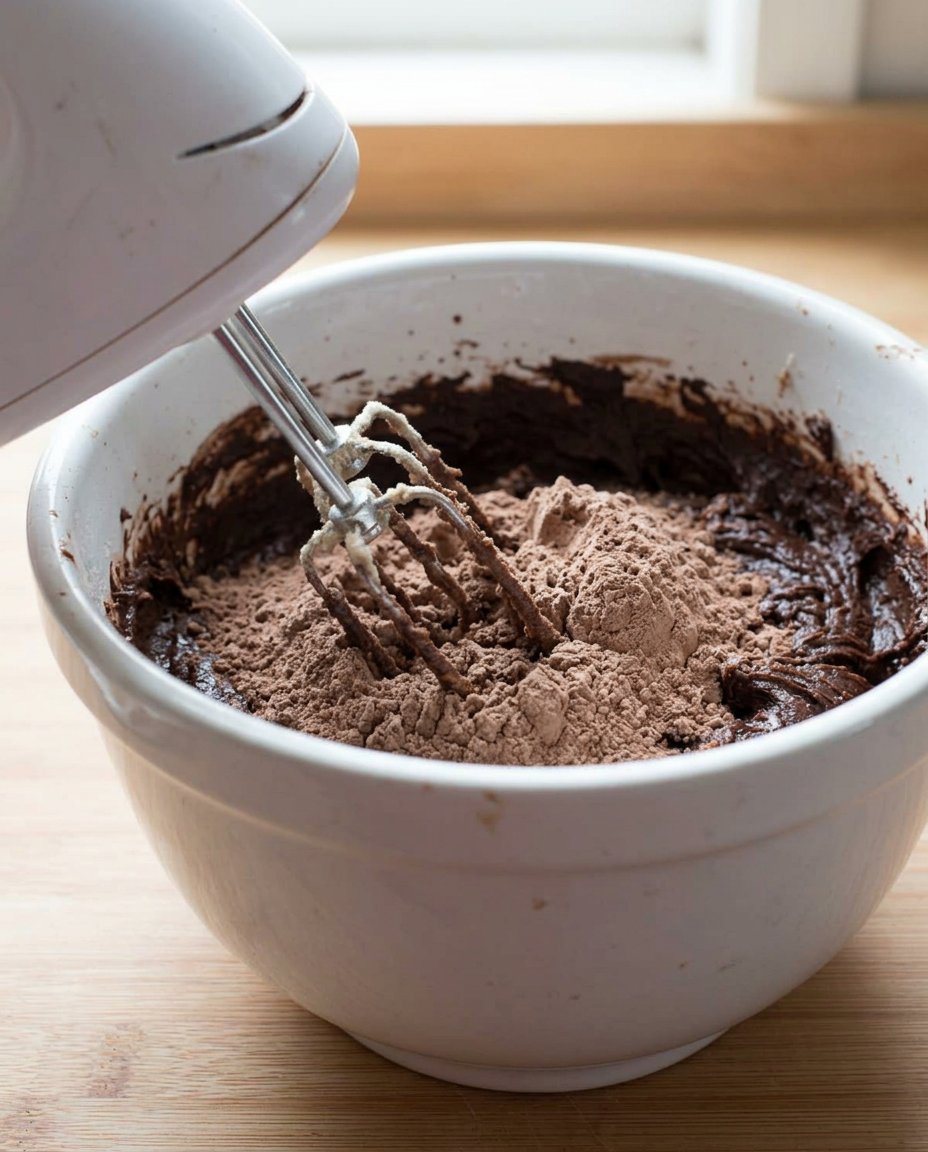
To achieve the specific structural integrity required for a sandwich biscuit, every component must be measured with precision. We use a combination of fats and sugars that have been tested to provide the maximum shelf life and the most authentic flavor profile.
- Unsalted Butter: We use room temperature butter to allow for proper aeration during the creaming stage. This creates the tiny air pockets that the baking soda will later expand.
- Dark Brown Sugar: This provides more than just sweetness; the increased molasses content makes the dough more hygroscopic, meaning it attracts and holds moisture.
- Unsulphured Molasses: This is the secret to the deep, historical flavor. Avoid blackstrap molasses, as its bitterness will overwhelm the delicate spices.
- Quick Oats: These are essential. Their smaller size allows them to integrate into the flour matrix without disrupting the delicate gluten structure we are trying to minimize.
- Cinnamon and Cloves: These spices are a nod to the Victorian spice trade, providing a warm, aromatic backbone that cuts through the richness of the cream.
For the filling, we use a high-ratio buttercream technique. The addition of heavy cream at room temperature is vital. If the cream is cold, it will break the emulsion of the butter, resulting in a grainy texture rather than the silk-smooth finish required for a professional cream pie.
The Proper Method for Classic Process
Step 1: Aerating the Fat and Sugars
Preheat your oven to 375°F (191°C). In a large bowl, combine the softened unsalted butter with the dark brown and granulated sugars. Using a paddle attachment, beat on medium-high speed for approximately three minutes. This step is not merely about mixing; it is about mechanical leavening. You are forcing air into the fat, which is a technique that dates back to the transition from hand-beaten cakes to the rise of the modern kitchen mixer. Scrape the bowl frequently to make sure every gram of sugar is incorporated.
Step 2: The Emulsion Stage
Add the room temperature egg, vanilla extract, and the tablespoon of dark molasses. Beat on high speed for exactly one minute. At this stage, you are creating an emulsion between the fats and the water content of the egg. The molasses adds a slight acidity which will react with the baking soda later, contributing to the lift and the darkening of the cookie through the Maillard reaction.
Step 3: Integrating the Dry Matrix
In a separate medium bowl, whisk together the all-purpose flour, baking soda, salt, cinnamon, cloves, and the quick oats. Turn your mixer to the lowest setting and slowly add these dry ingredients to the wet mixture. Do not overmix. As soon as no streaks of white flour remain, stop the mixer. Overworking the dough at this stage would develop the gluten, leading to a tough, bread-like cookie rather than the tender biscuit we desire.
Step 4: Portioning for Precision
Scoop the dough into heaping portions of approximately two tablespoons each. For those using a kitchen scale, each ball should weigh exactly 45 grams. Arrange them on a parchment-lined sheet three inches apart. This spacing is critical, as the high sugar content will cause the cookies to spread. The lack of chilling allows the butter to begin melting immediately in the oven, encouraging that iconic flat, soft shape.
Step 5: The Controlled Bake
Bake for 10 to 13 minutes. The edges should be just starting to turn a golden brown, but the centers must look remarkably soft and almost underdone. This is a deliberate technique. The residual heat from the baking sheet will finish the cooking process as they cool. Allow them to rest on the sheet for 10 minutes before moving them to a wire rack. This prevents the structure from collapsing before the starches have set.
Step 6: Crafting the Silk Cream Filling
While the cookies cool completely, prepare the filling. Beat the butter until it is pale and voluminous. Add the confectioners’ sugar in stages to avoid a cloud of dust, then pour in the heavy cream and vanilla. Beat on high for three minutes until the mixture resembles a cloud. The addition of a pinch of salt is a professional touch that balances the glucose levels, making the sandwich feel lighter on the palate.
Jordan’s Technique Notes and Precision Methods
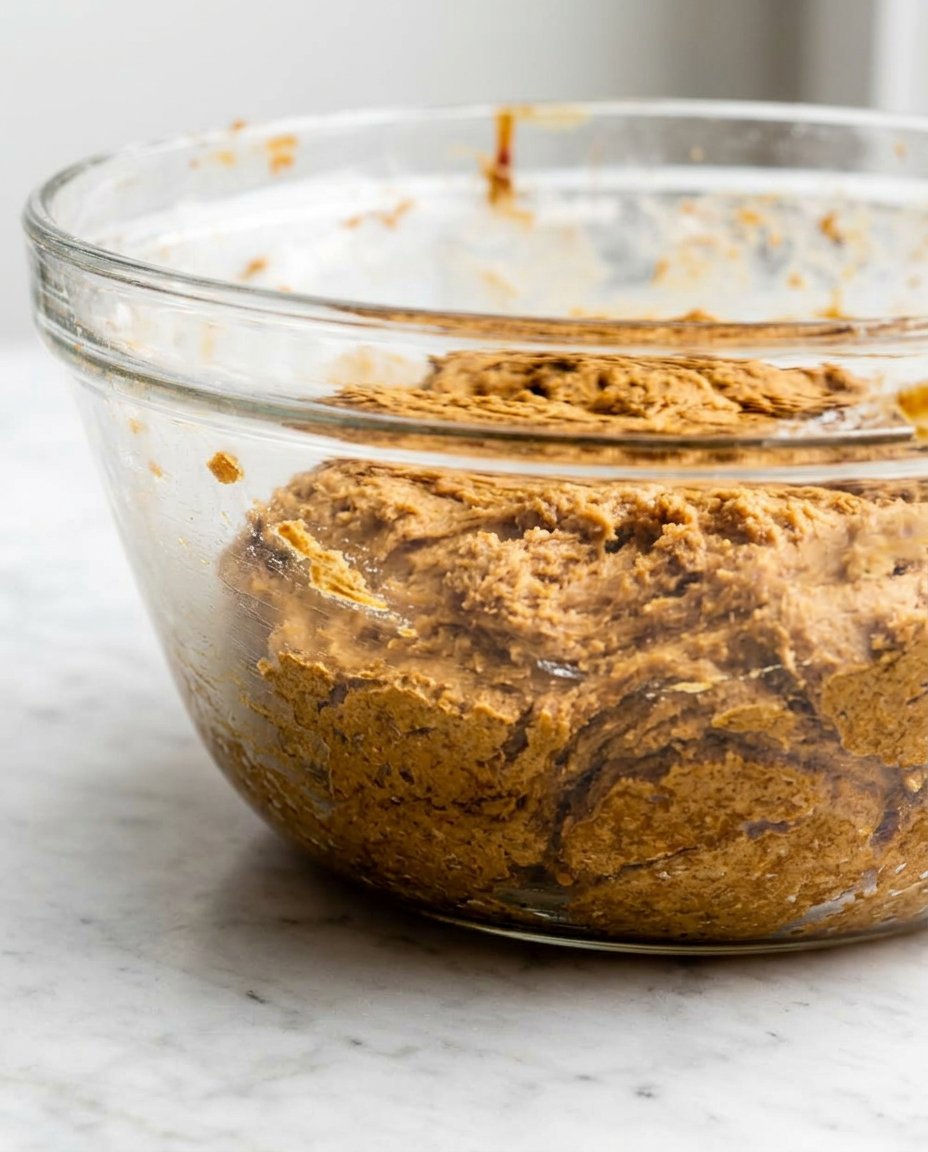
To achieve the most consistent results, always use a kitchen scale for your dry ingredients. Flour measurement is the most common point of failure in home baking; spooning and leveling is a decent approximation, but weight is the only true standard. For a deeper understanding of why these measurements matter, you can look into our efficient cookie methods to see how small changes in mass affect the final spread.
Another technical secret involves the temperature of your heavy cream. Cold cream will seize the butter in your filling, creating small lumps that are impossible to beat out. Always bring your cream to room temperature by leaving it on the counter for 30 minutes or by warming it very briefly in a bowl of lukewarm water. This confirms a stable emulsion that will hold its shape between the cookies without squishing out the sides when you take a bite.
Regional Differences and Tested Adaptations
While the classic oatmeal cream pie is a staple of the American South and Midwest, you can adapt the flavor profile to reflect different historical traditions. For a British-inspired version, replace the cinnamon and cloves with a blend of ground ginger and a hint of black pepper, similar to a traditional ginger nut biscuit. This creates a sharper flavor profile that pairs beautifully with a strong black tea. You can learn more about spice interactions in our holiday cookie science section.
For those who prefer a more textured filling, you can fold in finely chopped toasted pecans or walnuts. Historically, many Victorian biscuits included nuts for added protein and crunch. If you choose this path, make sure the nuts are chopped to a fine meal so they do not disrupt the piping or spreading of the cream. Another tested variation is the use of brown butter in the cookie dough, which adds a nutty, toasted aroma that complements the oats perfectly.
Traditional Service and Classic Enjoyment
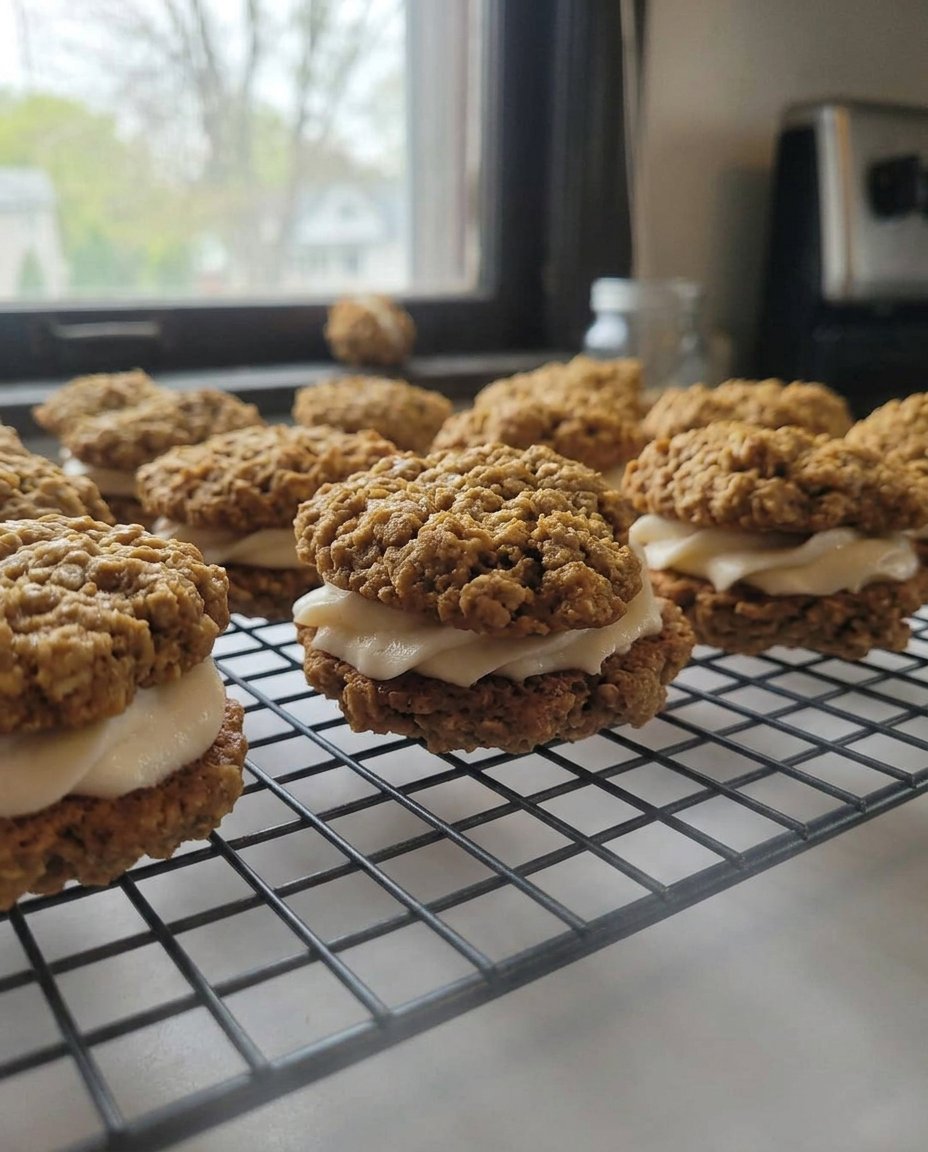
To enjoy these cookies at their peak, I recommend allowing the assembled sandwiches to sit for at least four hours before serving. This allows for a process called moisture migration, where the moisture from the cream filling moves into the drier cookie. This softens the entire structure, turning it into a unified, cohesive dessert. This is the same principle applied in precision cookie decorating where royal icing must set to become part of the cookie’s texture.
Serve these cookies alongside a glass of cold whole milk or a pot of Earl Grey tea. The tannins in the tea provide a necessary astringency that clears the palate of the rich buttercream and molasses. If serving at a gathering, arrange them on a chilled marble slab to keep the filling firm, especially in warmer climates where the butter-based cream might soften too quickly.
The Technical Truth and Classic Precision
Mastering the oatmeal cream pie is a lesson in the balance of moisture and grain. By respecting the historical roots of the oat biscuit and applying modern scientific testing to the creaming and baking stages, you can create a treat that far exceeds any commercial alternative. This recipe proves that when we understand the ‘why’ behind our methods, the ‘how’ becomes a rewarding exercise in culinary precision. For more foundational techniques that will serve you in all your baking endeavors, visit our guide on foundation cookie recipes.
If you found this technical breakdown helpful, please share your results with our community of methodical bakers. You can find us on Facebook, Pinterest, and Instagram. We look forward to seeing your perfectly aerated cream pies.