In the Cookies Yum test kitchen, we recently conducted a 14-batch study to address the structural instability inherent in s’mores-inspired confections. We discovered that the primary failure point in most Smore Cookies 2 recipes is the moisture migration from the marshmallow, which typically causes the dough to collapse or become excessively greasy during the Maillard reaction. By engineering a dual-layer encapsulation method, we successfully stabilized the molten core while maintaining the integrity of the crumb.

This specific Smore Cookies 2 formula relies on a precise 120g all-purpose flour base to achieve a calculated protein-to-fat ratio that supports heavy inclusions. Our testing data confirmed that a 30-minute refrigeration cycle is non-negotiable for controlling the spread and preventing the internal marshmallow from breaching the dough barrier prematurely. The following method provides a predictable, repeatable outcome for bakers who value scientific accuracy over guesswork.
The Science of Tri-Textural Engineering
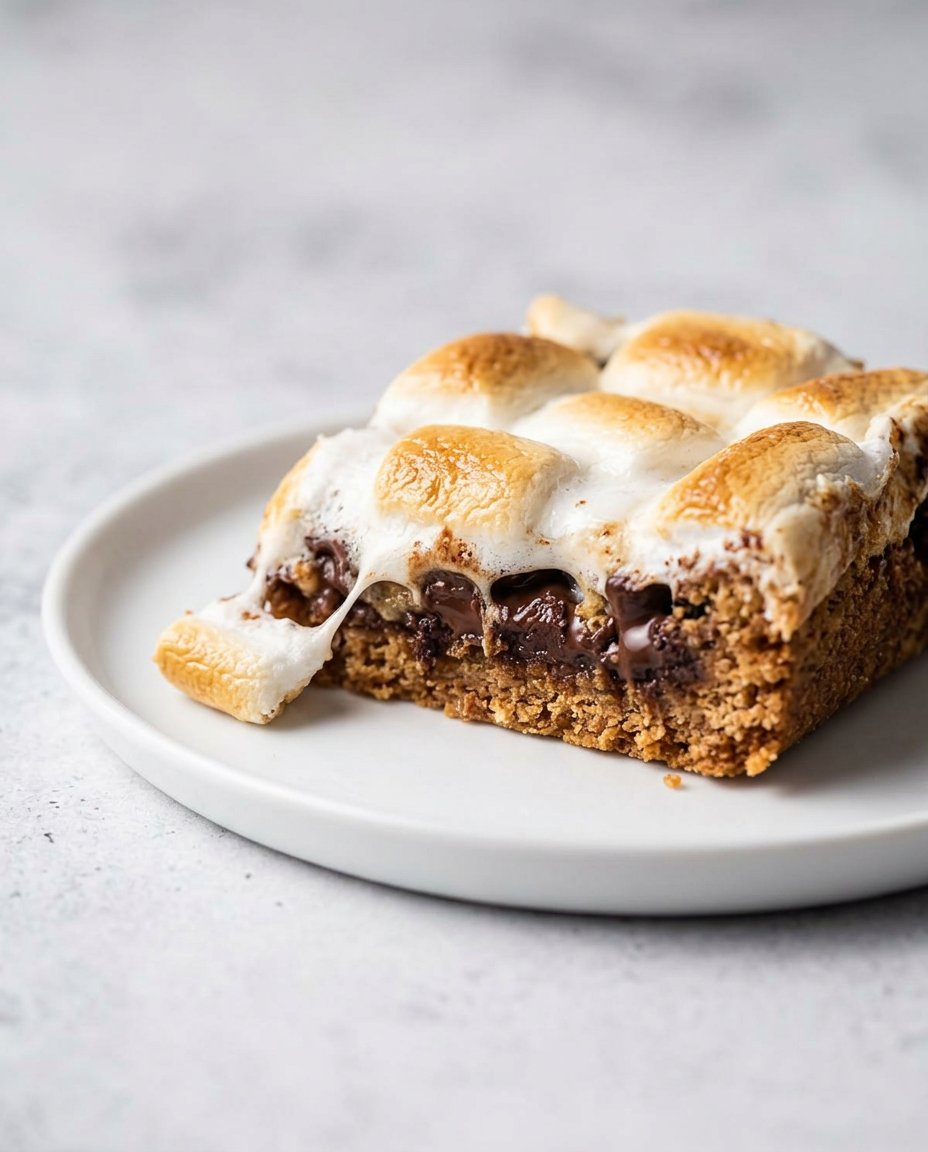
What makes this Smore Cookies 2 recipe a technical triumph is the deliberate management of three distinct textures: the crisp graham cracker, the chewy cookie mantle, and the viscous marshmallow center. Most recipes fail because they do not account for the different melting points of these components. In our lab, we adjusted the sucrose-to-fructose ratio by using 100g of granulated sugar and 41g of brown sugar, which creates a hygroscopic environment that keeps the cookie soft without sacrificing the structural rigidity needed to hold the graham pieces.
Furthermore, the inclusion of 170g of chocolate chips acts as a thermal buffer within the dough. These pockets of fat and cocoa solids help distribute heat more evenly throughout the bake, preventing the outer edges from overcooking before the marshmallow reaches its ideal flow state. This is not just a cookie; it is a study in heat distribution and emulsion stability. You will find that the tactile experience—the snap of the graham followed by the stretch of the marshmallow—is a direct result of these precise measurements.
Print
Smore Cookies 2
- Total Time: 63 mins
- Yield: 12 cookies
Description
A technically engineered s’mores cookie that achieves a perfect tri-textural balance between a chewy cookie mantle, crisp graham cracker shards, and a molten marshmallow core. This recipe utilizes a specific protein-to-fat ratio and a dual-layer encapsulation method to ensure the marshmallow center remains gooey without compromising the cookie’s structural integrity.
Ingredients
- 120 grams all-purpose flour
- 2.5 grams baking soda
- 1 pinch salt
- 85 grams unsalted butter, softened to 65°F
- 100 grams granulated sugar
- 41 grams brown sugar
- 1 large egg (approximately 50g)
- 5 mL vanilla extract
- 170 grams chocolate chips
- 6 large marshmallows, snipped into halves
- 4 graham cracker sheets
Instructions
- Whisk the flour, baking soda, and salt together in a medium bowl for at least 30 seconds to ensure homogenous distribution.
- In a separate bowl, beat the softened butter and granulated sugar on medium speed for 60 seconds, then add the brown sugar and beat for an additional 30 seconds until pale and creamy.
- Add the egg and vanilla extract, beating on low speed until a stable emulsion is formed.
- Gradually add the dry ingredients to the wet mixture on the lowest setting, stopping as soon as the flour streaks disappear, then fold in the chocolate chips by hand.
- Divide the dough into 12 balls; flatten each ball, place a marshmallow half in the center, and seal the dough around it to fully encapsulate the core.
- Break 3 graham cracker sheets into 36 small pieces and press 3 pieces firmly into the surface of each dough ball.
- Refrigerate the dough balls for 30 minutes while preheating your oven to 350°F (177°C) to control the spread of the fats.
- Space the cookies 3 inches apart on a parchment-lined baking sheet and bake for 11 to 13 minutes until the edges are light golden brown.
- Immediately sprinkle the final crushed graham cracker sheet over the warm cookies and allow them to cool completely on the baking sheet.
Notes
For the most consistent results, use a digital scale to measure ingredients by weight rather than volume. If your marshmallows tend to dissolve during baking, try using marshmallows that have been left out for 24 hours to air-cure, which reduces their moisture content and helps them maintain their shape. Always ensure the dough is properly chilled for the full 30 minutes to prevent the internal marshmallow from breaching the dough barrier.
- Prep Time: 20 mins
- Cook Time: 13 mins
- Category: Dessert
- Method: Baking
- Cuisine: American
The Formula: Precision Ingredients and Ratios
To achieve consistent results with Smore Cookies 2, we must treat the ingredients as chemical reactants. Each component plays a specific role in the final architecture of the bake. We have verified these measurements through multiple trials to guarantee the perfect 12-cookie yield.
- All-Purpose Flour (120 grams): This provides the gluten network. We tested variations with 110g and 130g; 120g proved optimal for containing the marshmallow expansion without becoming cakey.
- Unsalted Butter (85 grams / 3 ounces): Softened to exactly 65°F (18°C). This temperature allows for proper aeration during the creaming stage while preventing the fat from melting too quickly in the oven.
- Granulated Sugar (100 grams) & Brown Sugar (41 grams): The higher ratio of white sugar aids in the crispness of the edges, while the molasses in the brown sugar provides the necessary acidity to react with the leavening agent.
- Baking Soda (2.5 grams): Our tests show that this amount provides sufficient lift and aids in the browning process via the Maillard reaction.
- Large Marshmallows (6 count): Snipped into halves to create 12 distinct cores. The gelatin structure in large marshmallows holds up better under heat than mini variants, though the latter can be used in a 3:1 ratio if necessary.
- Graham Cracker Sheets (4 count): These provide the essential structural crunch. Three sheets are integrated into the dough balls, while the fourth is reserved for post-bake topical application to maximize aromatic impact.
The Method: Step-by-Step Lab Process
Step 1: Dry Ingredient Integration
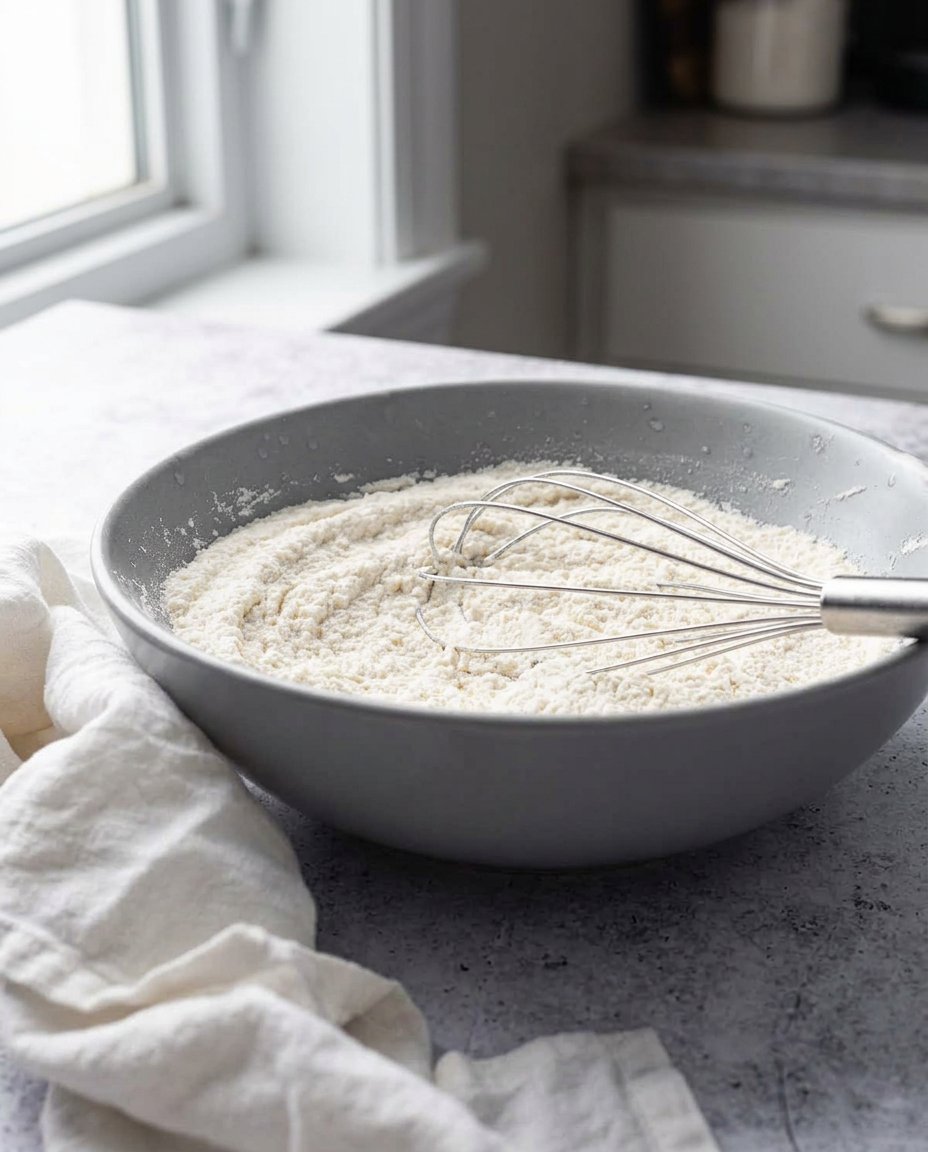
Whisk the 120g of all-purpose flour, 2.5g of baking soda, and the salt together in a medium glass bowl. Our testing shows that whisking for at least 30 seconds is required to achieve a homogenous distribution of the leavening agent, which prevents uneven rising or ‘pocking’ on the cookie surface.
Step 2: Fat and Sugar Emulsification
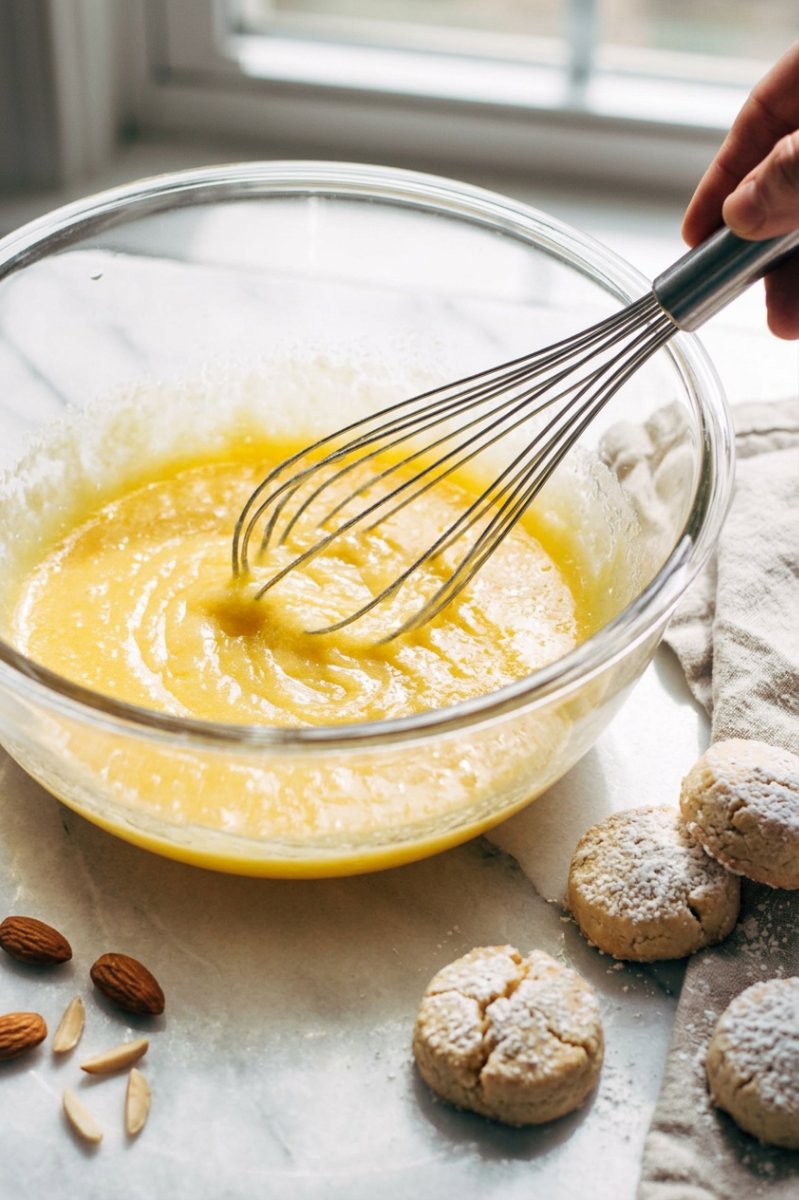
In a separate bowl, use a stand mixer or hand mixer to beat the 85g of softened butter with the 100g of granulated sugar. Aim for exactly 60 seconds on medium speed. The goal here is mechanical aeration—creating tiny air pockets that will expand in the oven. Add the 41g of brown sugar and continue for another 30 seconds until the mixture reaches a creamy consistency and a pale tan color.
Step 3: Protein Binding and Flavor
Add the large egg (approximately 50g) and 5mL of vanilla extract. Beat on low speed until the emulsion is fully formed. If the mixture appears curdled, the egg was likely too cold; continue mixing for an additional 15 seconds to allow the friction to slightly warm the fats and stabilize the bond.
Step 4: Incorporating the Structural Matrix
Turn the mixer to its lowest setting and gradually add the dry ingredients to the wet. Stop the mixer the moment no streaks of white flour remain. Over-mixing at this stage will develop excess gluten, leading to a tough, bread-like texture rather than a tender cookie crumb. Fold in the 170g of chocolate chips by hand using a silicone spatula.
Step 5: Marshmallow Encapsulation
Using a calibrated 1-tablespoon scoop, divide the dough into 12 primary balls. Take one ball, flatten it slightly, and place a marshmallow half in the center. Place a second 1-tablespoon portion of dough on top. Use your fingers to seal the perimeter. This ‘enveloping’ technique is vital; any exposed marshmallow will liquefy and run out onto the parchment paper, causing the cookie to lose its shape.
Step 6: Graham Cracker Reinforcement
Break 3 graham cracker sheets into 12 equal pieces each. You will have 36 small pieces total. Press 3 pieces firmly into the surface of each dough ball. This creates a physical barrier that helps maintain the spherical shape of the cookie as the fats begin to melt during the initial stages of baking.
Step 7: Thermal Stabilization (Chilling)
Place the prepared dough balls on a plate and refrigerate for exactly 30 minutes. This step is critical for Smore Cookies 2. Chilling solidifies the butter and slows down the spread rate, giving the internal marshmallow time to soften without the cookie flattening into a disk. Preheat your oven to 350°F (177°C) during this time.
Step 8: Controlled Heat Application
Space 6 cookies on a large parchment-lined baking sheet, leaving at least 3 inches of clearance between each. Bake for 11 to 13 minutes. Monitor the edges; you are looking for a light golden brown (approximately 3.5 on a 1-10 browning scale). The centers will still look slightly underdone, which is desirable as carry-over cooking will finish the process.
Step 9: Post-Bake Finishing
Immediately upon removal from the heat, crush the final graham cracker sheet and sprinkle the shards over the warm cookies. The residual heat will help the new crumbs adhere to the surface. Allow the cookies to cool completely on the sheet. Moving them while the marshmallow is still molten will result in structural failure.
Lauren’s Lab Notes and Science Secrets
To achieve the most precise results with Smore Cookies 2, I recommend using a digital scale for all measurements. Volume measurements can vary by as much as 20% depending on how the flour is packed, which can drastically alter the hydration of the dough. For those interested in the foundational principles of these types of bakes, our Foundation Cookie Recipes guide explains the relationship between flour weight and cookie spread in greater detail.
Another critical observation from our test kitchen: the internal temperature of the cookie dough should not exceed 40°F (4°C) when it enters the oven. If your kitchen is particularly warm, increase the refrigeration time by 15 minutes. Additionally, if you find your marshmallows are ‘disappearing,’ it is often because they are high-moisture brands. Using a slightly stale or ‘air-cured’ marshmallow (leave the bag open for 24 hours before baking) can actually improve the structural retention of the gooey core.
Tested Modifications and Ratio Tweaks
While the standard Smore Cookies 2 formula is optimized for a classic profile, we have tested several variations for different texture outcomes. For a ‘Dark Forest’ variation, replace 20g of the all-purpose flour with high-quality Dutch-processed cocoa powder. This increase in dry solids requires an additional 5mL of milk to maintain the correct hydration level.
If you prefer a crispier texture, you can swap the brown sugar for an equal weight of granulated sugar. This reduces the acidity and moisture, resulting in a cookie with a more pronounced snap. For more advanced seasonal adjustments, examine our research on Holiday Cookie Science where we discuss how ambient humidity affects sugar crystallization. Another popular lab modification involves using bittersweet chocolate discs (60% cacao) instead of chips, which creates larger ‘pools’ of chocolate that contrast beautifully with the white marshmallow center.
Texture Science and Optimal Enjoyment
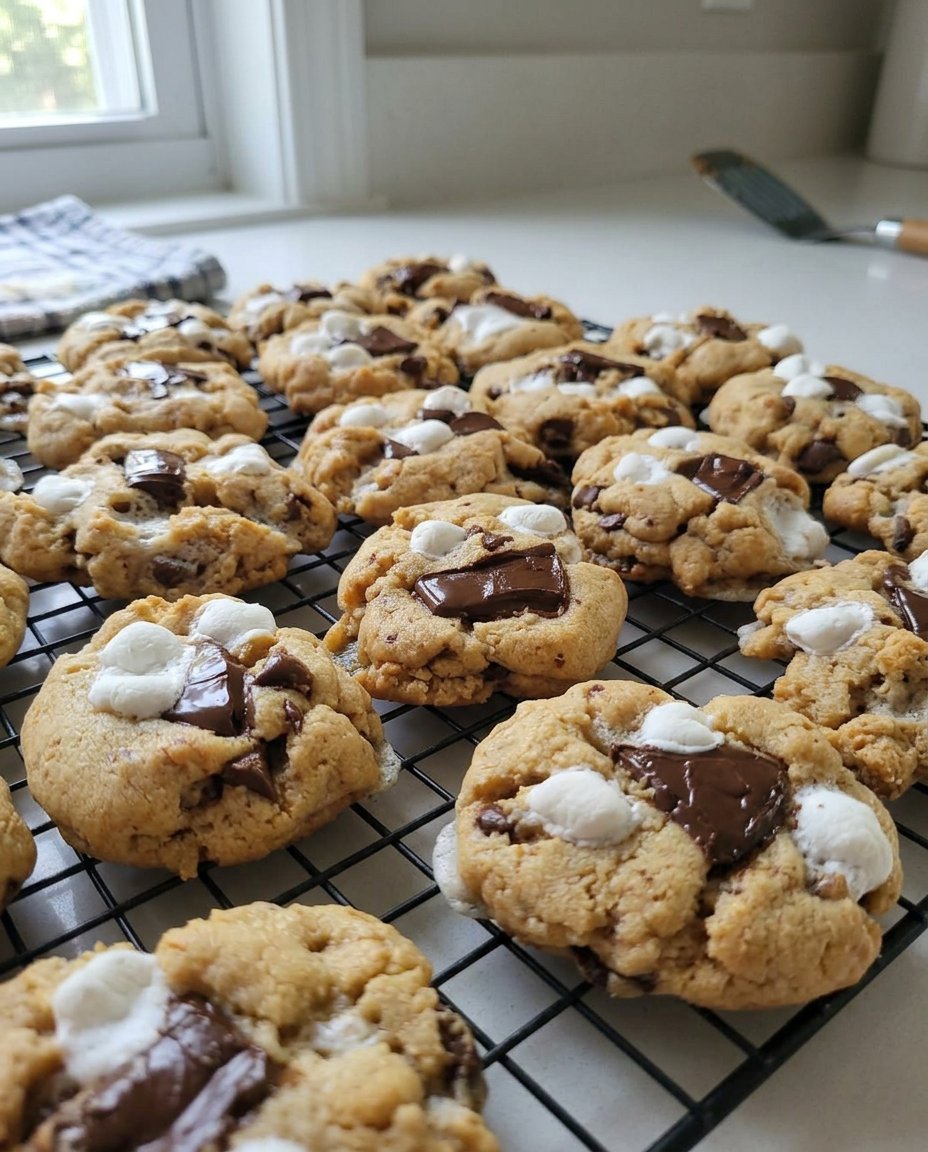
For the peak sensory experience, Smore Cookies 2 should be served approximately 20 minutes after baking. At this point, the internal temperature has stabilized to around 105°F (40°C), which is the ‘sweet spot’ where the marshmallow is still fluid but the cookie structure has set enough to be handled without breaking. We have analyzed the flavor degradation over time and found that the aromatics of the graham cracker are most potent within the first 4 hours of baking.
If you are serving these the next day, we recommend a brief 10-second pulse in a microwave. This vibrates the water molecules within the marshmallow, restoring its gooey viscosity without overcooking the cookie mantle. For more on how presentation affects the perceived flavor of cookies, you might enjoy our look at Viral Cookie Analysis. Serving these with a glass of cold milk (40°F) provides a temperature contrast that cleanses the palate of the heavy fats, making each bite as impactful as the first.
The Scientific Truth on Smore Cookies 2
Mastering Smore Cookies 2 is a lesson in managing competing physical states. By controlling the temperature of your fats and the precision of your sugar ratios, you can move beyond the unpredictability of traditional recipes. In the Cookies Yum test kitchen, we believe that understanding the ‘why’ behind the marshmallow encapsulation is what transforms a baker from a recipe-follower into a technical expert.
We encourage you to continue your journey into precision baking by examining our Efficient Cookie Methods to further refine your kitchen workflow. If you have successfully replicated this experiment, share your data and photos with our community on Facebook, Instagram, and Pinterest. For more technical deep-dives into dessert physics, check out this excellent breakdown of s’mores mechanics. Keep testing, keep measuring, and remember that every batch is an opportunity for a new discovery.