The Raspberry Thumbprint finds its heritage in the nineteenth-century Swedish ‘hallongrotta,’ or raspberry cave. Victorian bakers perfected this method of creating a structural vessel for fruit preserves using a rich, shortbread-style dough. This specific Raspberry Thumbprint technique relies on the traditional creaming method to achieve a delicate crumb that remains firm enough to support the jam center.

Modern testing confirms that the ratio of fat to flour in this Raspberry Thumbprint recipe creates a stable emulsion that resists spreading. By using British-style precision in measurement, we achieve a consistent texture that balances the tartness of the raspberry with the floral notes of almond. The following method ensures each biscuit retains its shape while providing a melt-in-the-mouth experience.
A Legacy of Texture and Taste
This Raspberry Thumbprint represents a pinnacle of biscuit engineering, combining the structural integrity of a traditional shortbread with the vibrant moisture of fruit preserves. Bakers have long appreciated this method because it requires no chemical leavening, relying instead on the mechanical aeration of butter and sugar. This results in a dense yet tender crumb that does not compete with the flavor of the jam.
The inclusion of almond extract provides a historical nod to the marzipan traditions of Northern Europe. Scientifically, the benzaldehyde in the almond extract complements the ketones in the raspberries, creating a more complex flavor profile than vanilla alone could provide. It is a reliable choice for those who value methodical baking and consistent results.
Furthermore, the small scale of these biscuits follows the British tradition of ‘one-bite’ dainties. This ensures that the ratio of glaze, jam, and dough remains perfectly balanced in every mouthful. You are not simply making a cookie; you are reproducing a tested piece of culinary history that has survived because its proportions are mathematically sound.
Print
Raspberry Thumbprint
- Total Time: 30 mins
- Yield: 24 cookies
- Diet: Vegetarian
Description
These elegant Raspberry Thumbprint cookies combine a buttery, melt-in-your-mouth shortbread base with a vibrant seedless jam center. Infused with aromatic almond extract and finished with a delicate sweet glaze, they are a sophisticated addition to any dessert platter.
Ingredients
- 1 cup Unsalted butter, softened
- 2/3 cup Granulated sugar
- 1/2 teaspoon Almond extract (for dough)
- 260 grams All-purpose flour
- 1/2 cup Seedless raspberry jam
- 1 cup Powdered sugar, sifted
- 1/2 teaspoon Almond extract (for glaze)
- 2–3 teaspoons Water
Instructions
- Preheat your oven to 350℉ (175℃) and line baking sheets with parchment paper.
- In a stand mixer, cream the softened butter, granulated sugar, and 1/2 teaspoon almond extract on medium speed for two minutes until light and fluffy.
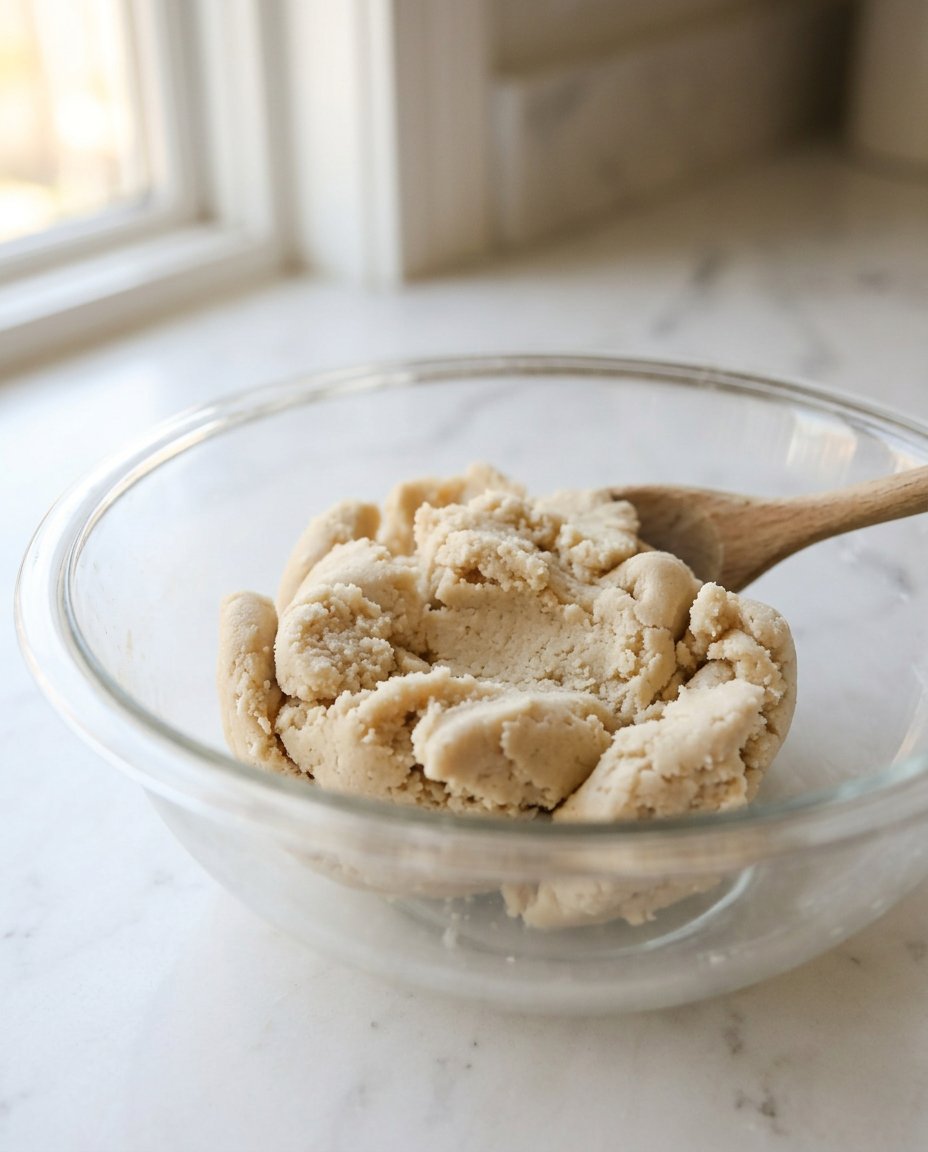
- Turn the mixer to the lowest setting and gradually add the flour, mixing only until the white streaks disappear.
- Roll the dough into uniform balls approximately one inch in diameter and place them two inches apart on the prepared sheets.
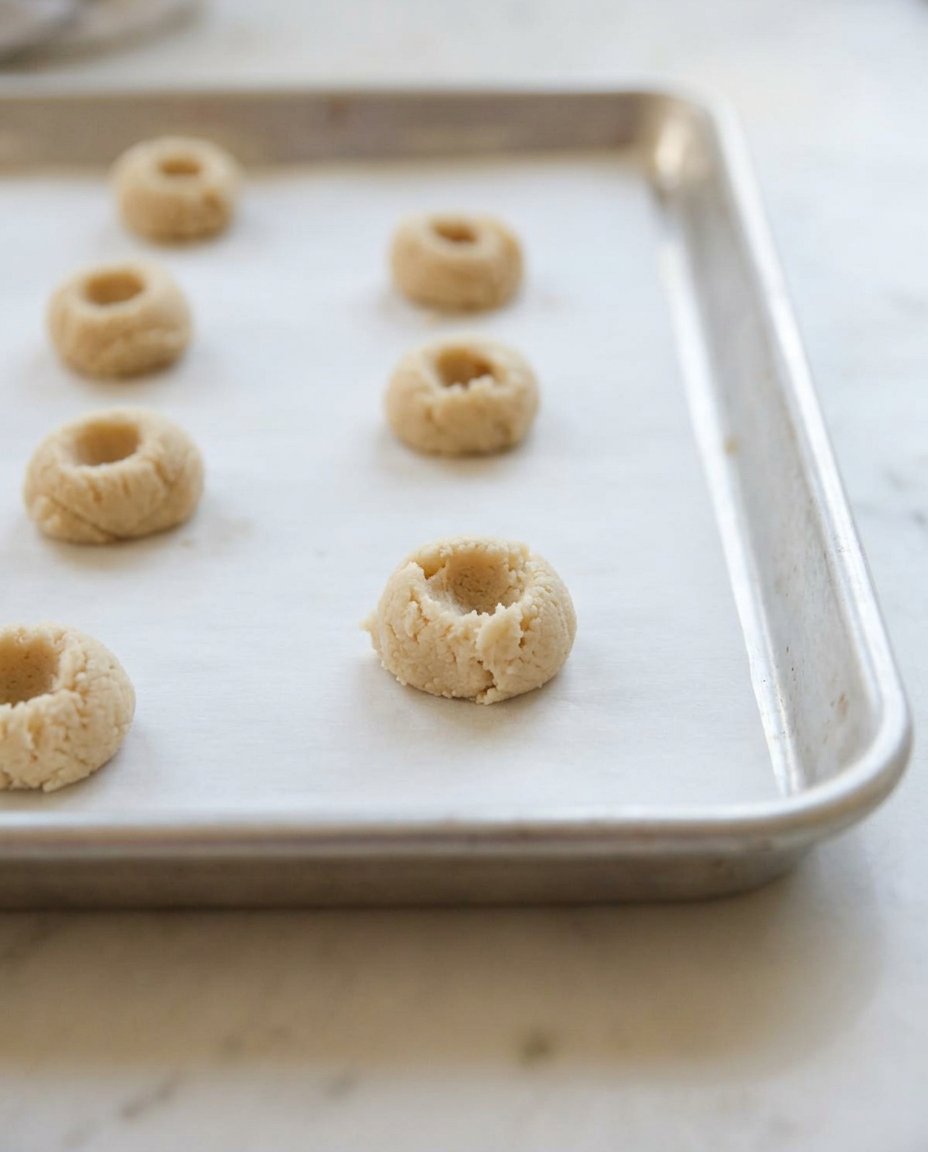
- Press a neat well into the center of each ball using your thumb or the back of a small measuring spoon.
- Fill each indentation with approximately one-quarter teaspoon of raspberry jam, being careful not to overfill.
- Bake for 9 to 11 minutes until the cookies are set and pale, or slightly golden at the edges if preferred.
- Allow cookies to rest on the pan for ten minutes before transferring them to a wire rack to cool completely.
- Whisk together powdered sugar, 1/2 teaspoon almond extract, and a few drops of water to create a thick glaze, then drizzle over the cold biscuits.
Notes
For the most precise shape, ensure your butter is softened but not oily before beginning the creaming process. If the dough cracks significantly when pressing the thumbprint, try chilling the rolled balls for ten minutes to stabilize the fat before filling with jam.
- Prep Time: 20 mins
- Cook Time: 10 mins
- Category: Dessert
- Method: Baking
- Cuisine: European
The Science of the Shortbread Pantry
Selecting high-quality components is the first step in achieving the proper structural outcome for your Raspberry Thumbprint. Each ingredient serves a specific technical purpose in the final bake.
- Unsalted Butter: Use a high-fat European-style butter if possible. The lower water content prevents excess steam during baking, which helps the biscuit maintain its shape.
- Granulated Sugar: The crystal size of granulated sugar is essential for creating the tiny air pockets during the creaming process that provide a light texture without needing baking powder.
- Almond Extract: This provides the primary aromatic foundation. Its volatile compounds are heat-stable, meaning the scent remains potent even after time in the oven.
- All-Purpose Flour: For the best results, weigh your flour to 260 grams. Volume measurements vary too widely, which can lead to a dry, crumbly dough or a greasy, spreading cookie.
- Seedless Raspberry Jam: A seedless variety is preferred for a smooth mouthfeel. The pectin levels in raspberry jam are naturally high, which helps the center set firmly during the cooling process.
- Powdered Sugar: Used for the glaze, this must be sifted to avoid clumps. It creates a matte, professional finish that seals the biscuit’s surface.
The Methodical Approach to Perfect Indentations
Step 1: Prepare the Technical Environment
Begin by preheating your oven to 350℉ (175℃). Line your baking sheets with parchment paper to provide a non-stick surface that also regulates heat distribution to the bottom of the dough.
Step 2: Establish the Creamed Base
In a stand mixer, combine the softened butter, granulated sugar, and almond extract. Beat at medium speed for two minutes until the mixture is visibly lighter in color and fluffy in texture. This step is critical for mechanical leavening; the sugar crystals are literally cutting tiny holes into the fat to trap air.
Step 3: Integrate the Flour
Turn the mixer to its lowest setting and gradually add the weighed flour. Mix only until the white streaks disappear. Over-mixing at this stage will develop the gluten proteins, leading to a tough, bread-like texture rather than a short, sandy crumb.
Step 4: Form the Spheres
Roll the dough into small, uniform balls approximately one inch in diameter. Consistency in size is not just for aesthetics; it ensures that every Raspberry Thumbprint in the batch bakes at the same rate. Place them two inches apart on the prepared sheets.
Step 5: Create the Indentations
Using your thumb or the back of a small measuring spoon, press a neat well into the center of each ball. If the edges crack, the dough may be slightly too cool; simply pinch the cracks back together to form a solid wall that will contain the jam as it liquefies in the heat.
Step 6: The Jam Application
Fill each well with approximately one-quarter teaspoon of raspberry jam. Do not overfill, as the jam will expand and bubble during the baking process. A controlled amount keeps the presentation tidy and the sugar levels balanced.
Step 7: Controlled Baking
Bake for 9 to 11 minutes. The goal is a set, pale finish; traditional Victorian biscuits were rarely browned. If you prefer a more pronounced Maillard reaction, you may leave them for the full 11 minutes until the edges are a light golden hue.
Step 8: Cooling and Glazing
Allow the biscuits to rest on the pan for ten minutes to let the internal structure firm up. Transfer to a wire rack. Once completely cold, whisk the powdered sugar and almond extract with a few drops of water to create a thick drizzle. Apply the glaze in a decorative pattern over the cooled biscuits.
Historical Wisdom for Modern Success
Temperature control is the most frequent point of failure in this Raspberry Thumbprint recipe. If your kitchen is particularly warm, the butter may soften too much, causing the dough to lose its shape. Should this occur, chill the rolled dough balls for fifteen minutes before making the indentations. This ‘two-rest’ method, often used in professional shortbread production, relaxes the gluten and solidifies the fat for a more precise bake.
Furthermore, for those interested in the chemistry of the glaze, adding a tiny pinch of salt can sharpen the almond flavor and cut through the intense sweetness of the powdered sugar. For more insights into the physics of fat in baking, refer to our Foundation Cookie Recipes. Always ensure your jam is at room temperature before filling; cold jam can create a temperature differential that causes the cookie base to bake unevenly.
Global Adaptations and Heritage Twists
While the Raspberry Thumbprint is a classic, regional variations offer fascinating insights into local pantries. In some parts of Scotland, the dough is rolled in finely chopped walnuts before the indentation is made, adding a savory crunch that balances the sweet jam. In Germany, a similar biscuit known as ‘Engelsaugen’ (Angel Eyes) often uses red currant jelly for a sharper, more acidic finish.
You might also consider substituting the raspberry for an apricot or plum conserve, which was common in mid-century British baking when raspberries were out of season. If you are baking for specific dietary needs or seasonal events, our Holiday Cookie Science guide offers tested adjustments for various climates and ingredients. Regardless of the fruit used, ensure the preserve has a high fruit-to-sugar ratio for the best flavor density.
Traditional Service and Aesthetic Presentation
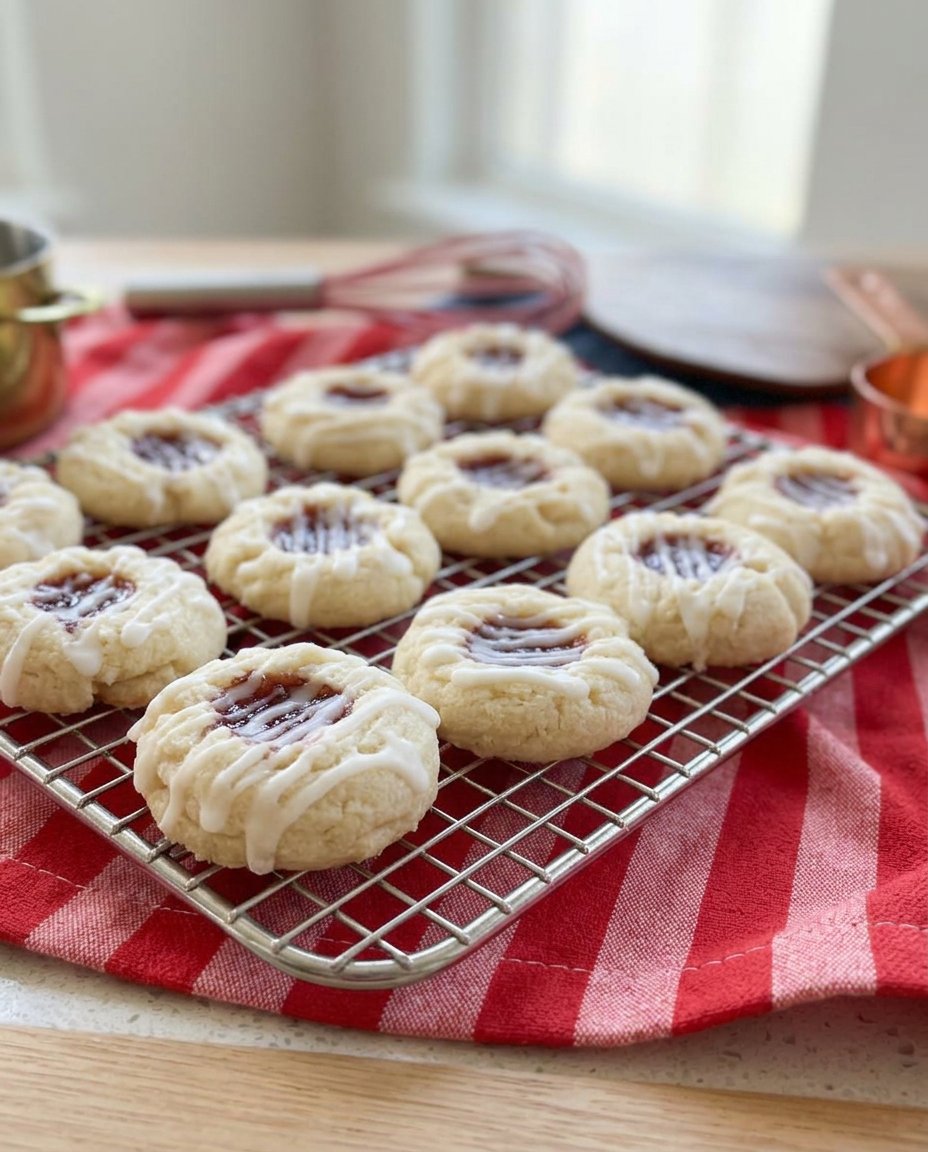
To honor the heritage of the Raspberry Thumbprint, serve these biscuits alongside a strong Assam or Earl Grey tea. The tannins in the tea provide a sophisticated counterpoint to the buttery dough and sweet jam. Presentation should be simple; a white porcelain plate or a tiered silver stand emphasizes the vibrant red of the raspberry centers.
For a more modern gathering, these biscuits pair exceptionally well with a glass of dry sparkling wine, where the bubbles cleanse the palate of the rich butter. If you are arranging a formal dessert platter, consult our guide on Precision Cookie Decorating for tips on achieving perfectly symmetrical glaze drizzles. These cookies are best enjoyed at room temperature to allow the almond aromatics to be fully perceived by the senses.
Preserving the Art of the Tea Biscuit
The Raspberry Thumbprint is more than a simple sweet; it is a testament to the enduring appeal of precise baking and quality ingredients. By following these methodical steps and respecting the historical ratios of shortbread, you create a treat that is as technically sound as it is delicious. This recipe proves that when we understand the science of our ancestors, we achieve superior results in the modern kitchen.
To continue your journey into the mechanics of the perfect bake, visit our section on Efficient Cookie Methods. You can also find more inspiration from the community at Raspberry Thumbprint Cookies. Share your technical triumphs with us on Facebook, Instagram, Pinterest, or X. Happy baking, and may your measurements always be precise.