Victorian kitchens relied heavily on the bakestone, a thick cast-iron plate that allowed for efficient baking directly over a hearth fire. This tradition of stovetop baking created the Welsh cake, a recipe that sits precisely between a biscuit and a scone. Historical records suggest these treats were a staple in mining communities because their sturdy structure survived the trip into the depths of the coal pits.

Modern laboratory testing confirms that direct conductive heat creates a specific textural profile that radiant oven heat cannot replicate. By applying heat to the surface of the dough at 5mm thickness, we achieve a rapid Maillard reaction while maintaining a soft, hydrated center. This methodical approach ensures a traditional result that honors the precision of 19th-century domestic science.
The Heritage of the Bakestone
This recipe offers a fascinating look into the efficiency of historical baking where an oven was not always necessary for quality results. You will appreciate the technical simplicity of the ratio-based dough which produces a tender yet resilient crumb. Because these cakes are cooked on a griddle, they provide a unique sensory experience where the aroma of toasted butter and cinnamon fills the kitchen much faster than traditional baking.
The scientific beauty of the Welsh cake lies in its moisture retention. Unlike a standard cookie that dries out as it cools, the rapid searing process on the pan traps internal steam. This results in a texture that remains pleasant for days, making it a reliable addition to any baker’s repertoire. It represents a triumph of practical chemistry over modern complexity, proving that basic tools often yield the most remarkable outcomes.
Bakers who value historical context will find great satisfaction in mastering the heat management required for this bake. It is a methodical process that encourages a deep connection with the ingredients. There is a quiet confidence found in watching the dough transform from a pale disc into a golden, spiced treasure. This is not just a snack; it is a tested method of Celtic survival and celebration that has remained unchanged for generations.
Print
Welsh Cakes
- Total Time: 25 mins
- Yield: 10 cakes
- Diet: Vegetarian
Description
Recreate a classic Victorian-era treat with this precise method for traditional Welsh cakes. These delightful griddle-baked sweets offer a unique texture—tender like a scone yet sturdy like a biscuit—perfectly spiced and studded with plump, rehydrated raisins.
Ingredients
- 150g all-purpose flour
- 10g baking powder
- 50g chilled butter, cubed
- 60g raisins
- 50g caster sugar
- 1/2 tsp ground cinnamon
- 1/4 tsp salt
- 1 large egg
- 2 tbsp milk
Instructions
- Place raisins in a bowl of hot water for 10 minutes to rehydrate, then drain and pat thoroughly dry with a clean cloth.
- In a large mixing bowl, combine the flour, baking powder, sugar, salt, and cinnamon.
- Rub the chilled butter into the dry mixture using your fingertips until it reaches the consistency of fine breadcrumbs.
- Stir in the prepared raisins, then whisk the egg and milk together and add to the bowl, mixing until a cohesive dough forms.
- On a lightly floured surface, roll the dough to a thickness of 5mm and stamp out rounds using a 6cm or 7cm fluted cutter.
- Heat a heavy-based frying pan or bakestone over medium heat with a little butter, then cook the cakes for 3 to 5 minutes per side until golden brown and cooked through.
Notes
To ensure a consistent bake, avoid overcrowding the pan and periodically check the surface temperature; if the cakes are browning too quickly while remaining raw inside, reduce the heat to maintain a steady, gentle cook. For the shortest, most tender crumb, handle the dough as little as possible once the liquid is added to prevent over-developing the gluten.
- Prep Time: 15 mins
- Cook Time: 10 mins
- Category: Snack
- Method: Stovetop
- Cuisine: Welsh
Proper Components for a Celtic Classic
To achieve the structural integrity required for a authentic Welsh cake, we must select ingredients that balance fat distribution with protein development. Each element in this 150g flour base serves a specific chemical purpose in the final crumb.
- All-Purpose Flour (150g): This provides the medium protein content necessary to hold the fruit in suspension without becoming overly tough. In British tradition, this would be a plain flour, which we handle gently to prevent gluten over-development.
- Chemical Leavening (10g): We use a relatively high proportion of baking powder to ensure an immediate vertical lift the moment the dough contacts the thermal energy of the pan. This creates the characteristic lightness inside the dense exterior.
- Chilled Butter (50g): The butter must be cold enough to be rubbed into the flour, creating small pockets of fat. These pockets melt during cooking, releasing steam and creating a short, tender texture similar to traditional shortbread.
- Rehydrated Raisins (60g): By soaking the fruit in hot water for ten minutes, we prevent them from pulling moisture away from the dough. This step also protects the raisins from scorching when they touch the hot pan surface.
- Warm Spices (1/2 tsp): Traditionally cinnamon or mixed spice, these provide the aromatic profile that defines the Welsh valley style. The oils in the spices are activated by the direct heat of the griddle.
- Egg and Milk Binder: A single egg combined with two tablespoons of milk provides the lecithin and hydration needed to bring the sandy mixture into a cohesive, rollable dough.
The Proper Method
Step 1: Meticulous Fruit Preparation
Begin by placing your raisins in a bowl of very hot water for approximately ten minutes. This process of rehydration is vital for technical success; dry fruit will extract moisture from your dough, leading to a brittle cake. Once softened, drain them thoroughly and pat dry with a clean cloth to ensure no excess surface water disrupts the dough’s hydration ratio.
Step 2: The Rubbing-In Technique
In a large mixing bowl, combine the flour, baking powder, sugar, salt, and cinnamon. Add the chilled butter pieces and use your fingertips to rub the fat into the dry ingredients. You are looking for a texture resembling fine breadcrumbs. This Victorian-era method coats the flour particles in fat, which effectively limits gluten formation and ensures a meltingly tender result.
Step 3: Incorporating the Binder
Add the drained raisins to the sandy mixture and stir gently to distribute. In a separate small vessel, whisk the egg with the milk until fully emulsified. Create a well in the center of your dry ingredients and pour in the liquid. Use a blunt knife or a spatula to bring the dough together until it just forms a ball. Avoid over-mixing at this stage, as mechanical agitation will toughen the final product.
Step 4: Precision Rolling and Cutting
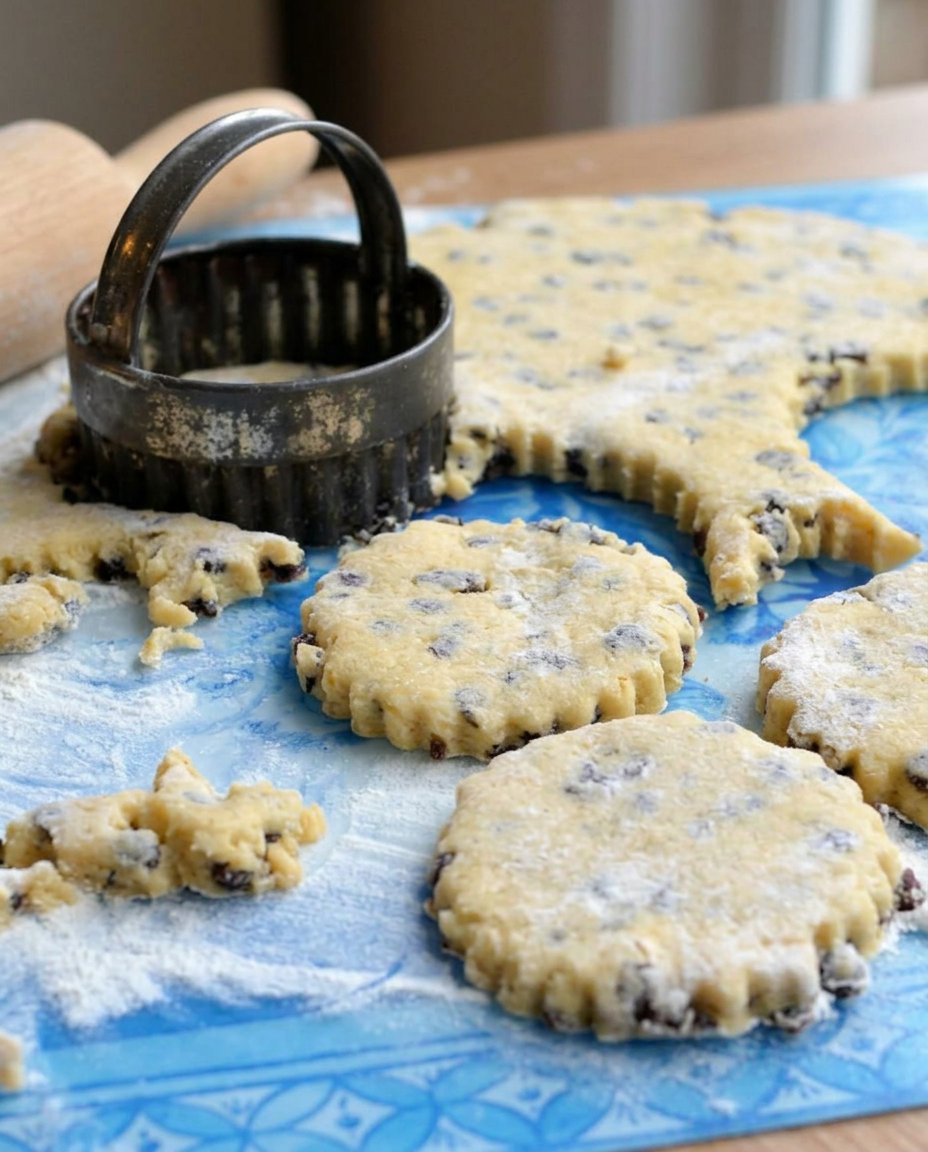
Turn the dough out onto a lightly floured surface and knead it very briefly—only three or four turns—to ensure homogeneity. Use a rolling pin to flatten the dough to a precise thickness of 5mm. Use a 6cm or 7cm fluted cutter to stamp out the cakes. This specific thickness is the golden ratio for Welsh cakes, allowing the heat to reach the center just as the exterior reaches a deep golden brown.
Step 5: Thermal Equilibrium and Griddling
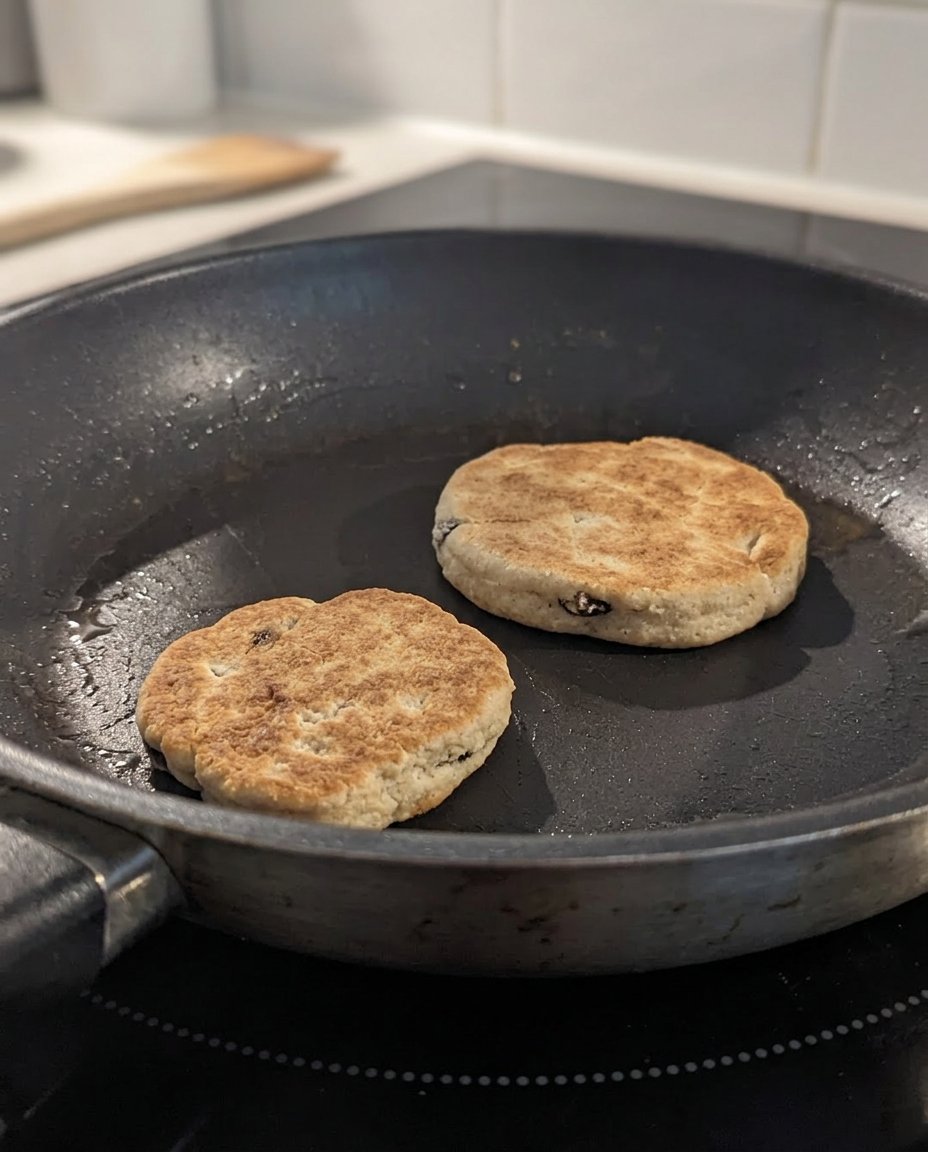
Heat a heavy-based frying pan or a traditional bakestone over medium heat with a small amount of butter. Once the fat is shimmering, place the cakes in the pan, ensuring they are not crowded. Cook for 3 to 5 minutes per side. You must monitor the temperature closely; if the cakes darken too quickly, reduce the heat to allow the interior to set without burning the sugars on the surface.
Jordan’s Technique Notes
The most common error in stovetop baking is failing to manage the thermal mass of the pan. If you find the first batch is perfect but the second batch burns, it is because the pan has accumulated too much latent heat. Periodically lifting the pan from the burner for thirty seconds can help maintain the correct temperature. For a deeper understanding of how fat temperatures affect dough, examine our Foundation Cookie Recipes to see how rubbing-in compares to creaming. Always use a heavy-bottomed pan, as thin metal creates hot spots that lead to uneven browning and raw centers.
Regional Differences and Tested Adaptations
While the valley tradition calls for cinnamon and raisins, regional variations across Wales offer fascinating technical shifts. Some families in the north prefer using nutmeg and a mixture of currants and sultanas for a more complex sweetness. For those interested in the science of fat ratios, substituting half the butter with high-quality lard can produce an even flakier, crisper exterior, a method often discussed in our Holiday Cookie Science modules. You might also consider adding a teaspoon of lemon zest to the dough to provide a bright acidic contrast to the rich, buttery base.
Traditional Service and Classic Enjoyment
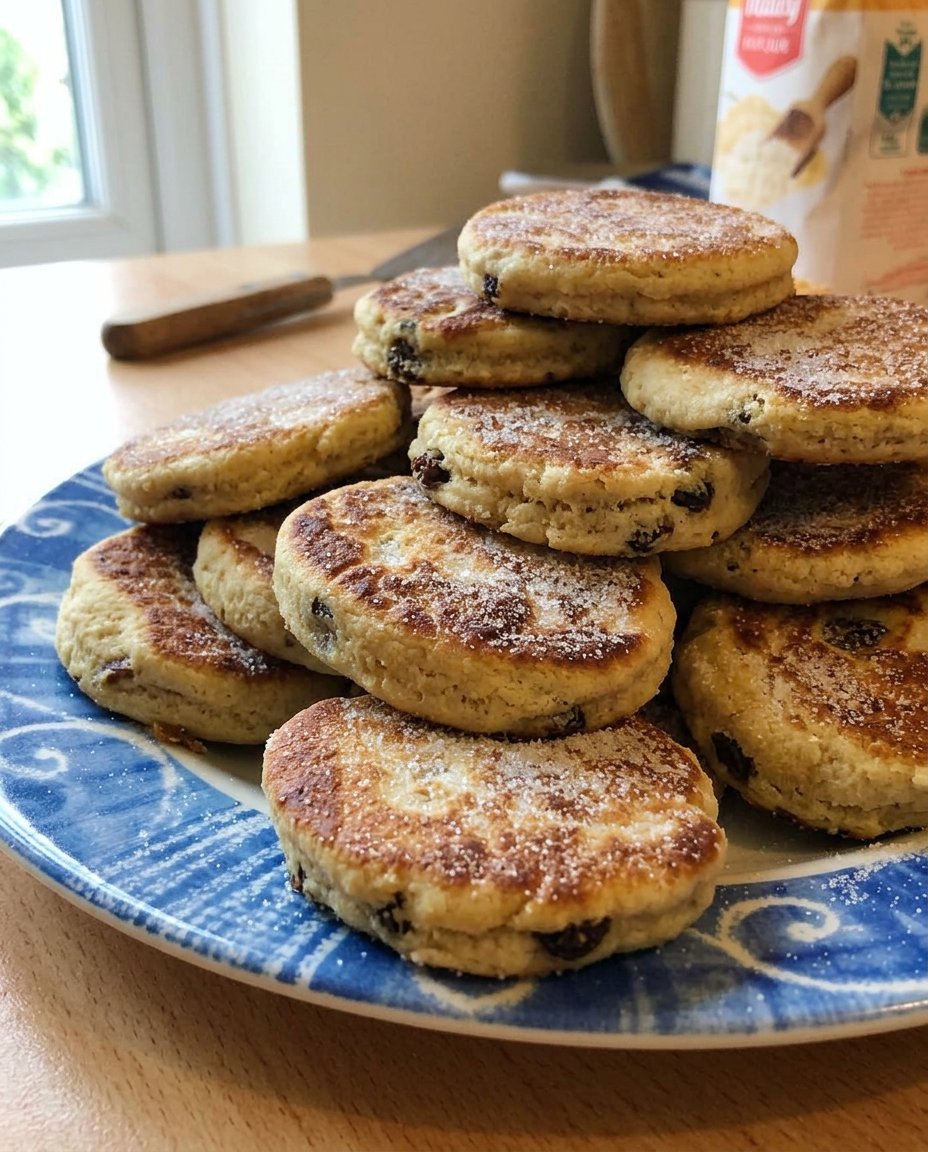
Welsh cakes are at their technical peak when served warm, immediately after they leave the pan. Traditionally, they are tossed in a shallow bowl of caster sugar while still hot, which allows the sugar to adhere to the residual moisture on the surface. For a proper afternoon tea, serve them with a generous spread of salted Welsh butter and a side of tart plum jam. If you are looking for more Efficient Cookie Methods, these are excellent because they require no cooling rack time and can be enjoyed within seconds of finishing.
The Technical Truth
Mastering the Welsh cake is a testament to the baker’s ability to control heat and texture without the aid of modern oven sensors. This recipe proves that historical methods often contain scientific wisdom that we are only now beginning to quantify through modern testing. As you practice the rubbing-in method and the griddle technique, you are participating in a culinary lineage that spans centuries. For further study on visual presentation, you might enjoy our guide on Precision Cookie Decorating. Please share your results with our community on Facebook, Instagram, or Pinterest.