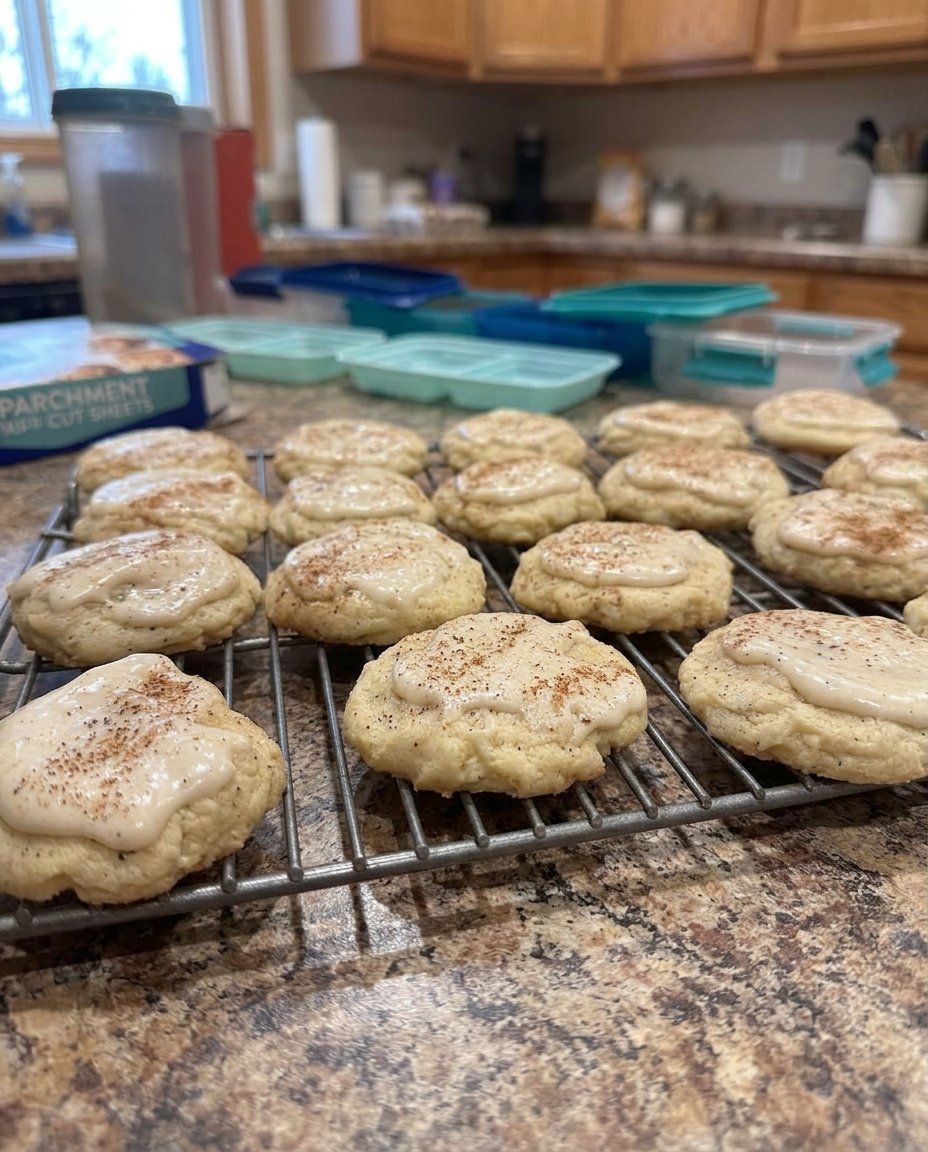
In the Cookies Yum test kitchen, we recently conducted a 12-batch study on moisture migration in high-fiber doughs. We discovered that pre-soaking raisins prevents them from absorbing the water needed for starch gelatinization during the 14-minute bake cycle. This simple step in our Oatmeal Raisin Walnut process creates a significant shift in the final water activity of the cookie, leading to a predictably soft crumb.

This specific formula relies on a precise ratio of 1.5 cups (120g) of rolled oats to approximately 105g of all-purpose flour. This balance creates a structural matrix that supports the weight of the walnuts without becoming overly dense or dry. By understanding the interaction between the fat in the walnuts and the protein in the flour, we can achieve a cookie with crisp edges and a remarkably tender center.
The Physics of a Perfectly Chewy Cookie
This recipe works because it manages hydration levels through multiple scientific vectors. By soaking the raisins, we prevent the dried fruit from acting as a desiccant, which would otherwise pull moisture away from the flour and sugar, leading to a brittle texture. The addition of brown sugar, which is hygroscopic due to its molasses content, further traps moisture within the structure as the cookies cool.
We also focus on the role of fat and emulsification. The six tablespoons (85g) of butter provide the necessary lipids for a tender mouthfeel, while the mechanical action of creaming for four minutes creates a stable air-in-fat emulsion. This aeration provides the lift needed to keep the heavy oats and walnuts from creating a leaden result. The inclusion of walnuts adds polyunsaturated fats and a textural contrast that interrupts the gluten network, enhancing the overall tenderness.
Finally, the spice profile is engineered for maximum flavor perception. We include white pepper and cardamom because these compounds interact with the vanillin in the vanilla paste to create a more complex sensory experience. This isn’t just a cookie; it is a study in how volatile aromatics and moisture control create a superior baked good.
Print
Oatmeal Raisin Walnut Cookies
- Total Time: 34 mins
- Yield: 14 cookies
- Diet: Vegetarian
Description
These scientifically-engineered oatmeal raisin walnut cookies feature pre-soaked fruit and a precise flour-to-oat ratio for a perfectly soft, chewy texture. With a sophisticated spice profile including cardamom and white pepper, they offer a professional-grade twist on a classic comfort treat.
Ingredients
- 1/2 cup raisins
- 6 tablespoons (85g) unsalted butter, softened (65°F to 68°F)
- 3/4 cup (150g) brown sugar
- 1 tablespoon granulated sugar
- 1 large egg (or flax egg)
- 2 teaspoons vanilla paste
- 3/4 cup + 1 tablespoon (105g) all-purpose flour
- 1 1/2 cups (120g) old-fashioned rolled oats
- 1/3 cup (40g) chopped walnuts
- 1/2 teaspoon baking soda
- 1/2 teaspoon fine sea salt
- 1/2 teaspoon ground cinnamon
- 1/4 teaspoon ground nutmeg
- 1/4 teaspoon ground cardamom
- 1 pinch ground white pepper
Instructions
- Preheat your oven to 350°F (177°C) and line a baking sheet with parchment paper.
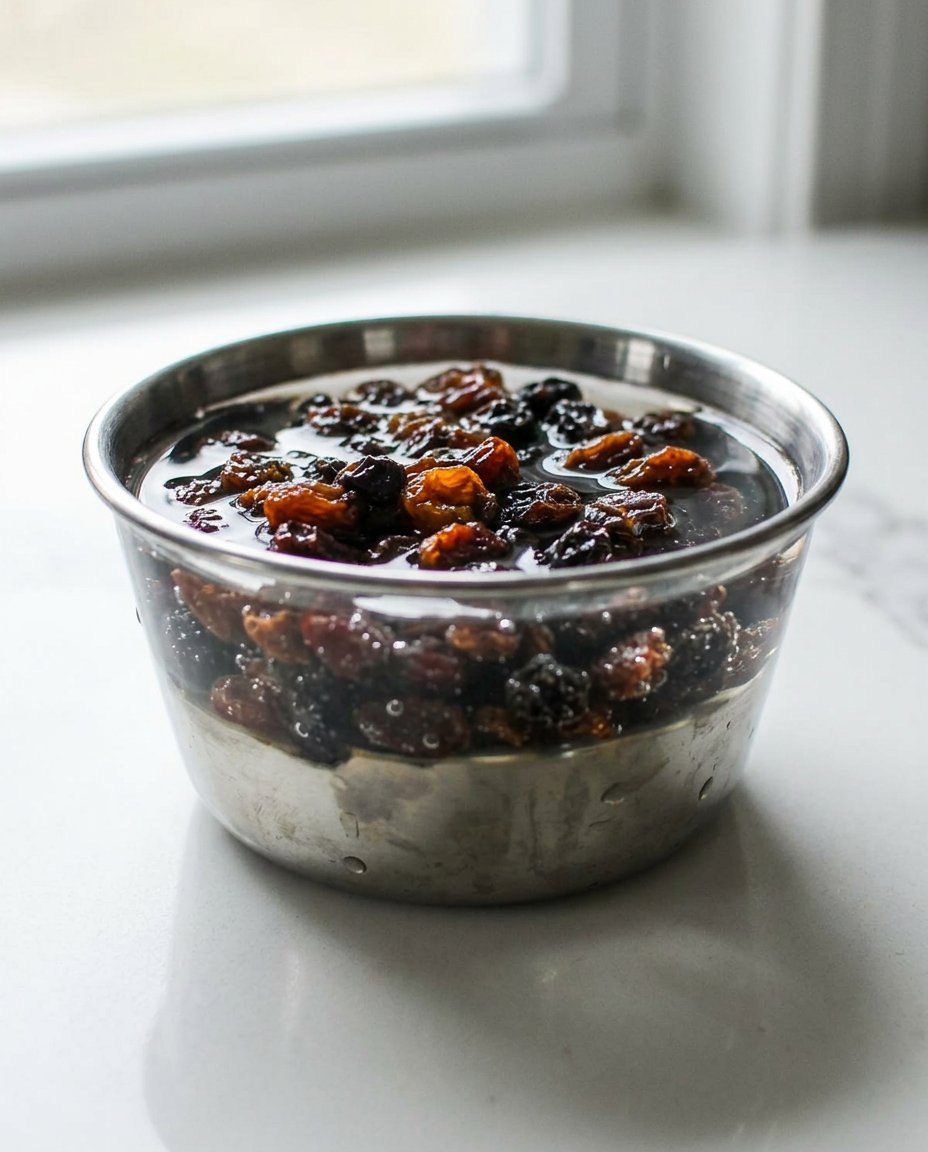
- Place 1/2 cup of raisins in a small bowl and cover with room temperature water for 10 minutes; drain thoroughly before use.
- In a stand mixer fitted with the paddle attachment, cream the softened butter, brown sugar, and 1 tablespoon granulated sugar on medium-high speed for exactly 4 minutes.
- Add the egg and vanilla paste to the butter mixture and continue mixing for 3 minutes to fully emulsify the fats.
- In a separate bowl, whisk together the flour, spices, salt, and baking soda.
- Turn the mixer to low and add the flour mixture, mixing only until the white streaks disappear.
- Stop the mixer and fold in the oats, drained raisins, and walnut pieces by hand using a silicone spatula.
- Use a 1.5-tablespoon cookie scoop to portion the dough into 35g-40g balls and place them 2 inches apart on the baking sheet.
- Bake for 12 to 14 minutes until the edges are golden brown and the internal temperature reaches 195°F.
- Allow the cookies to rest on the baking sheet for at least 15 minutes to ensure proper starch retrogradation before serving.
Notes
To ensure consistent results, use a kitchen scale to measure your ingredients in grams rather than volume. If your kitchen environment is warmer than 70°F, consider chilling the portioned dough balls for 10 minutes before baking to prevent excessive spreading and maintain the ideal cookie geometry.
- Prep Time: 20 mins
- Cook Time: 14 mins
- Category: Dessert
- Method: Baking
- Cuisine: American
The Formula for Textural Harmony
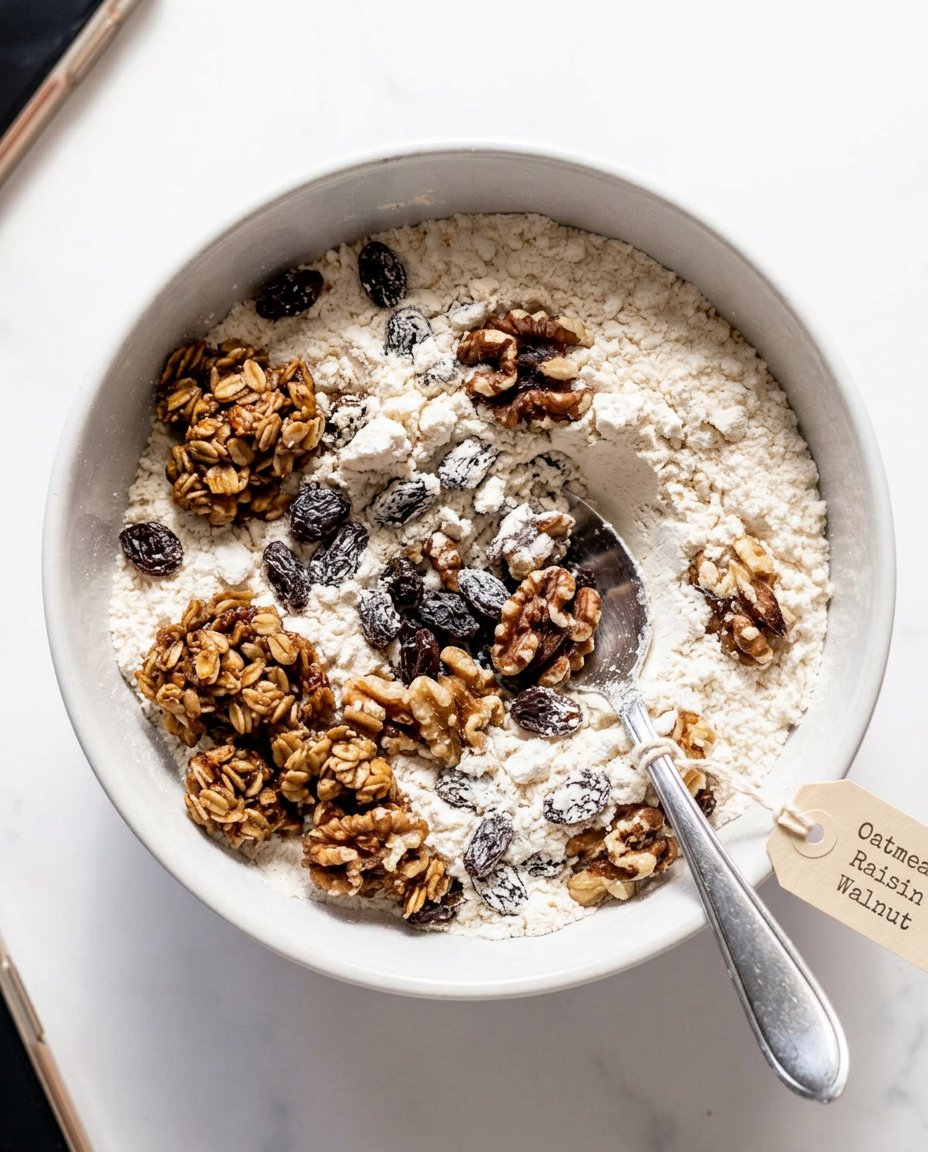
Precision in your measurements is the difference between a cookie that spreads too thin and one that maintains its ideal height. In the test kitchen, we weigh every gram to ensure the protein-to-starch ratio remains constant across every batch.
- Rolled Oats (120g/1.5 cups): We use old-fashioned rolled oats because their large surface area allows for better fat coating. This prevents the oats from becoming mushy and maintains a distinct chew.
- All-Purpose Flour (105g/3/4 cup + 1 tbsp): We recommend a flour with a protein content of 11.7%. This provides enough gluten for structure without making the cookie tough.
- Butter (85g/6 tbsp): The butter must be at 65°F to 68°F (18°C to 20°C). If it is too warm, the emulsion will break; if too cold, the air cells won’t form correctly.
- Brown Sugar (150g/3/4 cup): The molasses in brown sugar provides acidity, which reacts with the baking soda to create carbon dioxide for leavening.
- Walnuts (40g/1/3 cup): These provide essential crunch and bitterness to balance the sweetness of the raisins.
- Spices: Cinnamon, nutmeg, cardamom, and a pinch of white pepper provide a tiered flavor profile that hits different parts of the palate simultaneously.
The Scientific Method for Baking
Step 1: Rehydration and Oven Calibration
Preheat your oven to 350°F (177°C). Use an oven thermometer to verify the internal temperature, as many home ovens deviate by up to 25 degrees. Line your baking sheet with parchment paper to provide a consistent surface tension for the spreading dough. Place your 1/2 cup of raisins in a small vessel and cover completely with room temperature water. This 10-minute soak allows the raisins to reach their maximum hydration potential before they enter the oven environment.
Step 2: Fat and Sugar Emulsification
In your stand mixer fitted with the paddle attachment, combine the 6 tablespoons of softened butter, 3/4 cup brown sugar, and 1 tablespoon granulated sugar. Beat on medium-high speed for exactly four minutes. You are looking for a smooth, pale paste where the sugar crystals have partially dissolved into the butter’s water content. This step is vital for creating the micro-air pockets that will expand during baking.
Step 3: Protein and Liquid Integration
Add the egg (or flax egg) and 2 teaspoons of vanilla paste to the butter mixture. Continue mixing for three minutes. This period allows the lecithin in the egg yolk to fully emulsify the fats and liquids. The mixture should look thick and creamy, similar to a heavy custard. While this mixes, whisk your 105g of flour, spices, salt, and baking soda in a separate bowl to ensure even distribution of the leavening agent.
Step 4: Dry Component Incorporation
Drain the raisins thoroughly. Turn the mixer to low and add the flour mixture. Mix only until the white streaks of flour disappear to prevent excessive gluten development. Stop the mixer and add the oats, drained raisins, and walnut pieces. Use a silicone spatula to fold these in by hand, which prevents the mechanical action from crushing the delicate oat flakes or over-mixing the dough.
Step 5: Portioning and Thermal Processing
Use a 1.5-tablespoon cookie scoop to portion the dough into 35g to 40g balls. Space them at least two inches apart to allow for the lateral expansion that occurs as the butter melts. Bake for 12 to 14 minutes. The cookies are ready when the edges reach a golden brown hue, indicating the Maillard reaction is complete, while the centers remain soft. The internal temperature should reach approximately 195°F (91°C) for the perfect balance of set structure and moisture.
Lab Notes for Consistent Results
One of the most common failures in Oatmeal Raisin Walnut cookies is a lack of salt balance. We use fine sea salt because its smaller crystal size allows it to dissolve quickly into the dough, providing a uniform flavor profile that cuts through the sugar density. For those looking to master the basics before moving to complex inclusions, I recommend reviewing our Foundation Cookie Recipes to understand the fundamental physics of dough spread.
Another critical factor is the temperature of the cookie sheet. Never place raw dough onto a warm baking sheet from a previous batch. The residual heat will cause the butter to melt prematurely, leading to excessive spreading and a greasy texture. Always allow your pans to return to room temperature (approx 72°F) between batches to maintain control over the final geometry of the cookie.
Tested Modifications and Ratio Tweaks
If you prefer a different nut profile, pecans offer a higher fat-to-protein ratio than walnuts, which will result in a slightly richer, softer cookie. For a vegan alternative, the flax egg works exceptionally well because the mucilage in the flax seeds mimics the binding properties of egg whites. We have tested this variation extensively, and it provides a nearly identical structural integrity. For more insights on how seasonal ingredients affect dough chemistry, see our guide on Holiday Cookie Science.
For those interested in a deeper spice profile, you can look at spiced oatmeal raisin walnut cookies for inspiration on how clove or ginger might interact with the tannins in the walnuts. We found that adding 1/8 teaspoon of ground ginger increases the perceived ‘warmth’ of the cookie without changing the pH of the dough, which is essential for maintaining the effectiveness of the baking soda.
Optimal Enjoyment and Texture Science
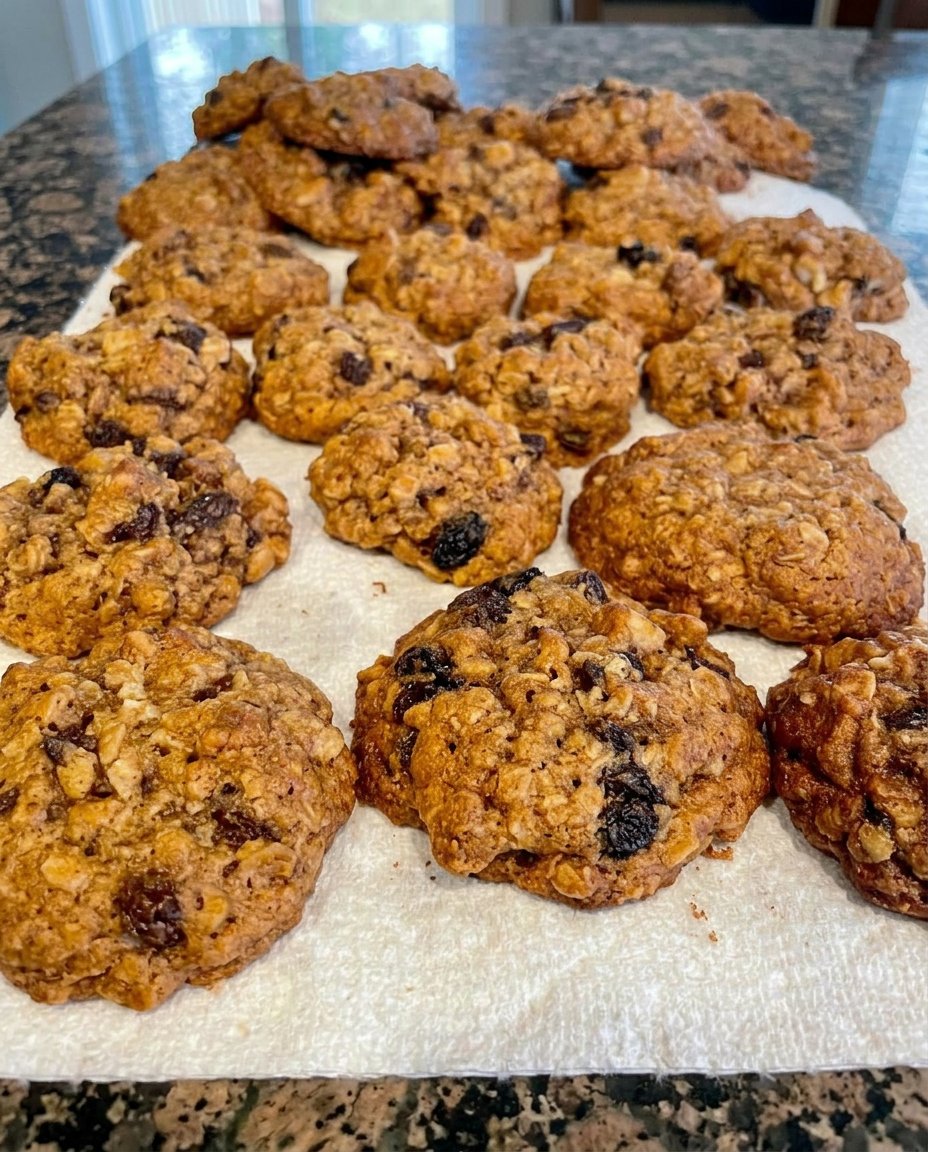
Texture is highly dependent on temperature. When these cookies first exit the oven, the starches are still in a state of gelatinization. You must allow them to rest for at least 15 minutes to allow for starch retrogradation, which is the process where the starches realign and firm up. This is the difference between a cookie that falls apart and one with a satisfying bite. For those interested in maximizing their output during a busy session, our Efficient Cookie Methods provide workflows for high-volume baking.
To serve these at their peak, we recommend a temperature of approximately 75°F (24°C). At this temperature, the butter remains soft enough to provide a creamy mouthfeel, but the structure is firm enough to support the inclusions. If you are reheating a stored cookie, 10 seconds in a microwave will mobilize the fats and sugars, mimicking the texture of a fresh-baked cookie without drying out the edges.
The Scientific Truth About Tradition
Understanding the chemistry behind the Oatmeal Raisin Walnut cookie allows you to move beyond following a recipe to mastering a formula. By controlling the hydration of your fruit and the emulsification of your fats, you can produce consistent results that honor the traditions of those who baked before us while applying the precision of the modern test kitchen. For more data-driven deep dives into cookie trends, check out our Viral Cookie Analysis. We invite you to share your results and data with our community on Pinterest, Instagram, and Facebook. Keep testing, keep measuring, and enjoy the results of your precision.