In the mid-19th century, British bakers discovered that the addition of molasses was not merely for sweetness but acted as a vital humectant to preserve the moisture of travel-ready biscuits. These Big Chewy Ginger Cookies honor that heritage, moving away from the brittle ‘snap’ of the Regency era toward a more substantial, soft-centered texture. We now understand that the high acidity of unsulphured molasses reacts with baking soda to create a lift that stays tender long after cooling.

This specific formula focuses on the structural integrity required to support a giant cookie without it collapsing into a greasy puddle. By balancing the protein in the flour with a specific ratio of dark brown sugar, we achieve a bake that is remarkably robust on the edges but exceptionally soft in the middle. It is a methodical approach to a holiday classic that rewards the baker with a deep, complex spice profile.
The Science of the Soft Ginger Snap
You will find that this recipe triumphs where others fail because it respects the chemistry of invert sugars. While many modern versions produce a cookie that hardens into a rock within hours, our methodical use of dark brown sugar and molasses creates a hygroscopic environment that actively pulls moisture from the atmosphere. This means your cookies stay soft and pliable for days, reflecting the same longevity prized by Victorian pantry-keepers.
Furthermore, the inclusion of a single egg yolk alongside the whole egg provides additional lecithin and fat without excessive water content. This technical adjustment creates a rich, fudgy mouthfeel that contrasts beautifully with the crunch of the coarse sugar coating. It is a bake that feels both historic and scientifically sound, offering a remarkable depth of flavor through a quartet of warming spices that bloom perfectly in the oven’s heat.
Print
Big Chewy Ginger Cookies
- Total Time: 1 hour 28 mins
- Yield: 24 cookies
- Diet: Vegetarian
Description
These oversized ginger cookies combine a robust molasses flavor with a soft, fudgy center and a crackled, sugary crust. Developed with a focus on food chemistry, they offer a nostalgic holiday treat that stays remarkably tender for several days after baking.
Ingredients
- 3 cups all-purpose flour
- 2.5 teaspoons baking soda
- 1 teaspoon cornstarch
- 1/2 teaspoon salt
- 1 tablespoon ground ginger
- 1/2 teaspoon ground cloves
- 1 cup unsalted butter, room temperature
- 1/2 cup granulated sugar
- 1 cup dark brown sugar
- 1/3 cup unsulphured molasses
- 1 large egg
- 1 large egg yolk
- 1 teaspoon vanilla extract
- Coarse sparkling sugar, for rolling
Instructions
- Whisk together the flour, baking soda, cornstarch, salt, ground ginger, and cloves in a medium bowl until the spices are evenly distributed.
- In a large mixer bowl, beat the room-temperature butter with the granulated sugar and dark brown sugar on medium speed for about 2 minutes until creamy.
- Add the molasses and beat until combined, then add the egg, egg yolk, and vanilla extract, scraping down the sides of the bowl to ensure a smooth emulsion.
- Reduce the mixer speed to low and gradually add the flour mixture, mixing just until the white streaks disappear to avoid over-developing gluten.
- Cover the dough and refrigerate for at least 1 hour to allow the flour to hydrate and the fats to firm up.
- Preheat the oven to 350°F and line baking sheets with parchment paper. Form the dough into 2-inch balls using a large scoop and roll each ball in coarse sugar.
- Place the balls 3 inches apart on the prepared sheets and bake for 12 to 13 minutes, rotating the pans halfway through, until the edges are set but the centers remain soft.
Notes
For the most consistent results, measure your flour by weight or use the spoon-and-level method to avoid a dry cookie. If you find your cookies are not spreading as much as desired, ensure your molasses is at room temperature before mixing and that your baking soda is fresh.
- Prep Time: 1 hour 15 mins
- Cook Time: 13 mins
- Category: Dessert
- Method: Baking
- Cuisine: American
The Proper Components for Structural Integrity
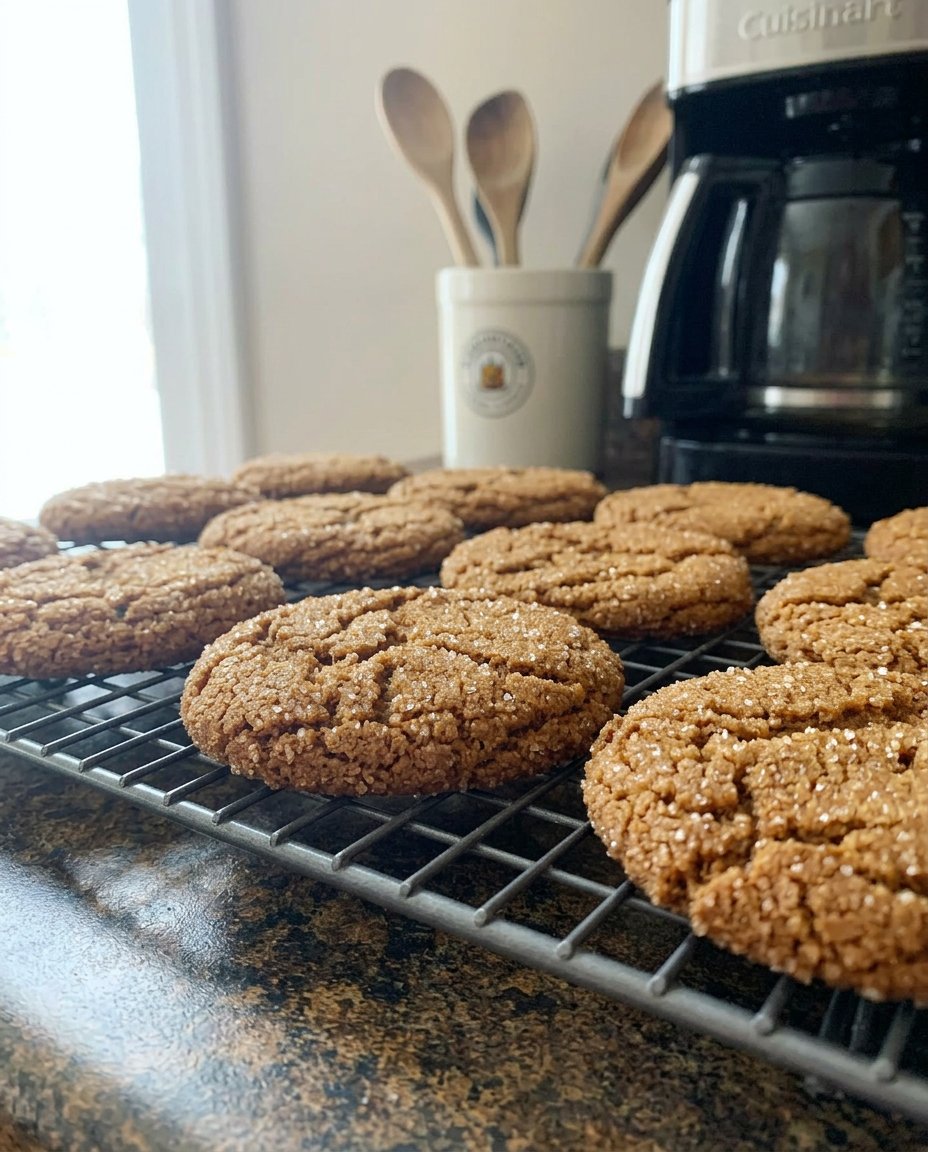
To achieve the perfect results, one must be precise with the selection of ingredients. Not all sweeteners or fats behave the same under the high heat of the oven, and the specific ratios here are designed for a controlled spread.
- Unsulphured Molasses: Avoid blackstrap molasses, which is too bitter and lacks the necessary sugar content. We use ‘original’ molasses to provide the characteristic acidity that reacts with our leavening agents.
- Dark Brown Sugar: This contains more molasses than light brown sugar, contributing to the soft, chewy texture and providing a deeper caramel note.
- Ground Ginger and Cloves: These spices contain volatile oils that are released during the bake. The high volume of ginger ensures a bold heat that lingers on the palate.
- Baking Soda: This is the primary leavener. Because molasses is acidic, the soda creates an immediate reaction, producing carbon dioxide and a crackled surface.
- Cornstarch: A small but significant addition. It softens the proteins in the all-purpose flour, creating a more tender crumb without sacrificing the cookie’s ability to hold its shape.
- Unsalted Butter: At room temperature, the butter should be pliable but not greasy. Proper temperature control during the creaming stage allows for tiny air pockets that contribute to the final crackled appearance.
The Proper Method for Technical Bakes
Step 1: Sifting and Aeration
Begin by whisking together the 3 cups of all-purpose flour, 2.5 teaspoons of baking soda, cornstarch, salt, and the spice blend. It is vital to distribute the spices and leavening agents evenly throughout the flour to prevent uneven rising or ‘hot spots’ of ginger heat. This dry-well method is a classic technique that prevents the over-working of gluten later in the process.
Step 2: The Emulsion of Fats and Sugars
In a large mixer bowl, combine the room-temperature unsalted butter with the granulated sugar and dark brown sugar. Beat at medium speed for approximately 2 minutes. You are looking for a creamy texture, but do not over-aerate. Excessive air in the butter-sugar matrix can cause the cookies to puff and سپس collapse too quickly in the oven.
Step 3: Integrating the Binding Agents
Add the molasses and beat until fully combined. Follow this by adding the large egg, the additional egg yolk, and the vanilla extract. The extra yolk is a professional secret for increasing the ‘chew’ factor. Mix until the emulsion is smooth and glossy, making sure to scrape down the sides of the bowl to incorporate every bit of the molasses.
Step 4: The Controlled Addition
Reduce the mixer to its lowest speed and gradually add the flour mixture. Mix only until the white streaks of flour disappear. Over-mixing at this stage will develop the gluten, leading to a tough, bread-like texture rather than the tender, fudgy center we desire. The resulting dough will be thick and slightly tacky.
Step 5: The Hydration Rest
Cover the dough and refrigerate for at least 1 hour. This chilling period is not just for ease of handling; it allows the flour to fully hydrate and the fats to firm up. In historical baking, this rest period allowed flavors to meld, and modern testing proves it prevents the cookies from spreading too thin during the bake.
Step 6: Shaping and Sugaring
Preheat your oven to 350°F and prepare your sheets with parchment. Using a large 3-tablespoon scoop, form 2-inch balls. Roll each ball in the coarse sugar until completely coated. The coarse sugar provides a technical barrier that creates the signature ‘crack’ when the cookie expands and then settles.
Step 7: The Precision Bake
Place the balls three inches apart to allow for the significant spread. Bake for 12 to 13 minutes, rotating the pans halfway through. Look for the edges to be set and the tops to have a beautiful, puffed, crackly appearance. They will look slightly underdone in the center, which is the secret to their lasting chewiness.
Historical Wisdom for Modern Precision
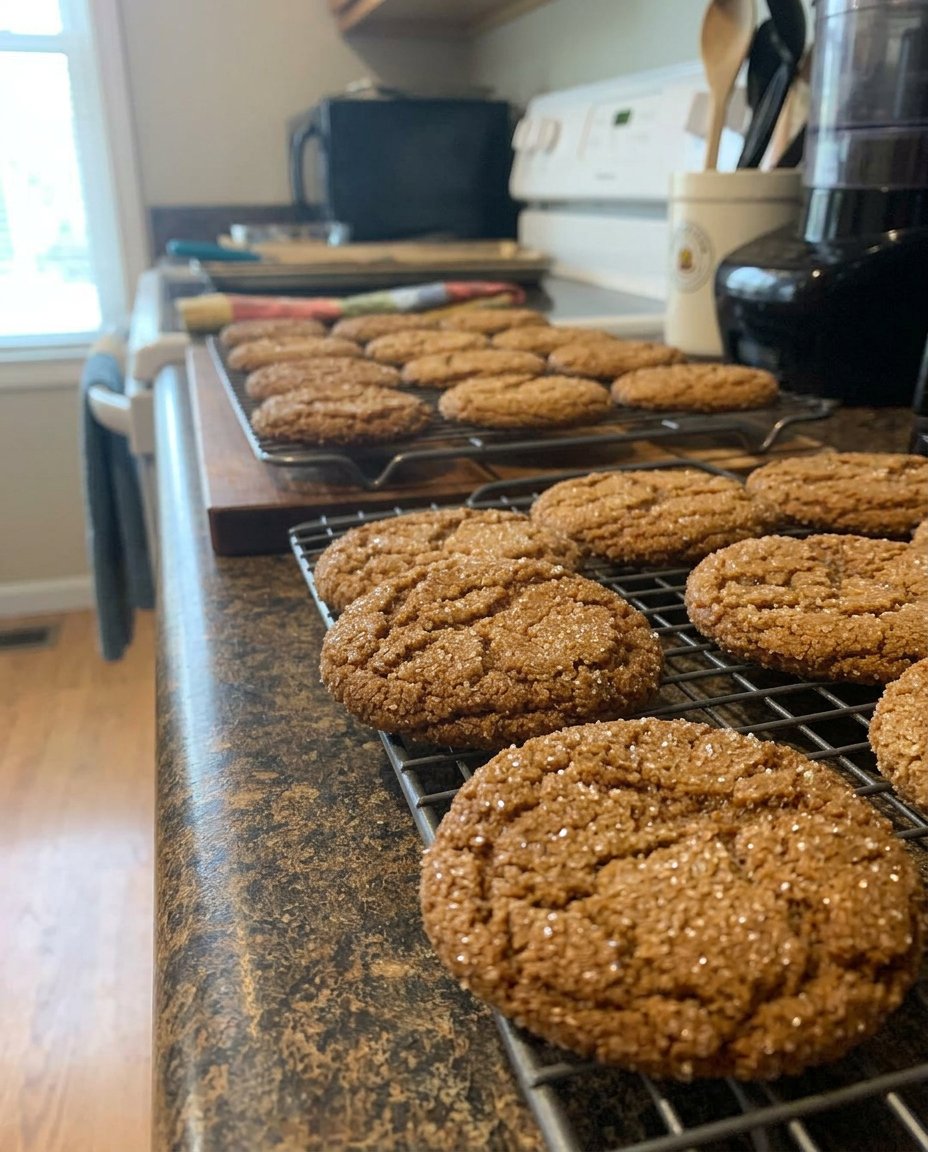
To achieve the iconic round shape seen in professional bakes, you can use a large round cookie cutter or a bowl immediately after removing the pan from the oven. Gently ‘scoot’ the warm, soft cookie in a circular motion inside the cutter to tuck in any irregular edges. This technique creates a uniform, professional aesthetic while the cookie is still malleable. For more foundational advice on handling dough, consult our guide on Foundation Cookie Recipes.
Also, pay close attention to the molasses you choose. The viscosity of the molasses significantly affects the spread of the cookie. If your molasses is too thin, the cookies may spread more than intended. Many bakers find success with standard ginger cookie techniques that emphasize the importance of using a high-quality, consistent brand of unsulphured molasses. Always measure your flour by weight rather than volume to keep the hydration levels exact.
Regional and Historical Adaptations
While this American-style giant cookie is a favorite, one can look to British traditions for interesting variations. In Yorkshire, it was common to add finely chopped crystallized ginger to the dough for an extra punch of heat and a different textural element. This adds a sophisticated layer of flavor that appeals to those who enjoy a more intense spice profile. For those interested in how environmental factors change these results, see our work on Holiday Cookie Science.
Another variation involves the sugar coating. While coarse sparkling sugar is traditional for the ‘giant’ variety, some historical recipes call for a rolling in demerara sugar for a deeper, molasses-rich crunch. You might also consider replacing the ground cloves with a hint of ground black pepper—a technique used in some older European ‘pepper-nut’ recipes to highlight the warmth of the ginger without overpowering it with floral notes.
Traditional Service and Classic Enjoyment
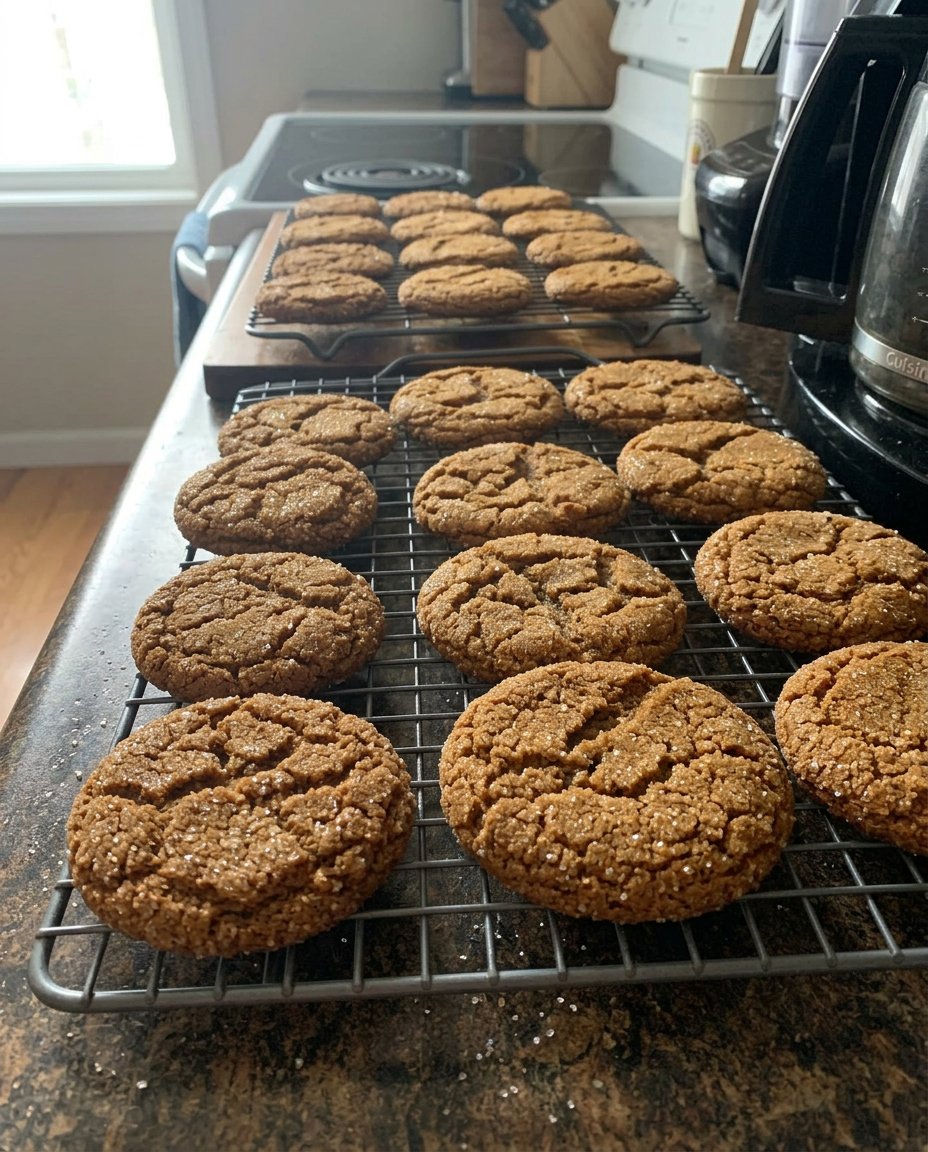
In the British tradition, a spiced biscuit is the quintessential companion to a hot beverage. Serve these Big Chewy Ginger Cookies alongside a strong Earl Grey tea or a dark roast coffee. The tannins in the tea provide a clean contrast to the rich molasses and pungent spices. For those interested in the visual aspect of the tea table, you can find more on Precision Cookie Decorating to complement your serving style.
These cookies also make a remarkable base for an ice cream sandwich. Pair two cookies with a high-quality vanilla bean or salted caramel ice cream. The ginger’s heat and the cold creaminess of the dairy create a sophisticated dessert that honors the classic profile while offering a modern twist. Always serve them on a warmed plate if you are enjoying them shortly after baking to keep the centers at their most supple.
The Technical Truth of the Ginger Cookie
Mastering the Big Chewy Ginger Cookie is a lesson in the harmony of ingredients. When we respect the historical use of molasses and apply modern precision to our temperature controls, we create a bake that is truly timeless. This method proves that tradition is not a static thing but a foundation upon which we build better, more consistent results. To see how these classic methods stack up against modern trends, read our Viral Cookie Analysis.
If you found this technical look at ginger cookies helpful, I invite you to share your results with our community of methodical bakers. You can find us on Facebook, Instagram, and Pinterest. We take pride in seeing how these heritage techniques come to life in your home kitchen.