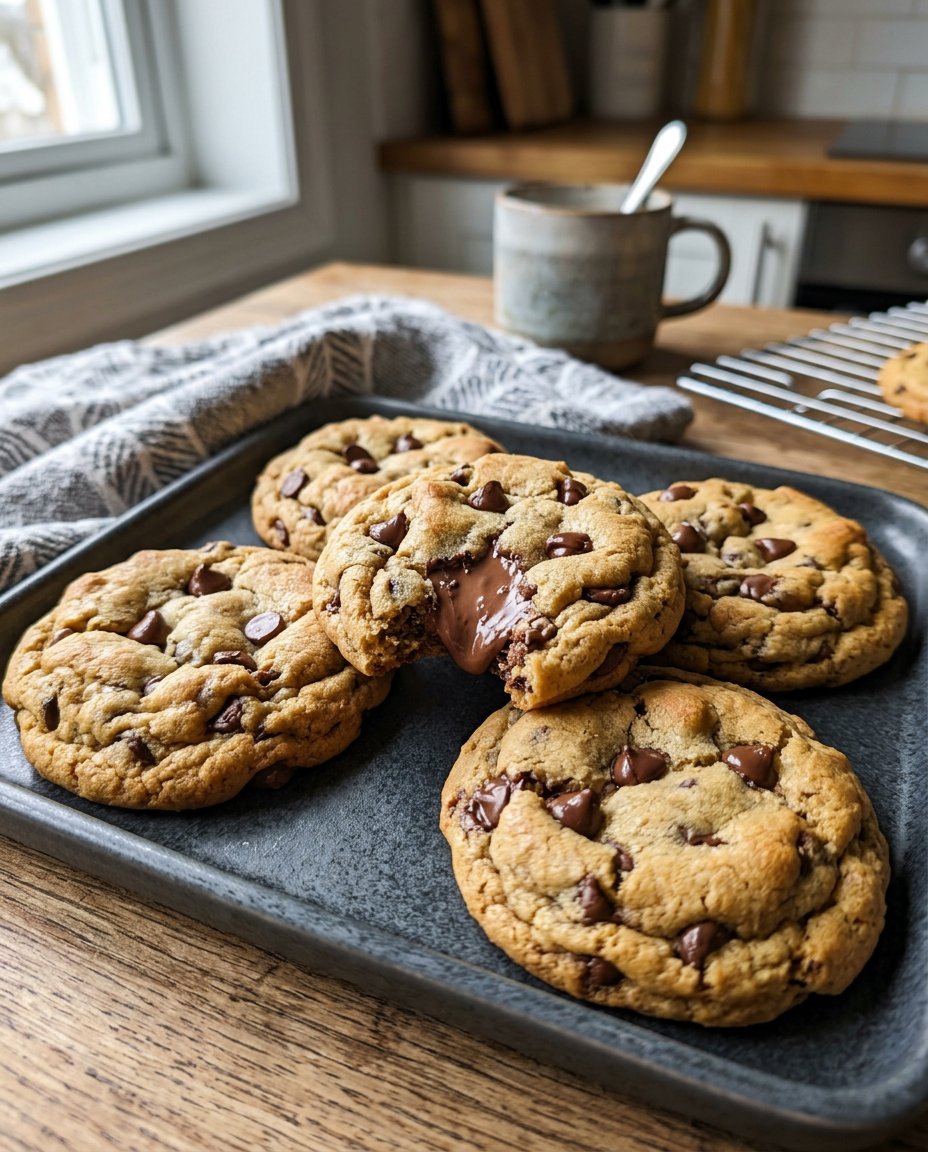
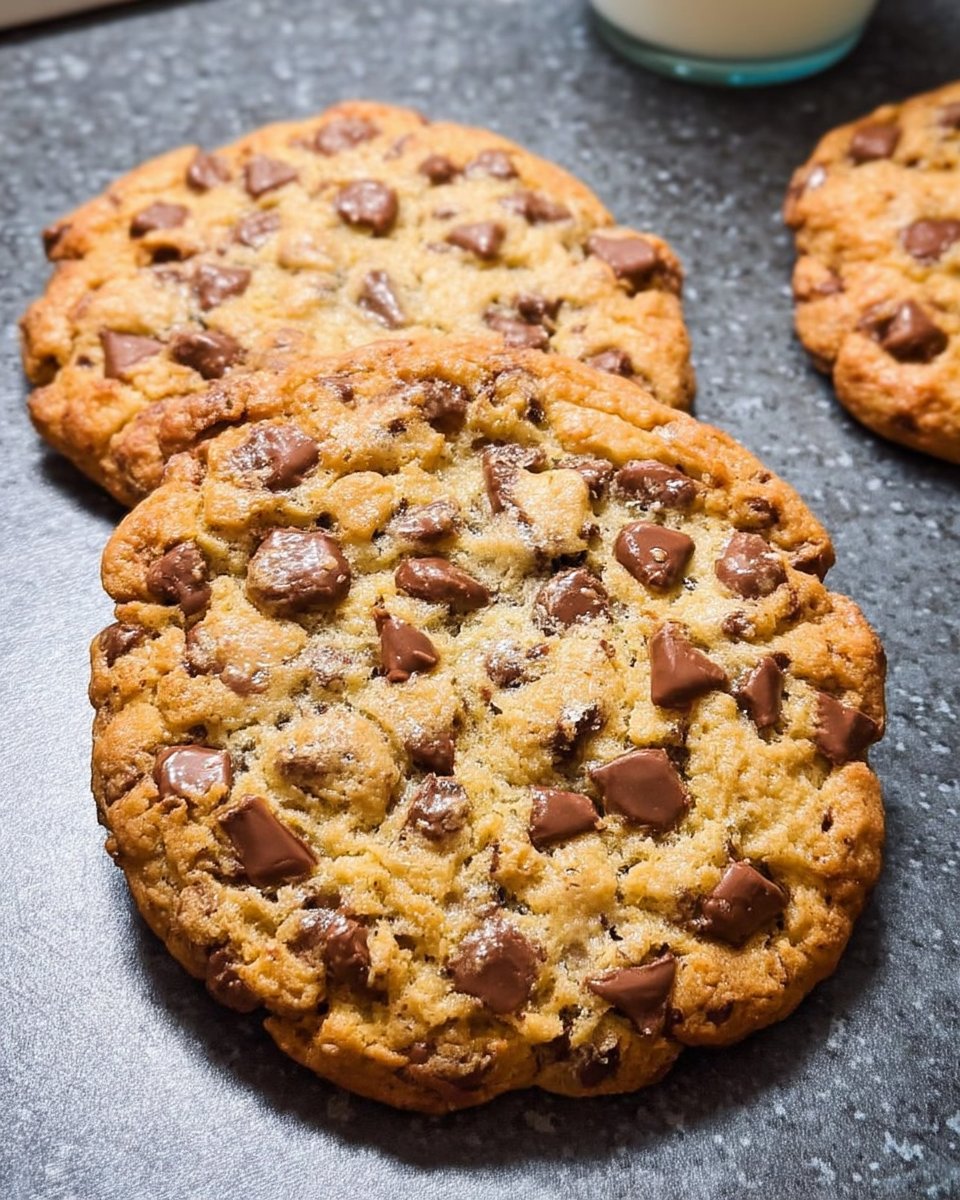
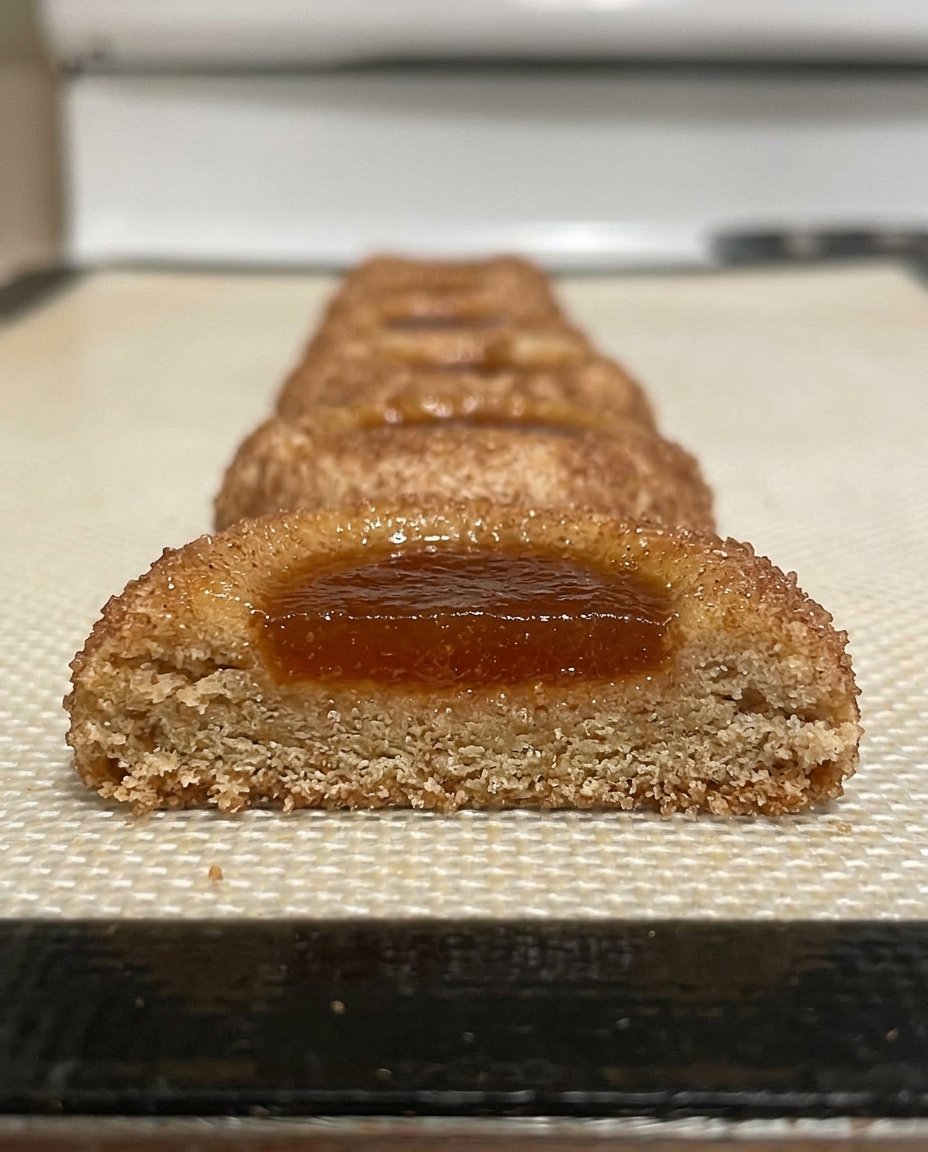
Menthol, the primary organic compound in peppermint, possesses a fascinating ability to trigger the TRPM8 receptors on our sensory neurons, sending a signal to the brain that mimics a physical cooling sensation. This aromatic interaction creates a remarkable contrast when paired with the rich, fatty lipids found in high-quality butter and chocolate. These Peppermint Chocolate Chip Cookies are a scientific study in temperature perception, where the perceived ‘cold’ of the mint balances the decadent ‘warmth’ of the melted bittersweet chocolate.

In this specific formula, we focus on the structural integrity of the dough and the precision of the ingredient ratios. By utilizing a specific hydration period during the chilling phase, we allow the starch granules in the all-purpose flour to fully absorb the liquid from the egg and vanilla extract. This results in a cookie that achieves a beautiful Maillard reaction on the edges while maintaining a soft, chemically stable center that resists over-spreading.
The Scientific Allure of Mint and Chocolate
These Peppermint Chocolate Chip Cookies are a masterclass in flavor layering and sensory science. The primary reason this combination is so successful lies in the molecular synergy between menthol and theobromine. While menthol provides a sharp, refreshing lift, the theobromine in bittersweet chocolate offers a grounding, slightly bitter depth. This prevents the cookie from becoming cloying, as the mint effectively cleanses the palate between bites of rich dough.
From a textural standpoint, this recipe succeeds by balancing varied melting points. The peppermint crunch chips provide a crystalline structure that persists even after baking, offering a satisfying mechanical snap. Conversely, the bittersweet chocolate chips have a lower melting point, creating pockets of fluid Ganache-like texture within the baked matrix. This interplay of textures—the soft dough, the fluid chocolate, and the crystalline peppermint—provides a complex sensory experience that goes far beyond a standard sugar cookie.
Furthermore, we use a specific ratio of granulated to brown sugar. Granulated sugar, or sucrose, is excellent for creating a crisp perimeter through rapid moisture loss during the baking cycle. Brown sugar, containing molasses, is hygroscopic, meaning it attracts and holds moisture. This dual-sugar approach ensures that your Peppermint Chocolate Chip Cookies have the physical structural support to stand tall while remaining tender and moist in the middle. It is a calculated balance of hydration and dehydration that creates the perfect cookie bite every time.
Print
Peppermint Chocolate Chip Cookies
- Total Time: 2 hours 35 mins
- Yield: 24 cookies
- Diet: Vegetarian
Description
These scientifically-crafted cookies blend the cooling sensation of peppermint with the deep richness of bittersweet chocolate. By utilizing a specific hydration rest and precise sugar ratios, they achieve a perfect balance of crisp edges and soft, chewy centers.
Ingredients
- 1 cup Unsalted Butter, softened
- 1/2 cup Granulated Sugar
- 1/2 cup Brown Sugar, packed
- 1 Large Egg
- 1 tsp Pure Vanilla Extract
- 2 cups All-Purpose Flour
- 1/2 tsp Kosher Salt
- 1/2 tsp Baking Soda
- 1 cup Peppermint Crunch Baking Chips
- 1 cup Bittersweet Chocolate Chips
Instructions
- In a medium-sized glass bowl, whisk together the all-purpose flour, kosher salt, and baking soda to ensure even distribution of the leavening agent.
- In a separate large bowl, cream the softened butter with both the granulated and brown sugars using a hand mixer on medium speed until pale and aerated.
- Add the egg and pure vanilla extract to the butter mixture and beat until fully incorporated and the emulsion is smooth.
- Slowly introduce the dry ingredients into the wet mixture in two stages, mixing only until the white streaks of flour disappear to avoid over-developing gluten.
- Using a rubber spatula, gently fold in the peppermint crunch chips and the bittersweet chocolate chips until evenly distributed.
- Cover the bowl tightly with plastic wrap and refrigerate for at least 2 hours, or ideally overnight, to allow for proper starch hydration and fat solidification.
- Preheat your oven to 350°F (175°C) and line a heavy-duty baking sheet with parchment paper.
- Use a 3-tablespoon scoop to create consistent rounds of dough, rolling them briefly into spheres before placing them on the sheet.
- Arrange the dough rounds at least 2 inches apart and bake for 14-15 minutes until the edges are golden-brown while the centers remain slightly soft.
- Allow the cookies to rest on the baking sheet for 5 minutes before transferring them to a wire rack to stabilize.
Notes
To ensure the perfect bake, make sure your butter is at exactly 65°F before you begin creaming, as this specific temperature allows for the best mechanical aeration. Chilling the dough is a non-negotiable step that prevents the cookies from spreading too thin while significantly enhancing the complex flavor developed during the hydration period.
- Prep Time: 20 mins
- Cook Time: 15 mins
- Category: Dessert
- Method: Baking
- Cuisine: American
The Molecular Building Blocks of Flavor
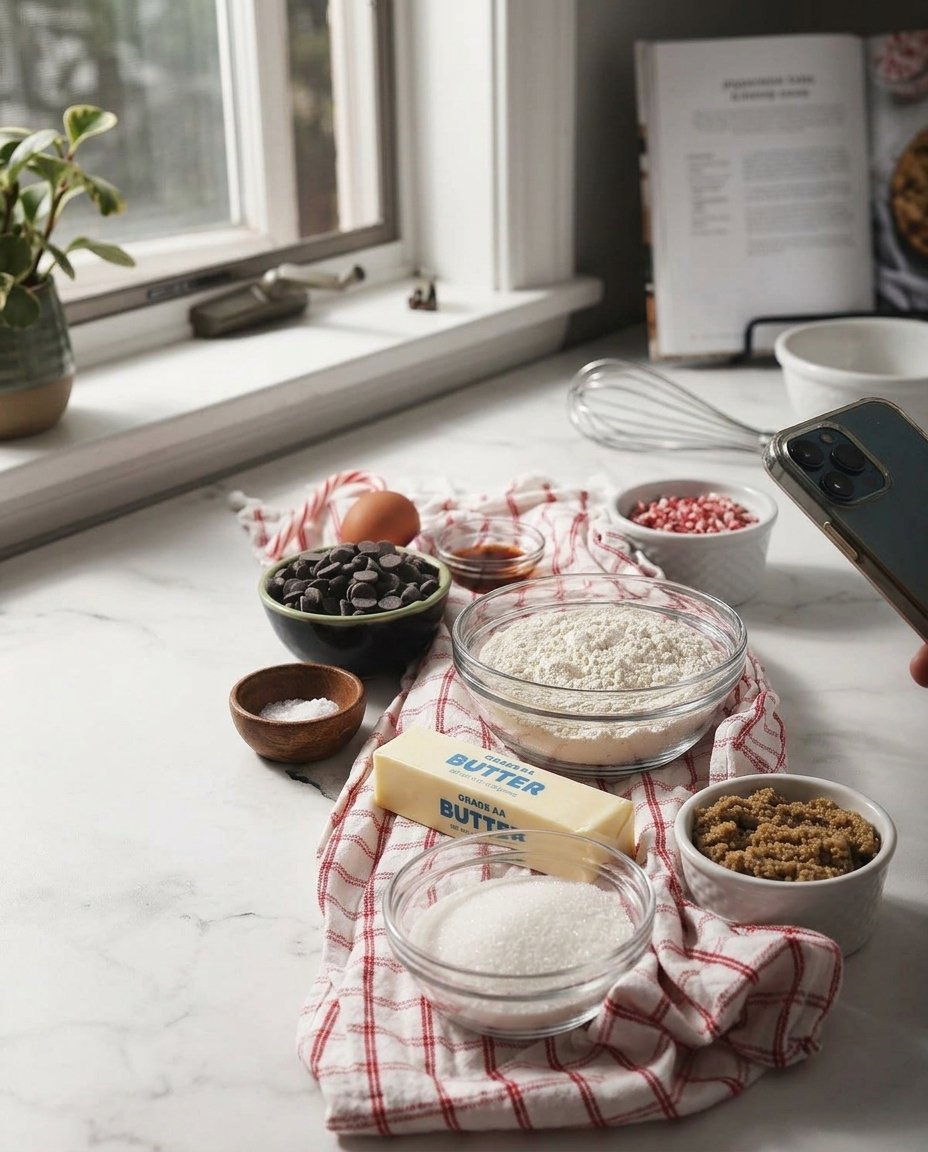
To achieve a superior batch of Peppermint Chocolate Chip Cookies, we must select ingredients based on their chemical contributions to the final bake. Each component serves a specific purpose in the lattice of flavor we are building.
- Unsalted Butter: This is our primary fat source and the base of our emulsion. By using unsalted butter, we maintain total control over the sodium levels, which is vital because salt acts as a flavor potentiator, heightening the perception of both the sugar and the peppermint.
- Granulated and Brown Sugars: As discussed, the sucrose provides structure and browning, while the molasses in the brown sugar contributes to the soft texture and adds a hint of caramel-like notes through the Maillard reaction.
- Large Egg: The egg acts as an emulsifier and a source of protein. The lecithin in the yolk helps bind the fats and liquids together, ensuring a smooth, cohesive dough that doesn’t separate in the oven.
- Pure Vanilla Extract: Vanilla contains vanillin, a compound that chemically amplifies our perception of sweetness. It acts as a bridge between the spicy mint and the earthy chocolate.
- All-Purpose Flour: This provides the gluten framework. We use just enough to support the inclusions without making the cookie tough or bready.
- Kosher Salt and Baking Soda: Sodium bicarbonate (baking soda) facilitates leavening by reacting with the acidic components of the brown sugar, while the salt suppresses any potential bitterness from the chocolate chips.
- Peppermint Crunch Baking Chips: These provide the concentrated menthol flavor and the necessary crystalline texture.
- Bittersweet Chocolate Chips: With a higher cacao percentage, these chips offer a sophisticated bitterness that counters the sweetness of the dough and peppermint.
The Precision Baking Process
Step 1: Whisking the Dry Matrix
In a medium-sized glass bowl, combine the all-purpose flour, kosher salt, and baking soda. Use a wire whisk to ensure the leavening agent is evenly distributed throughout the starch. This prevents uneven rising and ensures that the salt can effectively interact with the other flavor compounds later in the process.
Step 2: Emulsifying the Fats and Sugars
In a separate large bowl, combine the softened butter with both the granulated and brown sugars. Use a hand mixer on medium speed to cream them together. This step is not just about mixing; it is about mechanical aeration. You are forcing tiny air pockets into the fat, which will expand in the heat of the oven to create a light, airy texture. Stop when the mixture is pale yellow and visually aerated.
Step 3: Integrating the Liquid Flavor Carriers
Add the egg and the pure vanilla extract to the creamed butter mixture. Continue to beat the mixture until it is fully incorporated. The batter should look luscious and smell highly aromatic as the vanillin begins to permeate the fats. The egg yolk will stabilize the emulsion, creating a glossy, smooth base for our dry ingredients.
Step 4: Building the Dough Structure
Slowly introduce the dry ingredients into the wet mixture in two stages. This gradual addition prevents the flour from flying out of the bowl and allows for a more controlled integration of the gluten. Mix only until the white streaks of flour disappear. Over-mixing at this stage can lead to excessive gluten development, resulting in a tough, rubbery cookie rather than a tender one.
Step 5: Folding in the Flavor Inclusions
Using a rubber spatula, gently fold in the peppermint crunch chips and the bittersweet chocolate chips. Distribute them evenly throughout the dough so that every cookie contains a balanced ratio of mint to chocolate. This manual folding prevents the chips from breaking and maintains the integrity of the different textures.
Step 6: The Critical Hydration Rest
Cover the bowl tightly with plastic wrap and place it in the refrigerator for at least 2 hours, though overnight is preferred. This rest period is scientifically necessary for two reasons: it allows the fats to solidify, which prevents excessive spreading, and it gives the flour time to fully hydrate, which deepens the flavor profile through enzymatic activity.
Step 7: Thermal Preparation and Shaping
Preheat your oven to 350°F (175°C) and line a heavy-duty baking sheet with parchment paper. Use a 3-tablespoon scoop to create consistent rounds of dough. Roll them briefly between your palms to ensure a uniform spherical shape, which promotes even heat distribution during the bake.
Step 8: Spacing and Heat Transfer
Place the dough rounds on the prepared baking sheet, leaving at least 2 inches of space between each. This allows for proper airflow and prevents the cookies from merging as they spread. The parchment paper acts as a non-stick barrier and ensures the bottoms do not brown too quickly.
Step 9: The Maillard Transformation
Bake for 14-15 minutes. Watch for the edges to turn a golden-brown color—this is the visual cue that the Maillard reaction has occurred, creating complex toasted flavors. The centers may still look slightly underdone, but they will continue to set as they cool on the hot pan.
Step 10: Final Stabilization
Allow the cookies to rest on the baking sheet for 5 minutes before transferring them to a wire rack. This cooling period allows the internal structure to firm up, ensuring the cookie doesn’t fall apart when handled.
Precision Notes for Flavor Chemists
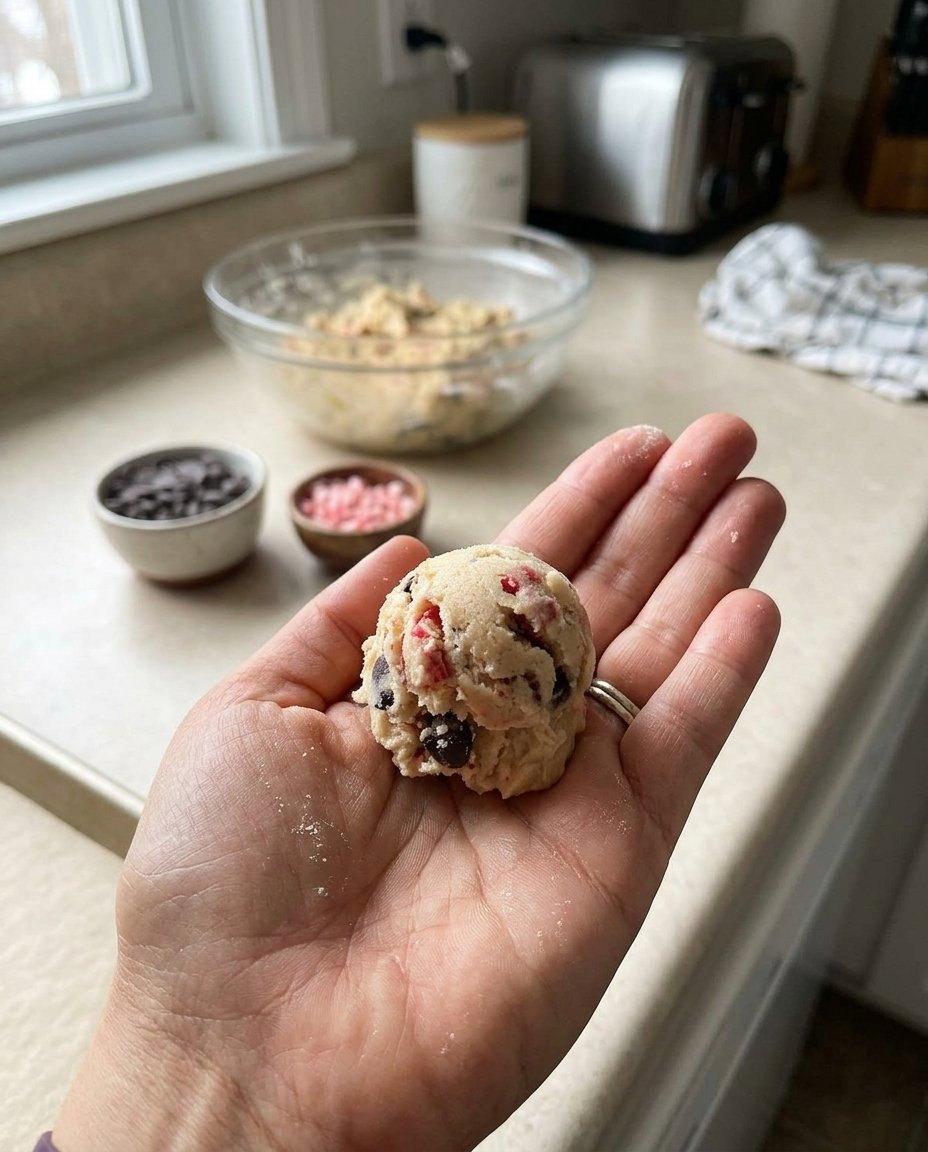
To achieve the most intense flavor profile, consider the placement of your salt. While we add kosher salt to the dry mix, a very light dusting of flaky sea salt on top of the cookies immediately after they exit the oven can provide a sharp contrast that makes the peppermint pop. Salt suppresses the bitterness of the chocolate while making the sugar taste ‘sweeter’ without adding more carbohydrates. If you are interested in the fundamentals of how these ingredients interact, you can study our Foundation Cookie Recipes for more technical data.
Another scientific tip is to ensure your butter is at exactly 65°F before creaming. If the butter is too warm, the air pockets you create will collapse, leading to a greasy, flat cookie. If it is too cold, the sugar crystals won’t be able to cut into the fat effectively. Precision in temperature is just as important as precision in measurement when dealing with fat-based emulsions like cookie dough.
Molecular Swaps and Scientific Adjustments
If you find yourself lacking peppermint chips, you can experiment with flavor pairings that share similar terpene profiles. For instance, orange zest contains limonene, which shares a refreshing, sharp top note with menthol. Substituting orange zest and dark chocolate for the peppermint creates a ‘Terry’s Chocolate Orange’ effect that is grounded in shared chemical compounds. For more on the chemistry of festive baking, see our guide on Holiday Cookie Science.
For those looking for a different textural experience, you can replace the bittersweet chips with white chocolate. White chocolate consists primarily of cocoa butter and milk solids, lacking the cocoa mass found in dark chocolate. This results in a much sweeter, creamier profile that rounds out the sharp peppermint, though it lacks the theobromine bitterness that provides balance. To maintain the scientific integrity of the recipe, reduce the granulated sugar by two tablespoons if using white chocolate to avoid an over-saturation of sweetness.
Optimal Pairing Strategies
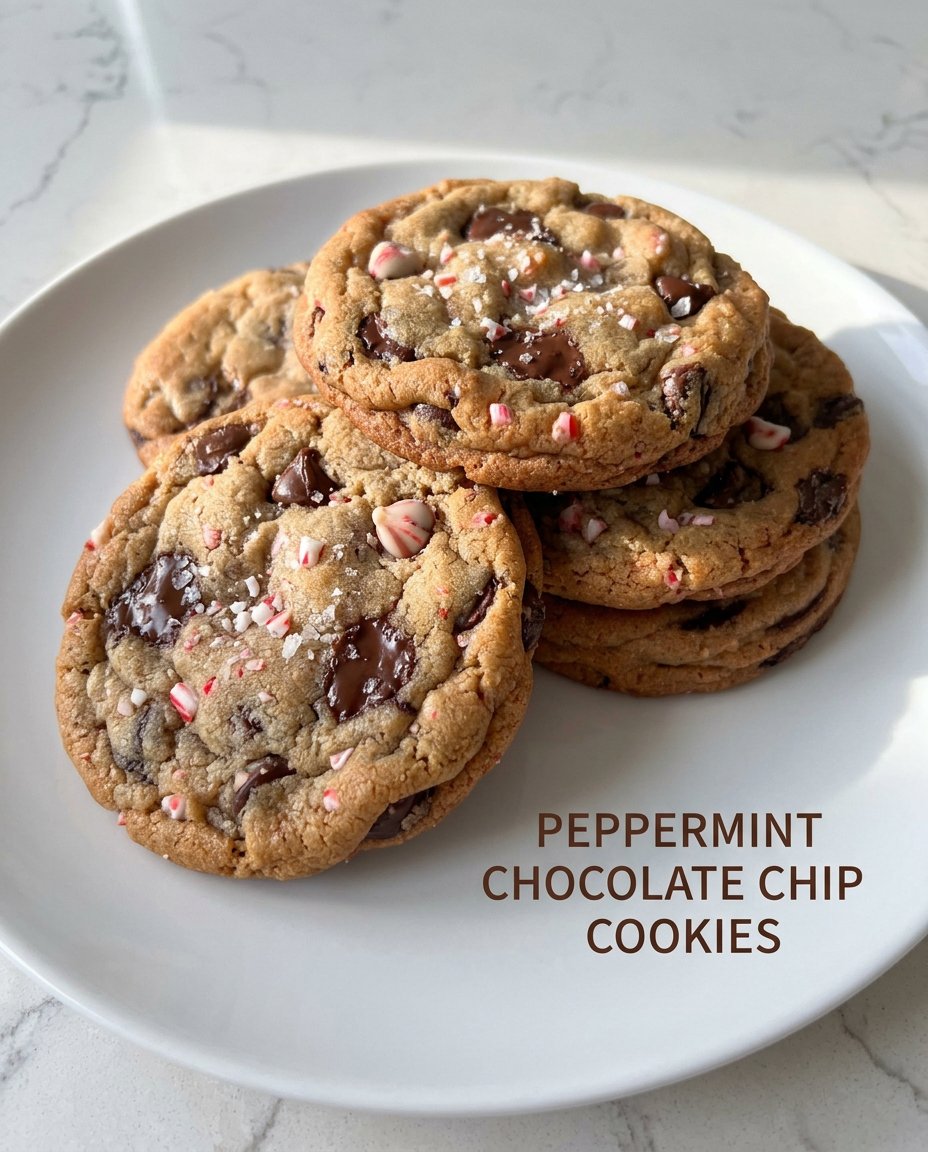
To fully appreciate the flavor science of these Peppermint Chocolate Chip Cookies, serve them with a beverage that complements their chemical makeup. A hot cup of black coffee is an ideal partner because the coffee’s natural acidity and roasted pyrazines harmonize with the bittersweet chocolate. The heat of the coffee also helps melt the fats on the tongue, releasing the menthol aromatics more rapidly. For an analysis of why certain cookie textures go viral with specific drinks, check our Viral Cookie Analysis.
If you prefer a cold pairing, a glass of whole milk is a classic for a reason. The milk proteins (caseins) and fats help coat the palate, which can soften the intensity of the peppermint for those with sensitive TRPM8 receptors. The cold temperature of the milk also enhances the ‘cooling’ sensation of the menthol, creating a synergistic effect that is both scientifically interesting and delicious.
The Final Flavor Theorem
Mastering the Peppermint Chocolate Chip Cookie is about more than just following a recipe; it is about understanding how different compounds like menthol, sucrose, and theobromine interact to create a balanced sensory experience. By controlling the hydration of your dough and the temperature of your fats, you can produce a cookie that is technically perfect and flavorfully complex. If you are looking for ways to streamline your baking process without sacrificing these scientific principles, visit our Efficient Cookie Methods. For a different perspective on this classic holiday combination, you might also enjoy this take on peppermint chocolate chip cookies from our friends at The Speckled Palate. Stay curious, keep measuring with precision, and happy baking!
Follow us for more flavor science: Facebook, Instagram, Pinterest.