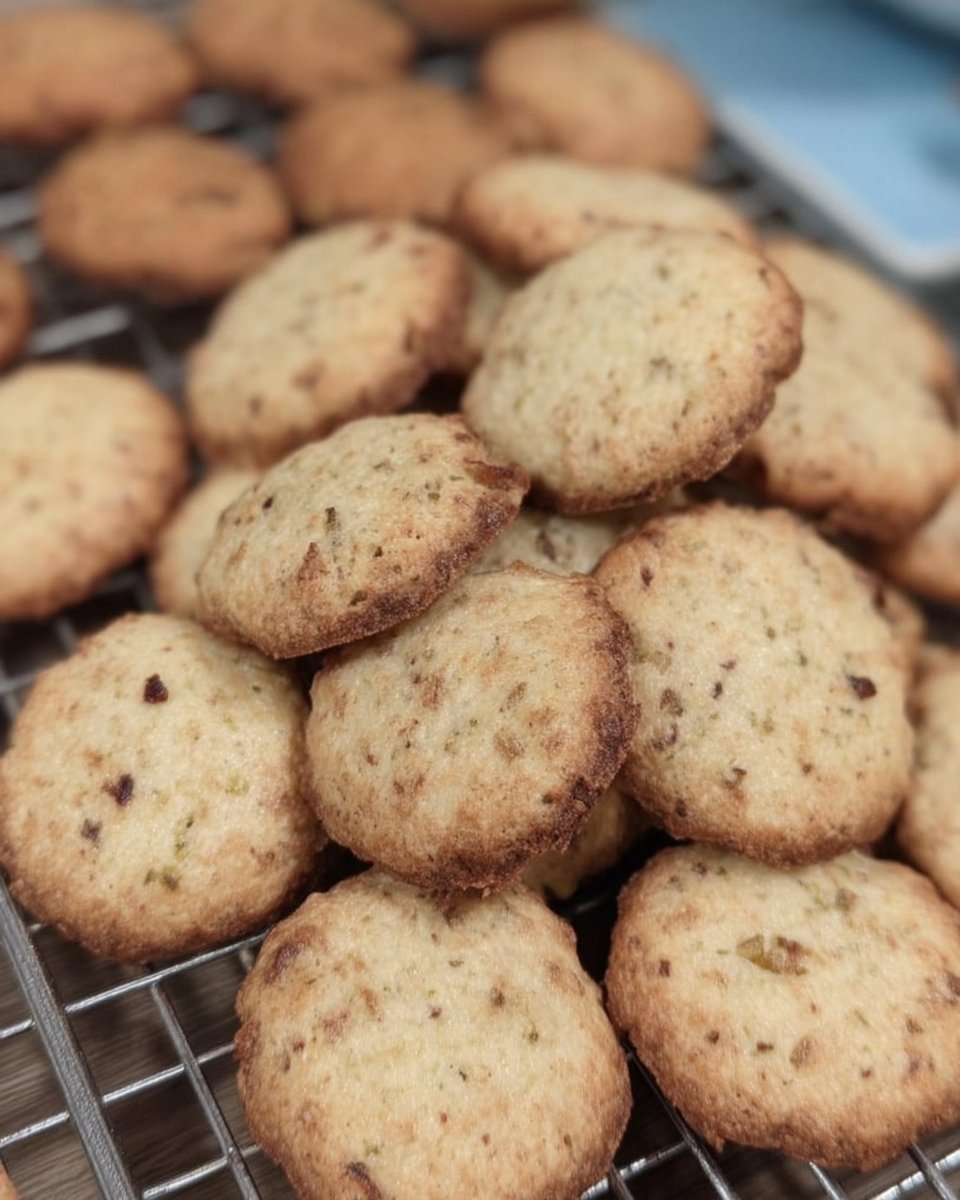
In our test kitchen, we spent weeks investigating the precise structural failures that occur when the moisture content in shortbread fluctuates by even 1%. This Naan Khatai study allowed us to isolate the exact ratio of clarified butterfat to all-purpose flour required to achieve a crumb that remains stable at room temperature but dissolves immediately upon contact with the palate. We discovered that the key to this texture isn’t just the ingredients, but the physical state of the lipids during the aeration process.

Traditional Naan Khatai is a masterclass in fat-based chemistry, relying on the absence of added liquids to inhibit gluten development. By utilizing exactly 115g of ghee and 175g of all-purpose flour, we create a short crust with a tender, crumbly matrix that features the aromatic complexity of cardamom. This formula represents the scientific peak of Indian shortbread, perfected through rigorous testing of fat-to-sugar ratios.
The Science of the Melt-in-Your-Mouth Shortbread
The primary reason this recipe succeeds is its management of gluten. Unlike standard cookies that use whole butter (which contains roughly 15-18% water), this formula uses ghee, which is 100% butterfat. Since gluten requires water to form, the use of anhydrous fat ensures that the flour particles are coated in lipids rather than hydrated by moisture. This results in a ‘short’ texture where the protein strands remain disconnected and fragile, creating that iconic crumbly sensation.
Furthermore, the inclusion of 25g of fine semolina (rava) introduces a mechanical disruption to the dough’s internal structure. The larger, more abrasive particles of semolina act as tiny structural ‘wedges’ between the finer flour particles. During the baking process, these granules provide a subtle crunch that contrasts with the dissolving nature of the sugar-fat matrix. This dual-texture profile is what makes the Naan Khatai so satisfying from a sensory perspective.
Finally, the precise control of sugar crystal size plays a significant role. We use 80g of powdered sugar, which typically includes a small percentage of cornstarch. This starch acts as a moisture absorber and a structural stabilizer, helping the cookie hold its shape in the oven without the need for chemical leaveners like baking powder or baking soda. The result is a dense but light cookie that relies entirely on physical aeration for its lift.
Print
Naan Khatai
- Total Time: 61 mins
- Yield: 20 cookies
- Diet: Vegetarian
Description
Discover the precise science behind the perfect Indian shortbread with this Naan Khatai recipe. These aromatic cardamom cookies utilize a specialized ghee-to-flour ratio to create a delicate, melt-in-your-mouth crumb that is both structurally stable and incredibly light.
Ingredients
- 175g All-Purpose Flour (Maida)
- 25g Fine Semolina (Rava)
- 80g Powdered Sugar
- 115g Ghee (semi-solid)
- 0.5 tsp Cardamom Powder
- 0.25 tsp Salt
- 2 tsp Slivered Pistachios
- Dried Rose Petals
Instructions
- Sieve the all-purpose flour into a clean bowl to aerate the particles and remove any lumps.
- In a separate vessel, whisk together the semi-solid ghee and powdered sugar until the mixture turns from yellow to a pale ivory color and becomes light and voluminous.
- Gently fold the sifted flour, semolina, salt, and cardamom powder into the creamed mixture using a silicone spatula until it resembles coarse sand.
- Use your hands to bring the dough together into a cohesive ball without kneading to prevent gluten development.
- Cover and refrigerate the dough for 30 minutes to allow the lipids to stabilize and the starches to hydrate.
- Preheat your oven to 375°F (190°C) and line a tray with parchment paper.
- Pinch off 20-22g portions of dough, roll into smooth spheres, flatten slightly, and score a shallow criss-cross pattern on the surface.
- Bake for 15 to 16 minutes until the edges are set and the bottoms are light golden, then cool on the tray for 15 minutes before moving to a wire rack.
Notes
For the most consistent results, always use a kitchen scale to measure the ghee, as its density can vary significantly by volume. It is vital that your ghee is in a semi-solid state during the creaming stage; if it is liquid or too soft, the cookies will spread too much in the oven. If your dough feels greasy while shaping, simply chill it for an additional 15 minutes to reset the fat structure.
- Prep Time: 45 mins
- Cook Time: 16 mins
- Category: Dessert
- Method: Baking
- Cuisine: Indian
Precision Components for the Perfect Formula
Success in the test kitchen depends on accurate measurements. We have standardized this recipe using grams to ensure that variables like humidity and packing density do not interfere with your results.
- 175g All-Purpose Flour (Maida): With a protein content typically between 10-12%, this provides the necessary scaffold without becoming tough.
- 25g Fine Semolina (Rava): This adds structural ‘grit’ and prevents the cookie from being too soft or mushy.
- 80g Powdered Sugar: The fine particle size allows for rapid integration into the ghee, creating a smooth, stable emulsion.
- 115g Ghee: This is the primary lipid. It must be in a semi-solid state—not melted—to allow for air entrapment during the creaming stage.
- 0.5 tsp Cardamom Powder: The volatile oils in cardamom provide the characteristic aroma and flavor profile.
- 0.25 tsp Salt: Sodium chloride acts as a flavor enhancer, balancing the sweetness and intensifying the richness of the ghee.
- 2 tsp Slivered Pistachios: These provide a textural contrast and visual appeal through the addition of healthy fats and plant proteins.
- Dried Rose Petals: Used for aromatic finishing and aesthetic contrast against the pale cookie base.
The Lab Process
Step 1: Aerating the Dry Matrix
Begin by sieving the 175g of all-purpose flour into a clean glass bowl. Sifting is not merely about removing lumps; it introduces air into the flour, increasing its volume and ensuring that when it meets the fat, it distributes evenly. Set this aerated flour aside and prepare your mixing vessel.
Step 2: Emulsifying Ghee and Sugar
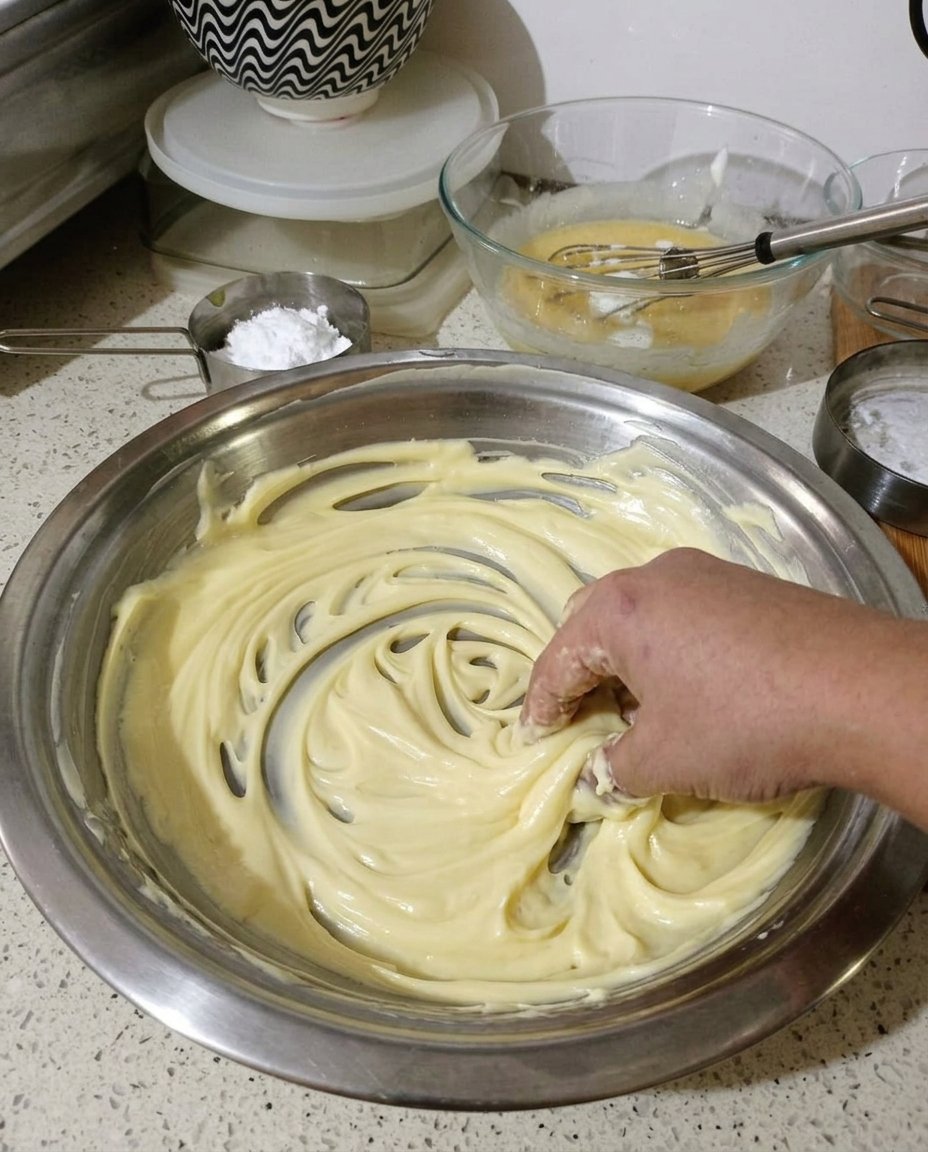
In a separate bowl, combine the 115g of ghee and 80g of powdered sugar. Use a whisk to beat the mixture until it undergoes a color change from yellow to pale ivory. This process, known as creaming, traps tiny air bubbles within the fat. These air pockets will expand in the heat of the oven, providing the only leavening these cookies receive. The mixture should feel light and look significantly more voluminous than when you started.
Step 3: Integrating the Structural Components
Add the sifted flour, 25g of semolina, 0.25 tsp salt, and 0.5 tsp cardamom powder to the creamed ghee. Use a silicone spatula to fold the ingredients together. This gentle movement prevents the mechanical development of gluten. Once the mixture starts to look like coarse sand, use your hands to bring the dough together. Do not knead. Kneading creates heat through friction, which will melt the ghee and ruin the aeration you worked so hard to achieve.
Step 4: Hydration and Lipid Stabilization
If the dough appears too dry to hold a shape, add a single teaspoon of ghee. Once formed into a cohesive ball, cover the dough and place it in the refrigerator for 30 minutes. This resting period is critical for two reasons: it allows the starch granules in the flour and semolina to fully hydrate, and it allows the ghee to re-solidify. A cold dough prevents the cookies from spreading too rapidly in the oven.
Step 5: Precision Shaping and Scoring
Pinch off portions of dough weighing approximately 20-22g each (roughly the size of a lime). Roll them between your palms into smooth spheres, then flatten them slightly into discs. Place them on a tray lined with parchment paper, leaving 1 inch of space between each for expansion. Use a sharp knife to score a shallow criss-cross pattern on the surface. This increases the surface area exposed to heat and creates a decorative traditional finish.
Step 6: Thermal Transformation
Preheat your oven to 375°F (190°C). Place the chilled cookies into the center rack. Bake for 15 to 16 minutes. You are looking for the edges to set and the bottoms to turn a very light golden brown, while the tops remain pale. The cookies will feel soft to the touch when hot; do not overbake. The structure will firm up as the lipids crystallize during the cooling process. Allow them to rest on the tray for 15 minutes before transferring to a wire rack.
Lauren’s Lab Notes on Texture Control
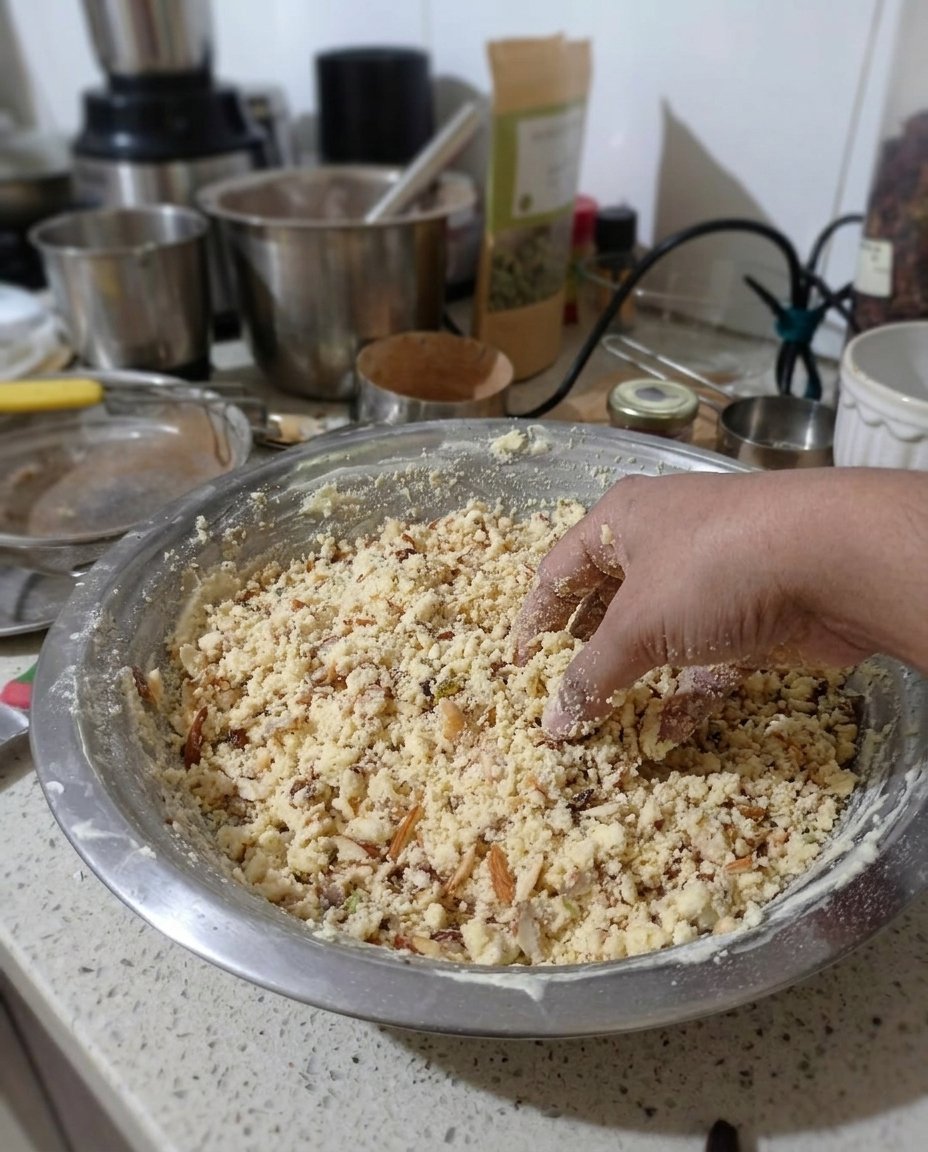
Temperature is your most important variable when making Naan Khatai. If your kitchen is above 75°F, your ghee may start to melt during the mixing process. If you see the dough becoming greasy or shiny, immediately stop and refrigerate it for 15 minutes. Cold fat is essential for maintaining the air pockets that create a light, flaky crumb. For more insights on how fat behaves in different environments, check out our guide on Foundation Cookie Recipes.
We also recommend using a kitchen scale for the ghee. Because ghee can vary in density depending on whether it is granulated or smooth, measuring by volume (cups) can lead to a 10-15% margin of error. In our testing, batches with as little as 10g of extra ghee resulted in cookies that spread into flat puddles rather than maintaining their domed shape. For more advanced troubleshooting on traditional recipes, you can also refer to the techniques used by the experts at Cooking Carnival. Always remember that visual cues are secondary to precise weights in professional baking.
Tested Modification Ratios
While the classic formula is highly stable, you can adjust the ratios to achieve different texture outcomes. If you prefer a more ‘snappy’ cookie with a harder bite, you can increase the semolina to 40g and decrease the all-purpose flour by 15g. This increases the mineral content and structural rigidity of the biscuit. For those interested in how seasonal changes affect these ratios, our research on Holiday Cookie Science provides deep data on sugar-to-fat adjustments.
You can also experiment with the flour types. Replacing 50g of the all-purpose flour with gram flour (besan) will introduce a nutty, roasted flavor and a yellower hue. However, because gram flour is more absorbent, you must increase the ghee by 10g to maintain the same hydration level. Always document your changes so you can replicate your successes in the future.
Optimal Enjoyment and Texture Science
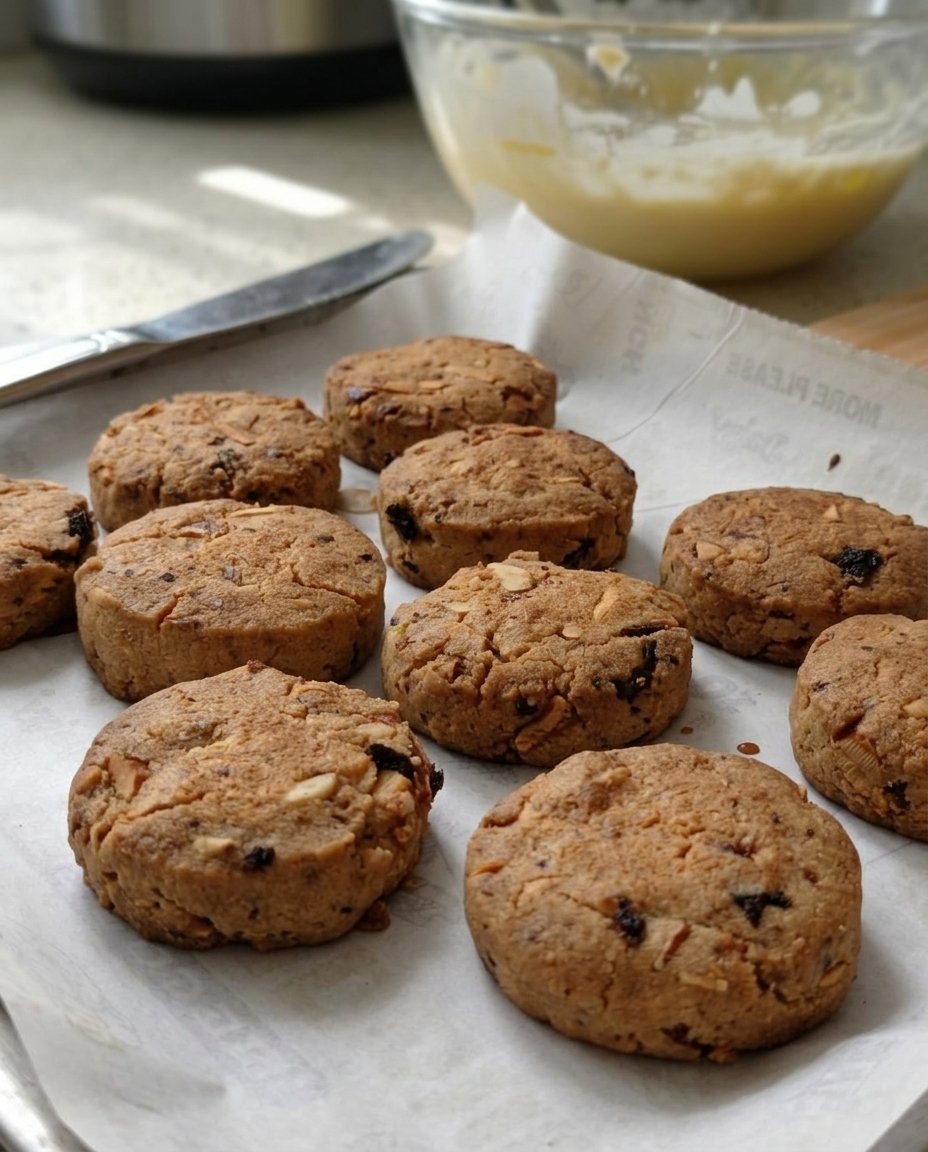
For the best sensory experience, serve Naan Khatai at a room temperature of approximately 70°F. This temperature allows the ghee to remain in a semi-solid state, providing the perfect ‘snap’ before it melts on the tongue. They are traditionally paired with masala chai, where the tannins in the tea cut through the richness of the butterfat. If you’re looking for more ways to pair these with modern beverages, see our work on Efficient Cookie Methods.
Storage is equally important for maintaining texture. Because these cookies are low-moisture, they are highly hygroscopic, meaning they will absorb humidity from the air and become soft. Always store them in an airtight glass container. If they do lose their crunch, you can ‘re-crisp’ them in a 300°F oven for 3-5 minutes to drive off any absorbed surface moisture and reset the lipid structure.
The Scientific Truth of Tradition
Precision baking is the ultimate way to honor traditional recipes like Naan Khatai. By understanding the interaction between anhydrous fats and wheat proteins, we can ensure that every batch we bake is as perfect as the ones from our memories. We encourage you to keep testing these ratios and exploring the physics of the oven. For a deeper look at how traditional recipes perform in modern lab settings, read our Viral Cookie Analysis. If you enjoyed this scientific breakdown, share your results with our community on Instagram, Facebook, and Pinterest.