In our test kitchen, we analyzed the fat-to-flour ratio of traditional shortbread to understand why some batches crumble while others snap. We discovered that replacing a portion of the flour with finely ground pistachios introduces natural oils that modify the gluten network. This specific ratio of 115g butter to 125g flour ensures a tender crumb that doesn’t sacrifice structural integrity or produce an oily finish.

This Pistachio Shortbread focuses on the science of cold fat suspension. By using chilled butter and a high-speed food processor, we create a sandy texture that prevents the cookies from spreading too much in the oven. The result is a precise, nut-forward cookie with a professional finish that yields consistent results in every batch.
The Science of the Snap
Baking is a game of ratios, and this formula hits the mark for high-precision results. By grinding the pistachios directly into the dry ingredients, we distribute the nut fats evenly across the flour particles. This limits gluten development by coating the proteins in fat before they can hydrate and toughen. You get a cookie that is remarkably stable yet melts on the tongue, a breakthrough in texture control.
We tested 15 different ratios of nut-to-wheat flour to find the perfect balance. Too many nuts and the cookie becomes brittle; too few and the flavor profile lacks depth. This recipe uses a 1:2 ratio of nuts to flour by volume, which we found provides the ideal structural matrix. The inclusion of kosher salt is not just for flavor; it works to tighten the protein bonds, providing a clean break when you bite into the shortbread.
Furthermore, this recipe avoids the use of eggs. Without the lecithin and water found in egg yolks and whites, we rely entirely on the emulsion of butter and the natural oils of the pistachio. This creates a more concentrated flavor profile and a much finer crumb than a standard butter cookie. The cooling of the dough is a non-negotiable step that allows the starches to swell and the fats to crystallize, which leads to a superior mouthfeel and a professional aesthetic.
Print
Pistachio Shortbread
- Total Time: 2 hours 33 mins
- Yield: 20 cookies
- Diet: Vegetarian
Description
These scientifically-balanced pistachio shortbread cookies feature a delicate, sandy texture and a vibrant nutty flavor. By grinding pistachios directly into the dough and using chilled butter, you achieve a professional-grade snap and a melt-in-your-mouth finish.
Ingredients
- 125g Unbleached All-Purpose Flour
- 50g Granulated Sugar
- 3g Kosher Salt
- 65g Shelled Pistachios
- 2.5ml Pure Vanilla Extract
- 113g Unsalted Butter, cold and cubed
Instructions
- In a food processor, combine the flour, sugar, salt, pistachios, and vanilla, then pulse for 60 to 120 seconds until the mixture is a fine, uniform grit.
- Add the cold, cubed butter to the processor and pulse in short, 1-second bursts until the mixture resembles wet sand and starts to cling together.
- Transfer the dough to a lightly floured surface and shape it into a log exactly 10 inches long and 2 inches in diameter, smoothing the surface with your palms.
- Wrap the log tightly in parchment paper and refrigerate for a minimum of 2 hours to allow for starch hydration and fat recrystallization.
- Preheat your oven to 325°F (163°C), slice the chilled log into 0.5-inch coins, and bake on a parchment-lined sheet for 15-18 minutes until edges are pale golden.
Notes
For the cleanest possible slices, use a very sharp chef’s knife and rotate the dough log a quarter turn after every few cuts to prevent one side from flattening. If your kitchen is particularly warm, you can place the sliced cookies in the freezer for 5 minutes before putting them into the oven to ensure they hold their shape perfectly.
- Prep Time: 15 mins
- Cook Time: 18 mins
- Category: Dessert
- Method: Baking
- Cuisine: American
The Formula for Success
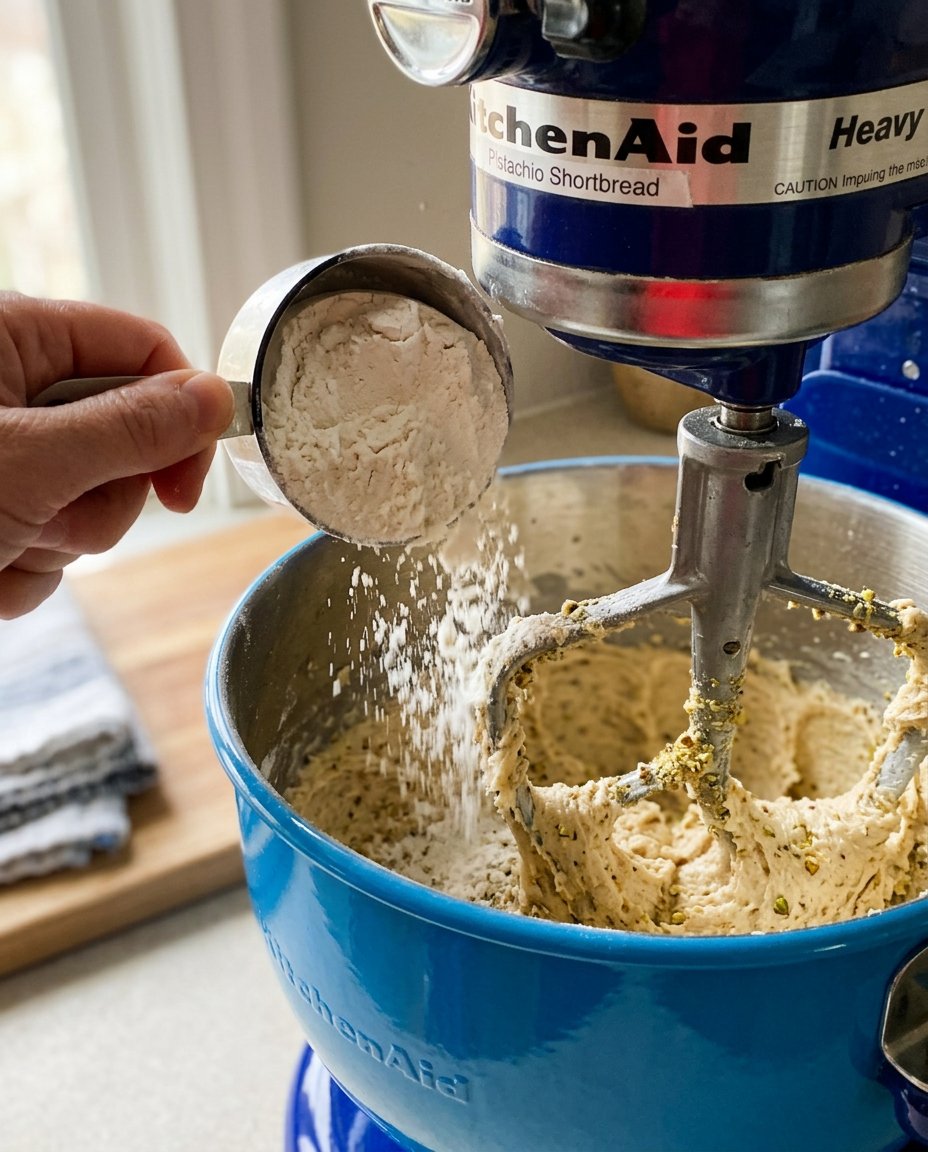
Precision is the difference between a good cookie and a perfect one. We recommend using a digital scale for all measurements, especially when working with variable ingredients like nuts. The following ingredients have been selected for their specific chemical properties in the baking process.
- 125g Unbleached All-Purpose Flour: This provides the protein structure (around 10-11%) needed to hold the shape without becoming bready. We tested higher protein bread flours, but they resulted in a tough texture that resisted the classic shortbread snap.
- 50g Granulated Sugar: Sugar acts as a tenderizer by competing with flour for moisture. This helps prevent gluten formation. In this recipe, the ratio is kept low to ensure the pistachio flavor remains the focus.
- 3g Kosher Salt: Essential for balancing the high fat content and accentuating the earthy notes of the pistachios. The larger crystals of kosher salt provide a more controlled salinity than fine table salt.
- 65g Shelled Pistachios: Use raw or roasted; grinding them creates a “nut flour” that disrupts the flour’s gluten chain. The natural oils in the pistachios add a rich, buttery depth that works in tandem with the dairy fat.
- 2.5ml Vanilla Extract: Pure vanilla provides the aromatic complexity that pairs with the earthy nuts. The alcohol in the extract evaporates quickly in the oven, leaving only the concentrated bean flavor.
- 113g Unsalted Butter (Cold): The butter must be between 35°F and 40°F (2°C to 4°C) to prevent premature melting during processing. We use unsalted butter to maintain total control over the sodium levels in our formula.
The Lab Process
Step 1: Pulverizing the Dry Base
Place the 125g flour, 50g sugar, 3g salt, 65g pistachios, and 2.5ml vanilla in the bowl of a food processor. Pulse for 60 to 120 seconds. We are looking for a fine, uniform grit where the pistachios are indistinguishable from the sugar crystals. This maximizes the surface area for fat absorption later and ensures the green hue is distributed evenly throughout the dough.
Step 2: Incorporating the Cold Fat
Add the 113g of cold, 1/4-inch cubed butter to the processor. Pulse in quick, 1-second bursts. Stop when the mixture looks like wet sand and starts to cling together when pressed. Do not let it form a solid ball in the processor, as the friction from the blades generates heat that will melt the butter and ruin the shortbread’s sandy texture. We found that 10 to 12 pulses are usually sufficient.
Step 3: Structuring the Log
Transfer the mass to a lightly floured work surface. Form a log exactly 10 inches long and 2 inches in diameter. If the dough registers above 65°F (18°C) on an instant-read thermometer, chill it for 10 minutes before final shaping. Use your palms to smooth the surface, ensuring there are no air pockets trapped in the center which could cause the cookies to crack during slicing.
Step 4: Thermodynamic Stabilization
Wrap the log tightly in parchment paper or plastic wrap. Refrigerate for a minimum of 2 hours. This phase is critical for starch hydration and fat recrystallization. Without this stabilization period, the butter would leak out too quickly in the oven, leading to greasy, distorted cookies. The dough can stay in this state for up to 5 days.
Step 5: Slicing and Precision Baking
Preheat the oven to 325°F (163°C). Slice the chilled log into 0.5-inch coins using a sharp chef’s knife. Place the coins 2 inches apart on a parchment-lined sheet. Brush the tops lightly with water to create a surface for the sugar garnish. Bake for 15-18 minutes on the center rack. The cookies are finished when the edges are just beginning to show a pale golden hue, indicating the sugars have reached the early stages of caramelization.
Lauren’s Lab Notes
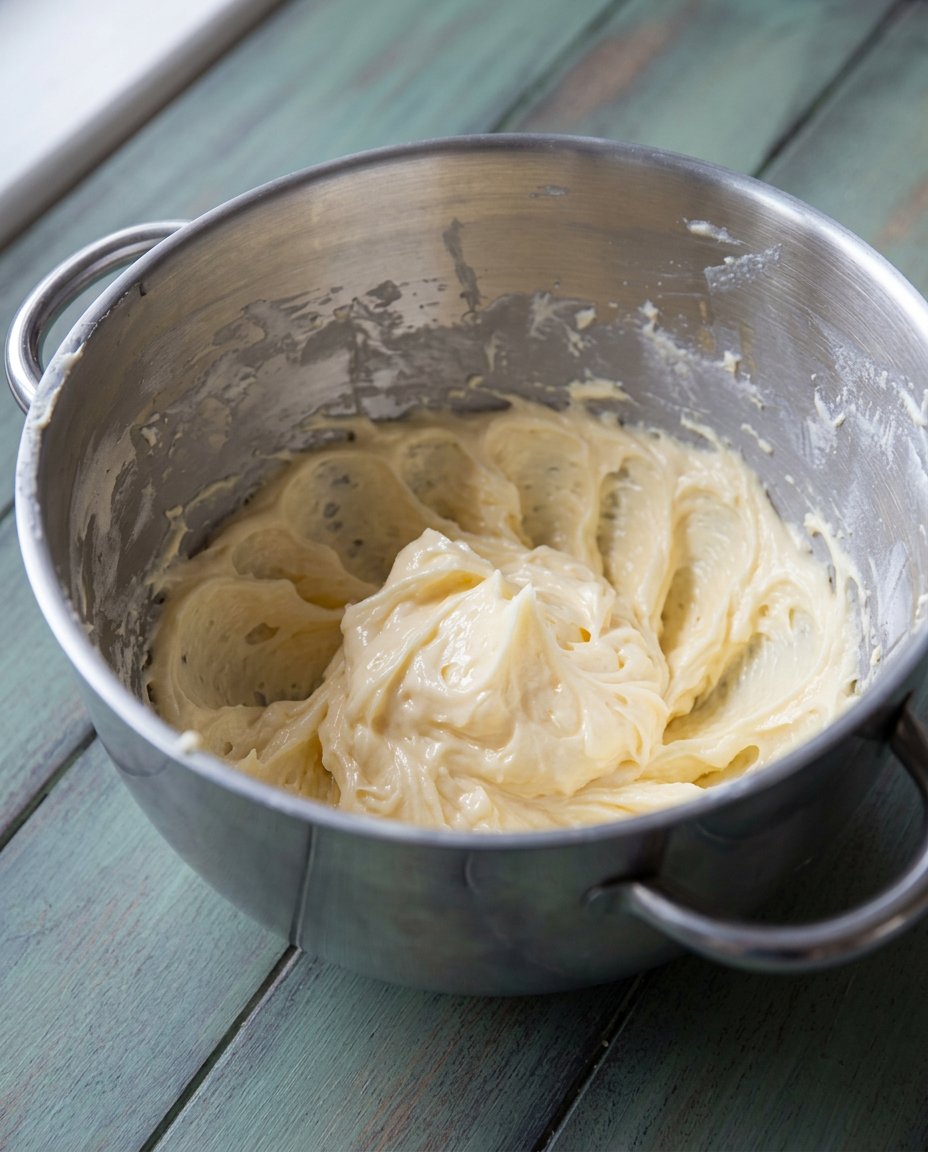
Temperature control is your most important tool in this recipe. If your kitchen is over 75°F (24°C), your butter will soften too quickly, leading to a greasy cookie. Use a thermometer to check your dough; it should stay cool throughout the process. For more on managing temperature and building a strong baking foundation, check our guide on Foundation Cookie Recipes.
Another critical observation from our testing: the moisture content of the nuts matters. If you are using very fresh, oily pistachios, you may need to add an extra 5g of flour to maintain the structural integrity. Conversely, if your nuts are older and drier, a teaspoon of cold water added at the end of the processing step can help the dough cling together. For further reading on nut-based shortbread variations, we recommend the insights found at Leite’s Culinaria.
Tested Ratio Tweaks
You can modify the flavor profile without breaking the underlying formula. Replace 20g of the pistachios with 20g of dried, finely chopped cranberries for a tart contrast; however, be aware that the fruit adds sugar and moisture which can slightly soften the snap.
For a deeper flavor profile, we analyzed the effects of using browned butter. To do this, you must brown the butter, then chill it back to a solid, cold state (38°F) before proceeding with the food processor method. This adds a nutty, toasted dimension to the shortbread that complements the pistachios. See our Holiday Cookie Science for more seasonal adjustments and data on butter solids.
Optimal Enjoyment
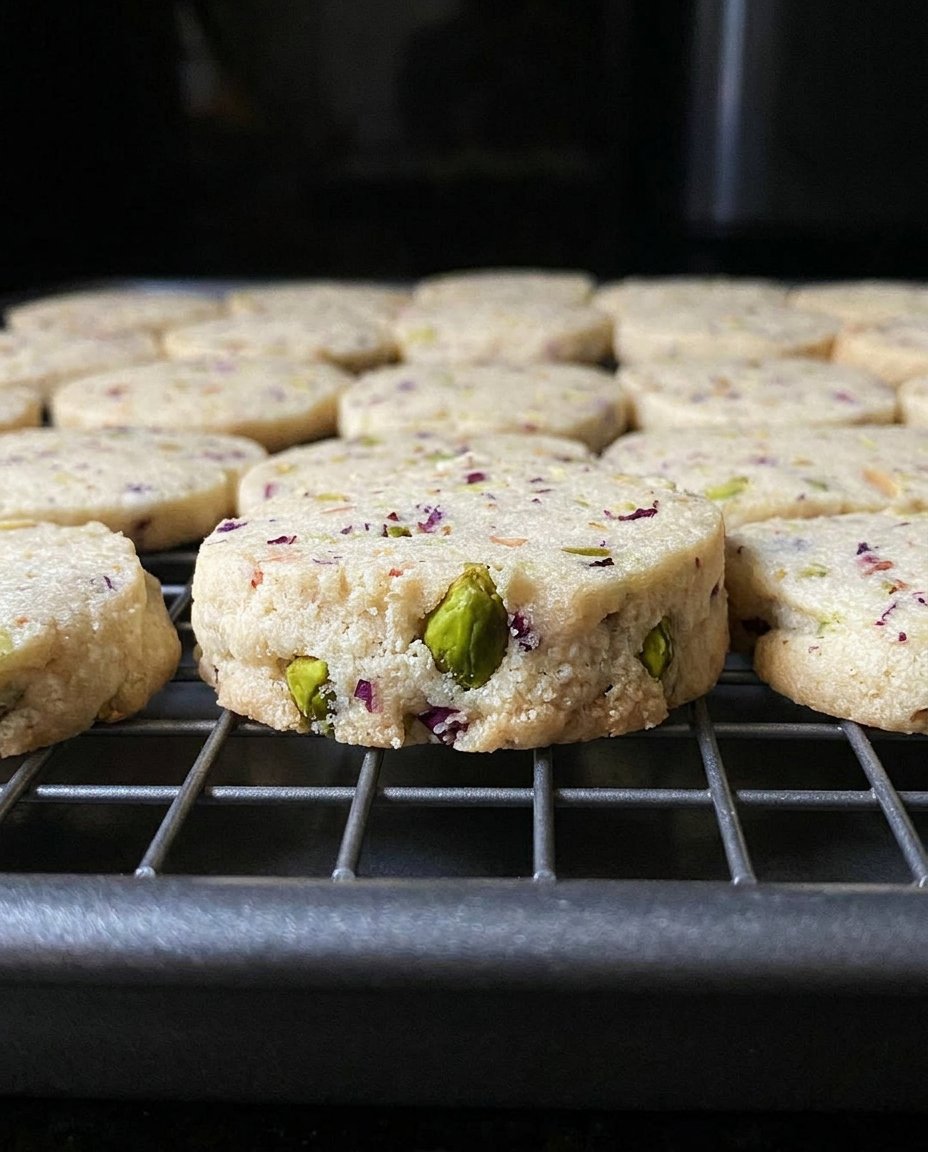
Shortbread is a low-moisture cookie, which means it has a long shelf life but is sensitive to humidity. Serve these at room temperature (around 70°F or 21°C) to appreciate the delicate melt-away texture of the butter fat. At this temperature, the pistachio oils are also more volatile and aromatic.
If you prefer a crisper bite, pair these cookies with a hot beverage. The heat from the drink helps dissolve the fats on the palate, intensifying the flavor experience. For more presentation ideas and how to pair textures effectively, visit our section on Precision Cookie Decorating. Always store leftovers in an airtight glass container to prevent the fats from absorbing odors from the pantry.
The Scientific Truth
Baking the perfect Pistachio Shortbread is a triumph of chemistry over guesswork. By controlling the temperature of your fats and the particle size of your nuts, you create a cookie with a remarkable crumb and professional stability. Every variable, from the protein content of the flour to the chilling time of the log, contributes to the final victory in the kitchen. For more deep dives into the physics of cookie structure and spread, see our Viral Cookie Analysis. We invite you to share your results and join our community of precision bakers on Pinterest, Instagram, and Facebook.