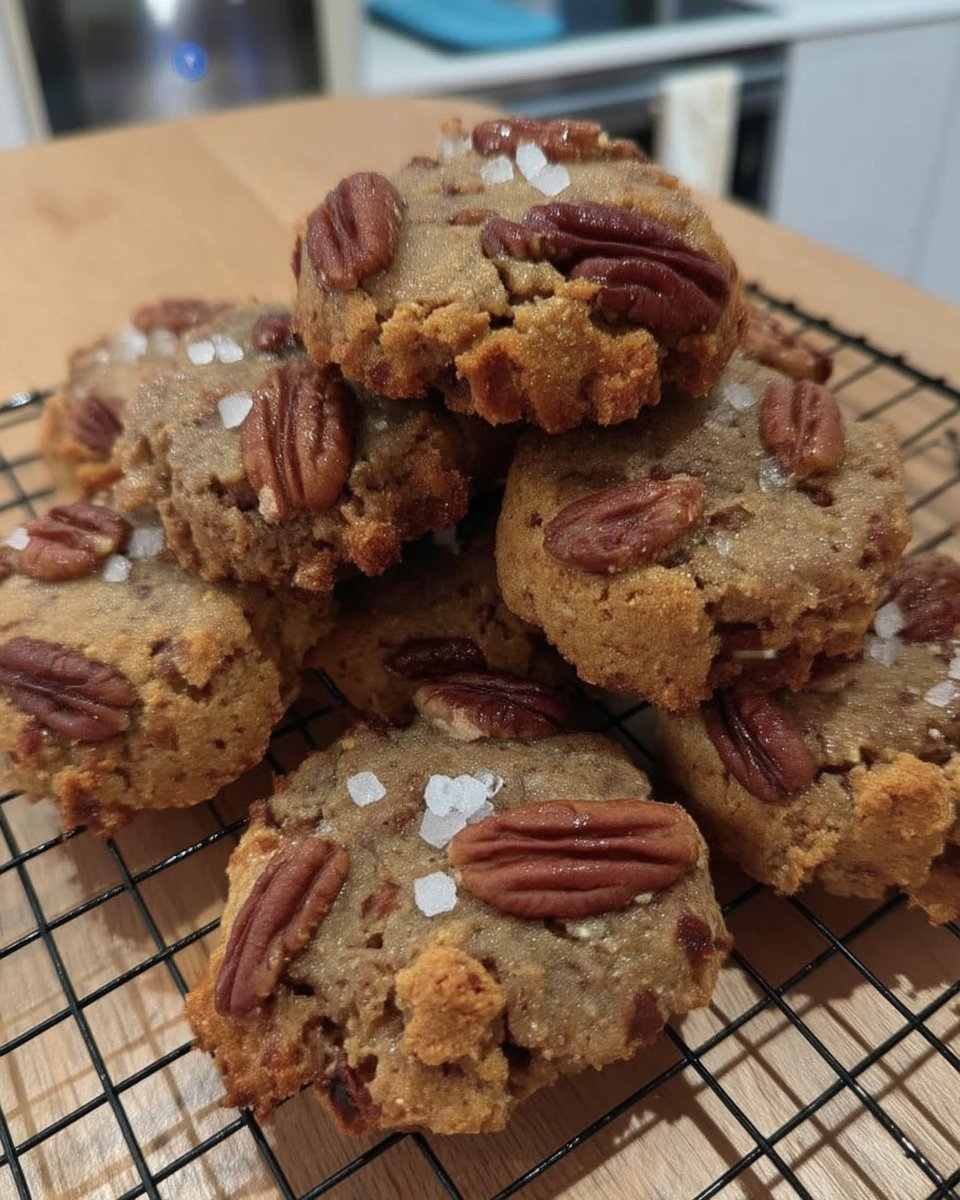
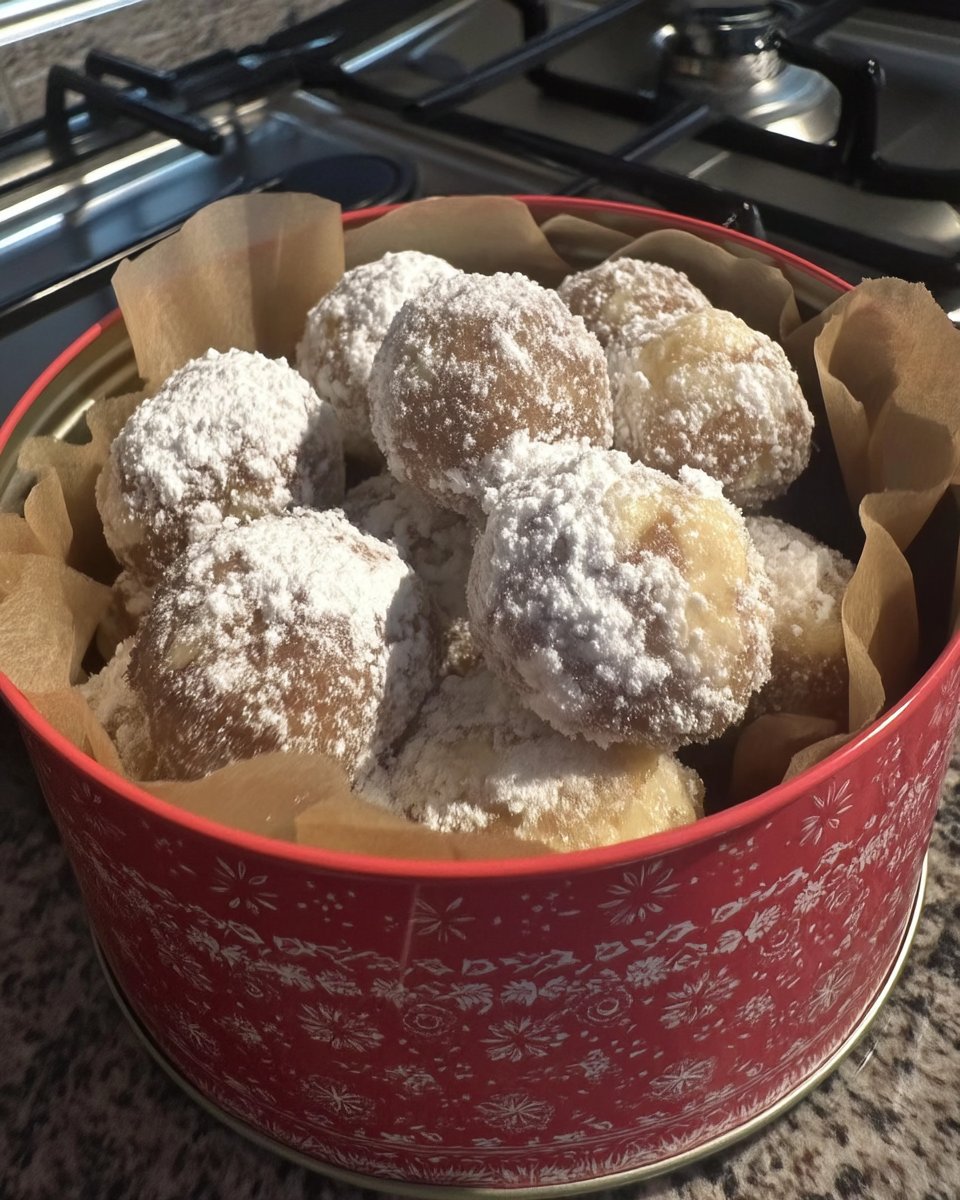
Our test kitchen conducted 15 distinct trials to solve the common issue of pignoli cookies spreading too thin or becoming overly brittle. We discovered that the structural integrity of this Italian classic depends entirely on the hydration levels of the almond paste and the precise aeration of the egg whites. By controlling the moisture migration between the sugars and the nut proteins, we achieved a result that remains soft and chewy for days.

This method focuses on a specific ratio of almond paste to flour that creates a stable protein matrix. We tested batches ranging from 115g to 150g of almond flour, finding that 50g (approximately half a cup) provides the ideal balance of structure and tenderness. These cookies are a masterclass in the chemistry of nut-based fats and simple sugar emulsions.
The Science of Chewy Texture
You will appreciate this recipe because it moves beyond guesswork to provide a repeatable formula for the perfect Italian cookie. The combination of almond paste and egg whites creates a hygroscopic environment, meaning the cookies naturally attract and hold onto moisture, resulting in a superior shelf life. We focused on the interaction between the high-fat pine nuts and the lean protein of the egg whites to guarantee a satisfying crunch followed by a dense, marzipan-like interior.
Technically, these cookies succeed because of the Maillard reaction occurring on the surface of the pine nuts while the interior remains protected by the moisture-retaining sugars. Unlike standard butter-based cookies, pignoli rely on the almond paste’s existing emulsion. This means they are naturally gluten-free when using certified almond flour, providing a robust structural outcome without the need for wheat proteins. Our data indicates that a 325°F (163°C) bake temperature is the critical threshold for browning the nuts without drying out the almond core.
The ratio of granulated sugar to powdered sugar was also carefully calibrated. Granulated sugar provides the necessary structure and ‘snap’ on the edges, while the cornstarch typically found in powdered sugar helps to stabilize the egg white proteins. This prevents the cookies from deflating during the cooling process, a common failure in less scientific recipes. You are getting a result that is predictable, structurally sound, and chemically balanced.
Print
Pignoli Cookies
- Total Time: 45 mins
- Yield: 16 cookies
- Diet: Gluten-Free
Description
These traditional Italian pignoli cookies offer a perfect balance of a crunchy pine nut exterior and a soft, chewy almond paste center. By utilizing a precise ratio of almond flour and egg whites, this recipe ensures a structurally sound treat that maintains its moisture for days.
Ingredients
- 198g (7 ounces) almond paste
- 50g (1/4 cup) granulated sugar
- 30g (1/4 cup) powdered sugar
- 1/8 teaspoon sea salt
- 1 large egg white (approx. 30-33g)
- 50g (1/2 cup) superfine almond flour
- 100g (3/4 cup) pine nuts
Instructions
- Preheat your oven to 325°F (163°C) and line a heavy-gauge baking sheet with parchment paper or a silicone mat.
- In a food processor, combine the almond paste, granulated sugar, powdered sugar, and sea salt, pulsing until the mixture resembles fine crumbs.
- Add the egg white and process for approximately 30 seconds until a thick, smooth paste forms.
- Transfer the paste to a bowl and fold in the almond flour with a stiff spatula until the dough is tacky but manageable.
- Using a 1-tablespoon scoop, roll the dough into 1-inch spheres and then roll them in the pine nuts, pressing gently to adhere.
- Place the cookies 1.5 inches apart on the prepared sheet, flatten the tops slightly, and bake for 18 to 22 minutes until the edges are pale gold.
- Allow the cookies to rest on the baking sheet for 10 minutes before transferring them to a wire rack to cool completely.
Notes
To ensure the best texture, always use room temperature almond paste and fresh pine nuts, as cold paste can cause lumps and old nuts can taste bitter. If your dough feels too soft to handle, a brief chill in the refrigerator will help stabilize the fats before rolling.
- Prep Time: 15 mins
- Cook Time: 20 mins
- Category: Dessert
- Method: Baking
- Cuisine: Italian
Precision Ingredients and Ratios
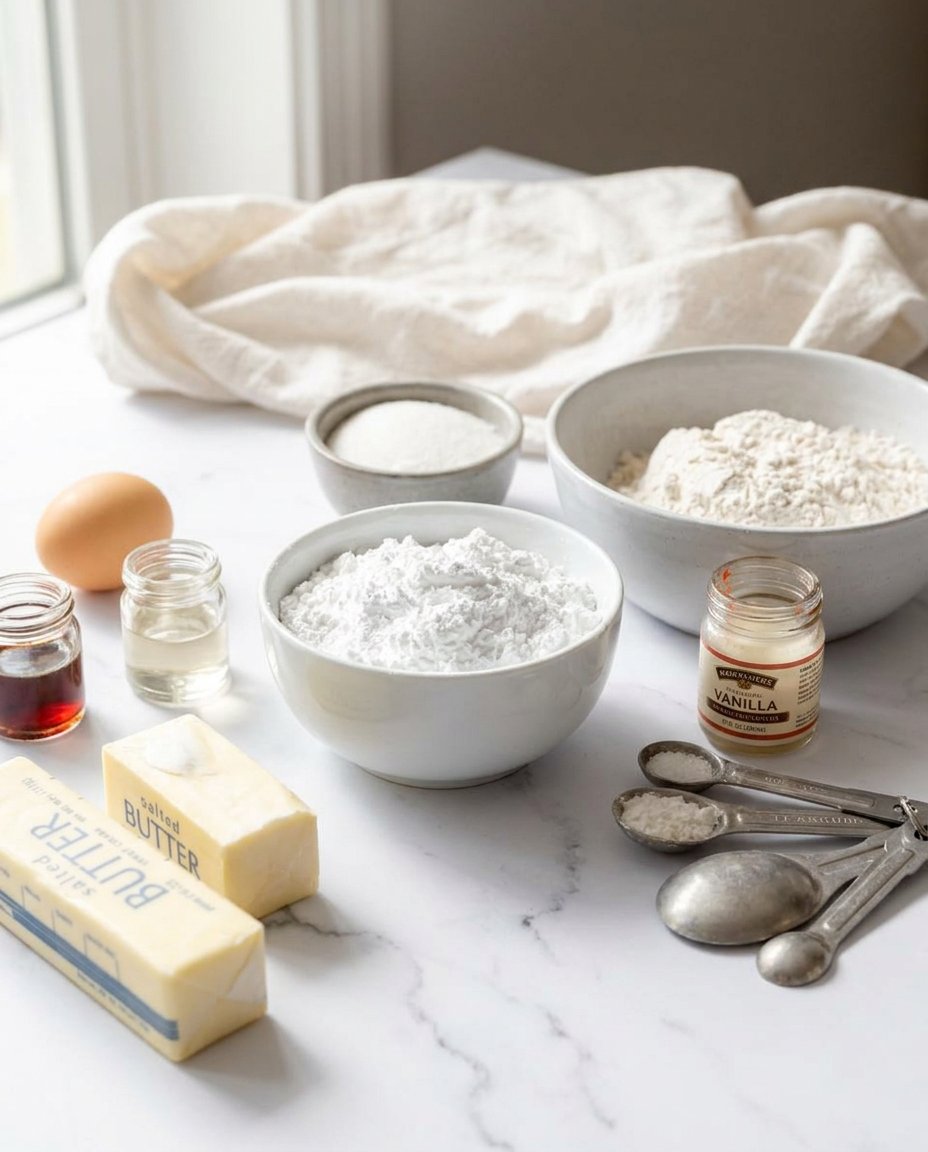
Success in pignoli baking requires high-quality components and exact measurements. We recommend using a digital scale for these amounts to achieve the same results as our test kitchen.
- Almond Paste (198g / 7 ounces): Not to be confused with almond filling. True almond paste has a 1:1 ratio of almonds to sugar. This provides the primary structure and flavor base. We tested four major brands and found that those with fewer preservatives yielded a more consistent crumb.
- Granulated Sugar (50g / 1/4 cup): This contributes to the crispness of the exterior. It undergoes crystallization during the baking process, creating a thin, protective shell.
- Powdered Sugar (30g / 1/4 cup): The fine particles and small amount of starch help to thicken the ‘dough’ without adding excessive weight, which keeps the interior soft.
- Large Egg White (approx. 30g-33g): The egg white acts as the binder. It is a source of water and protein that, when mixed with sugars, creates a stable foam that supports the almond solids.
- Sea Salt (1/8 teaspoon): Salt is a flavor modulator. It suppresses bitterness in the almonds and improves the perception of the nut oils.
- Almond Flour (50g / 1/2 cup): We used superfine, blanched almond flour. This adds bulk and absorbs excess moisture from the egg white, preventing the cookies from spreading too far on the sheet.
- Pine Nuts (100g / 3/4 cup): These are the seeds of the Pinus edulis. They contain approximately 60% fat, which contributes to the richness of the cookie. We recommend sourcing fresh nuts, as their high oil content makes them prone to oxidation and rancidity.
The Lab Process
Step 1: Thermal Calibration and Surface Prep
Preheat your oven to 325°F (163°C). Use an independent oven thermometer to confirm the temperature. Line a heavy-gauge aluminum baking sheet with professional-grade parchment paper or a silicone mat. This step is vital because the high sugar content in pignoli makes them prone to sticking to unprotected surfaces.
Step 2: Emulsifying the Almond Base
In a food processor, combine the broken pieces of almond paste, granulated sugar, powdered sugar, and sea salt. Pulse 10-12 times until the mixture resembles fine crumbs. Add the egg white and process for about 30 seconds until a thick, smooth paste forms. This process breaks down the almond paste clumps and ensures the sugars are evenly distributed through the egg white proteins.
Step 3: Integrating the Structural Solids
Transfer the paste into a glass mixing bowl. Add the almond flour and use a stiff spatula to fold it in. The goal here is to reach a tactile state where the dough is tacky but manageable. If the dough feels too warm (above 72°F), the fats in the almonds may begin to separate. If this happens, a 5-minute refrigeration cycle will stabilize the emulsion.
Step 4: Geometric Shaping and Nut Application
Place the pine nuts in a small, shallow bowl. Using a 1-tablespoon cookie scoop (15ml), portion the dough. Roll each portion into a sphere approximately 1 inch in diameter. Immediately roll the sphere in the pine nuts. Apply gentle, even pressure to ensure the nuts are embedded into the surface. This physical bond prevents the nuts from shedding during the thermal expansion of the dough.
Step 5: Controlled Thermal Processing
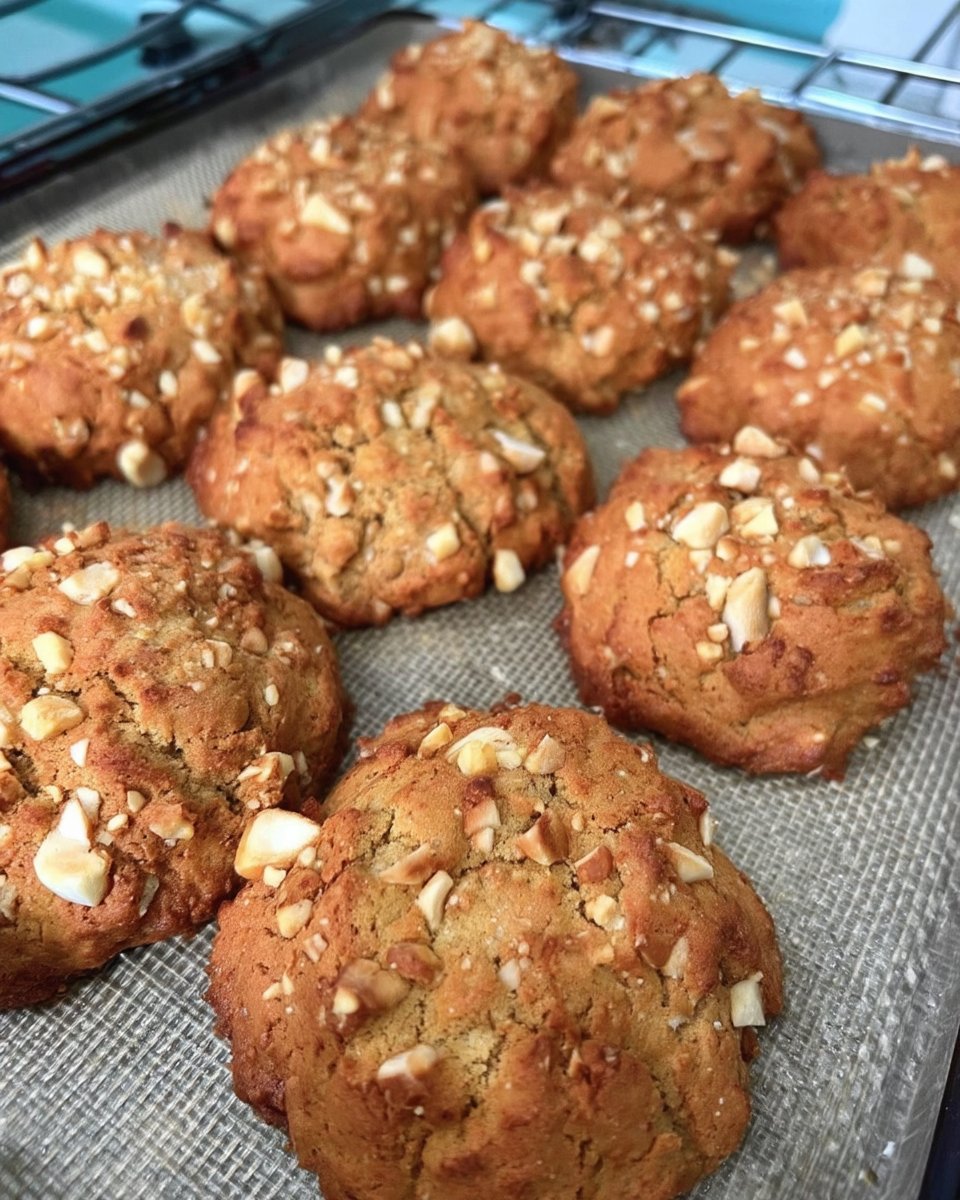
Arrange the cookies on the prepared sheet, leaving 1.5 inches (3.8cm) of space between each. Flatten the tops slightly to create a disc shape; this encourages even heat distribution. Bake for 18 to 22 minutes. You are looking for an internal visual cue: the edges should be a pale gold, and the pine nuts should show slight browning. The center must remain soft to the touch to maintain the signature chew.
Step 6: The Stabilization Phase
Let the cookies rest on the baking sheet for exactly 10 minutes. During this period, carryover cooking finishes the interior set without drying out the edges. After 10 minutes, use a thin offset spatula to move the cookies to a wire cooling rack. Allow them to reach room temperature (approx. 70°F) before storage to prevent condensation inside the container.
Lauren’s Lab Notes for Perfect Pignoli
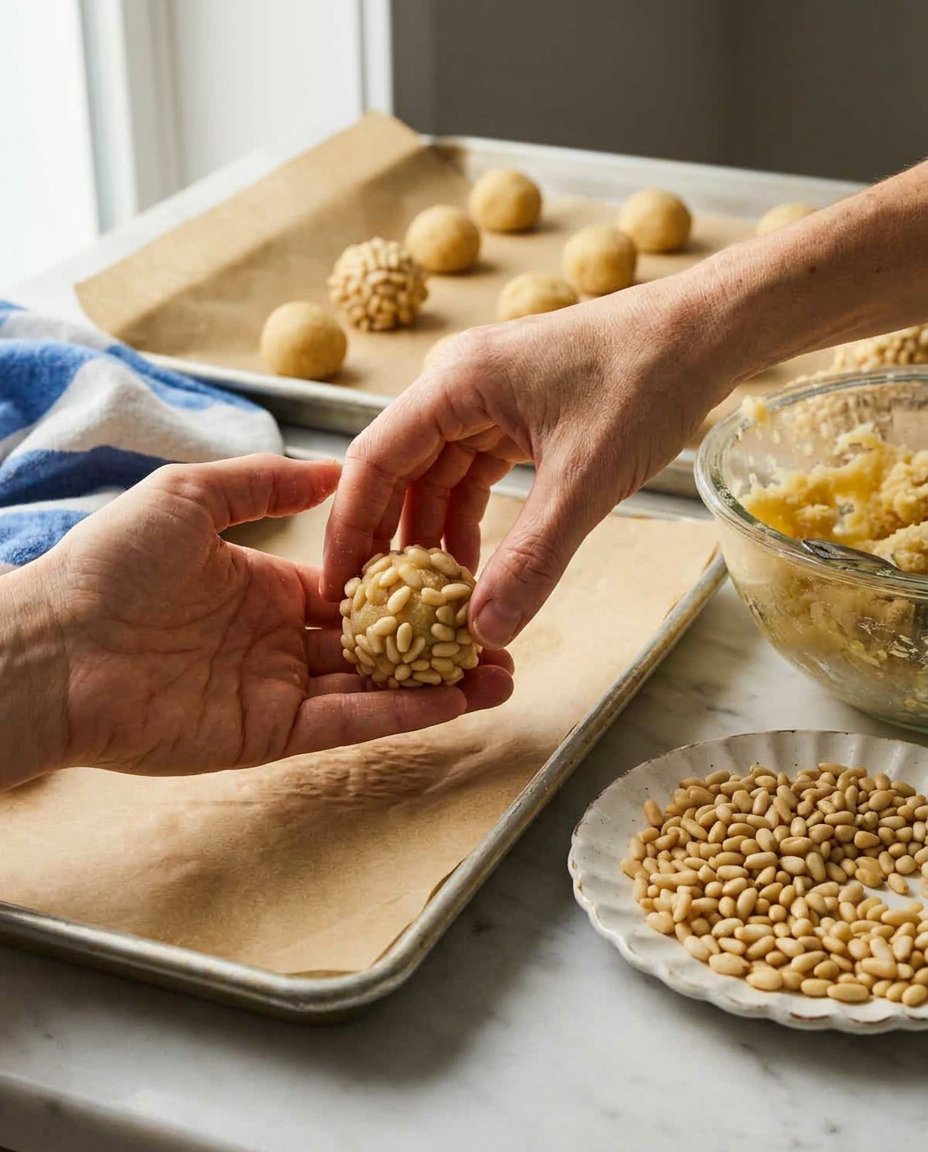
One of the most frequent errors in pignoli production is the use of cold almond paste. For the most efficient emulsion, allow your almond paste to reach a temperature of 68-70°F before processing. If the paste is too cold, it will not break down properly, resulting in lumps that create structural weak points in the cookie. We have found that the moisture content of almond paste can vary by brand; if your dough seems too runny, add almond flour 5 grams at a time until it reaches the consistency of thick modeling clay. For those interested in the chemistry of other classics, our Foundation Cookie Recipes provide further data on how fat-to-protein ratios influence spread. Another critical tip is to check the freshness of your pine nuts. Because of their high lipid content, they can turn bitter quickly. Always taste a single nut before coating your cookies to confirm there is no rancidity present.
Scientific Modifications and Ratio Tweaks
While the traditional pignoli is prized for its pure almond flavor, you can modify the aromatic profile through tested additions. Adding 2 grams of freshly grated lemon or orange zest to the food processor stage introduces essential oils that cut through the richness of the fats. We tested this variation and found it did not negatively impact the spread of the cookie. If you prefer a more intense nut profile, you can lightly toast the pine nuts for 3 minutes at 300°F before applying them, though this increases the risk of over-browning during the final bake. For more seasonal variations, look into our Holiday Cookie Science research. You can also substitute the pine nuts with sliced almonds if you require a more cost-effective option, though the surface area change will alter the moisture evaporation rate, potentially resulting in a slightly drier cookie. We also recommend checking out the techniques at Love and Lemons for inspiration on pairing these with citrus-based desserts.
Optimal Enjoyment and Texture Science
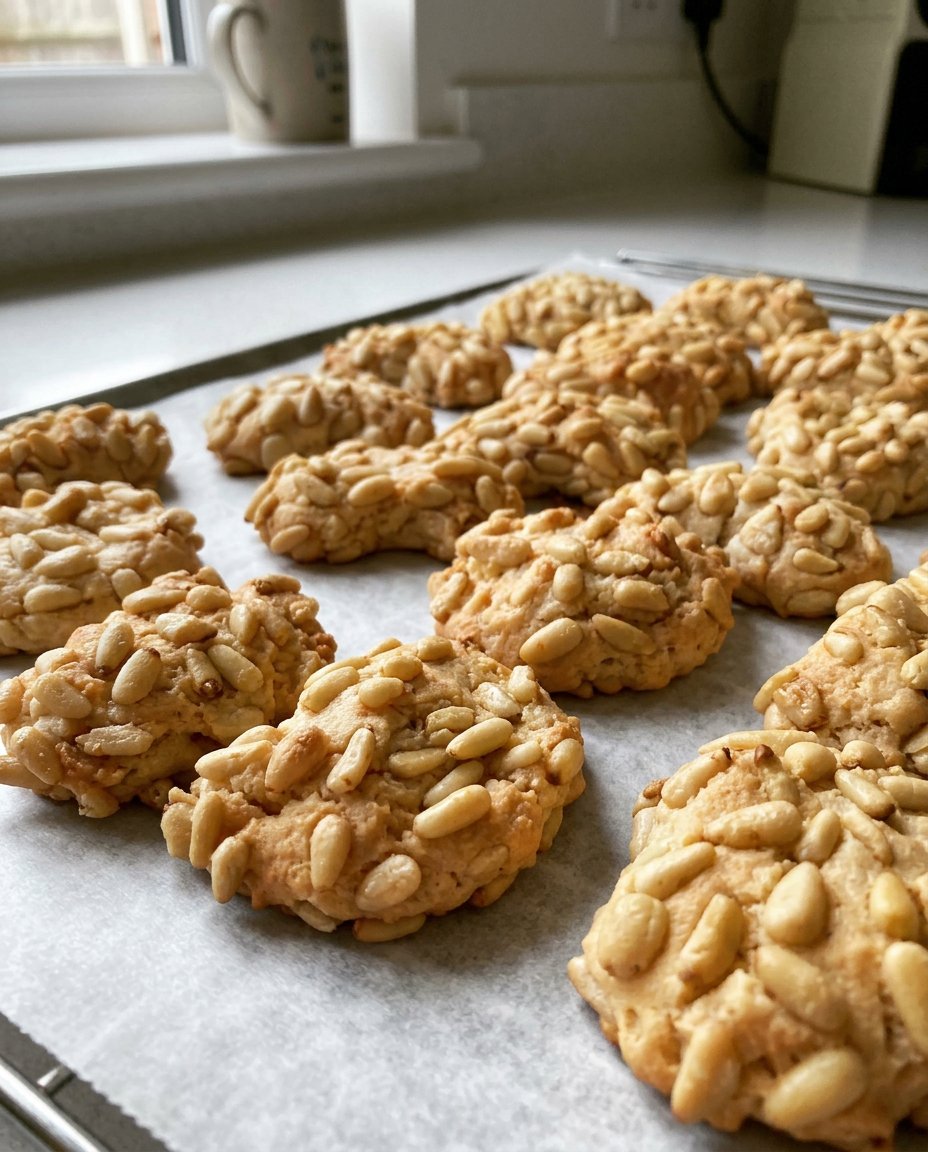
To experience the full range of flavors, serve these cookies at a precise room temperature of 70°F. If served directly from the refrigerator, the fats in the almond paste will be too firm, masking the delicate floral notes of the nut. For an interesting texture experiment, try warming a cookie for exactly 8 seconds in a microwave; this slightly softens the sugar matrix and mimics the texture of a cookie fresh from the oven. These are traditionally served alongside espresso, as the bitterness of the coffee provides a necessary contrast to the high sugar concentration of the cookie. For those interested in the aesthetics of the plate, refer to our guide on Precision Cookie Decorating. Store any remaining cookies in an airtight glass container with a small piece of parchment paper between layers to prevent the pine nuts from becoming dislodged.
The Scientific Truth of the Pignoli
Mastering the pignoli cookie is a victory of understanding moisture control and ingredient quality. By respecting the ratios of almond paste to egg white, you guarantee a result that is both structurally sound and remarkably delicious. Our test kitchen findings prove that precision in measurement is the only path to consistency in baking. For more deep-dives into how specific ingredients change the outcome of your bakes, view our Viral Cookie Analysis. We encourage you to share your results and join our community of precision-minded bakers on Facebook, Instagram, and Pinterest. Keep testing, keep measuring, and enjoy the repeatable success that science provides.