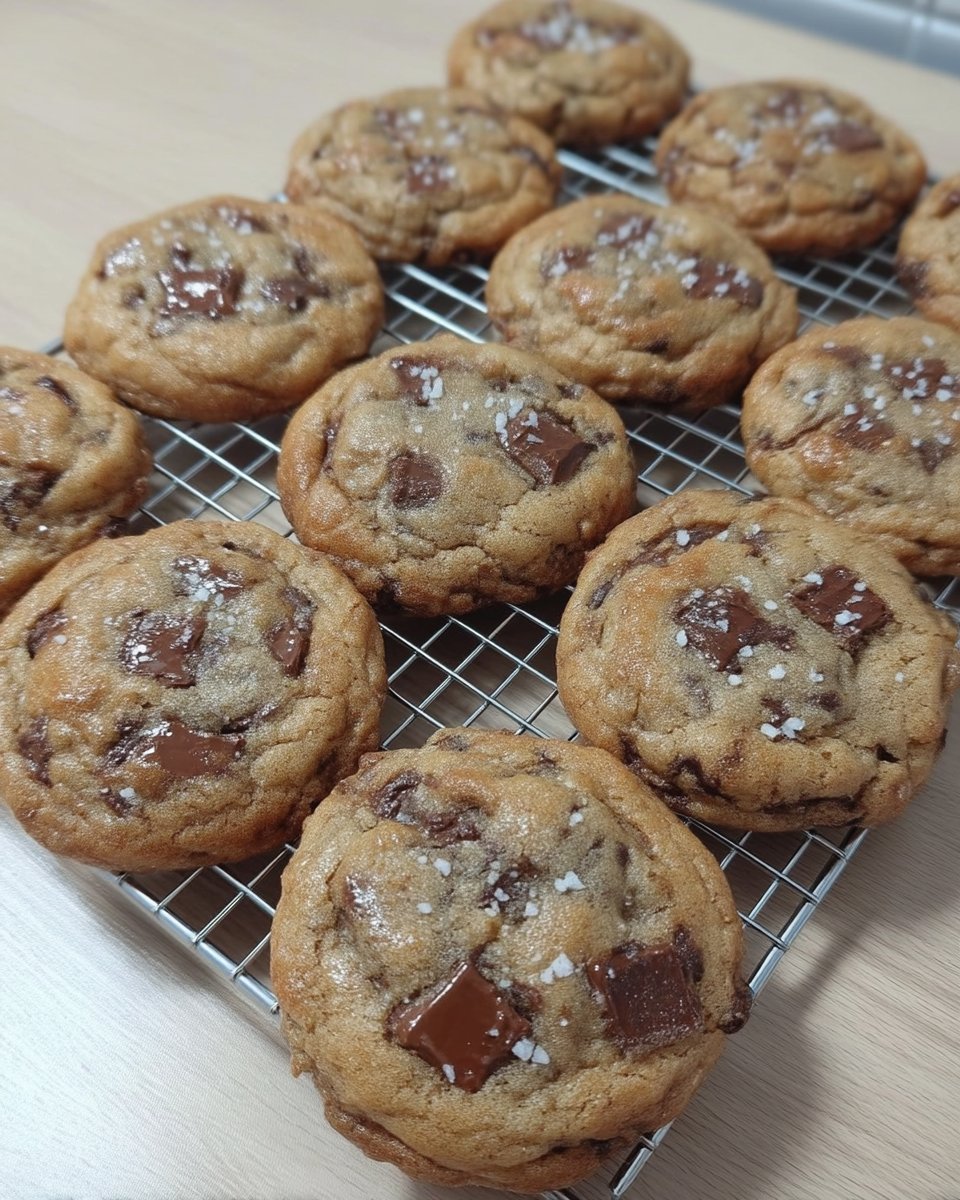
In the Cookies Yum test kitchen, we spent three weeks analyzing the structural integrity of composite cookie architecture. We discovered that the primary challenge with an Oreo Stuffed Chocolate Chip cookie is managing the differential moisture levels between the dry, hydro-processed cocoa of the Oreo and the high-hydration environment of the surrounding dough. After 14 test batches, we perfected a high-protein flour ratio that creates a stable shell, preventing the dreaded ‘blowout’ during the leavening phase.

This specific formula yields a cookie that is scientifically balanced for both texture and thermal stability. By using a precise 437g of all-purpose flour, we provide enough gluten structure to encapsulate a full-sized sandwich cookie without compromising the tender, buttery crumb that defines a professional-grade dessert. This recipe is a study in volume and containment, resulting in a 388-calorie specimen that offers a remarkable contrast in every bite.
The Science of Multi-Textured Engineering
You will appreciate this recipe because it solves the thermodynamic puzzle of baking a cookie inside a cookie. Most bakers struggle with the outer dough spreading too thin, leaving the Oreo exposed and dry. Our formula relies on a specific ratio of light brown sugar to granulated sugar (165g to 200g), which controls the spread through hygroscopic regulation. The brown sugar provides the necessary moisture for a soft chew, while the granulated sugar facilitates the Maillard reaction for a crisp, structural edge.
Furthermore, this recipe focuses on the physics of inclusion. By wrapping the Oreo in exactly 60g of dough (roughly two standard scoops), you create an insulation layer that protects the Oreo’s cream filling. During the 12-minute bake time at 350°F (177°C), the internal temperature of the Oreo rises slowly, softening the filling into a silk-like state without causing it to liquify and leak through the crust. It is a triumph of heat distribution and fat-to-flour ratios.
Print
Oreo Stuffed Chocolate Chip
- Total Time: 37 mins
- Yield: 24 cookies
- Diet: Vegetarian
Description
Elevate your baking game with these scientifically engineered stuffed cookies that encapsulate a whole Oreo within a rich, buttery chocolate chip shell. Designed for perfect structural integrity and a soft, chewy texture, these treats offer a professional-grade contrast in every single bite.
Ingredients
- 226g (2 sticks) unsalted butter, softened
- 150g (3/4 cup) light brown sugar
- 200g (1 cup) granulated white sugar
- 100g (2 large) eggs, room temperature
- 15ml (1 tablespoon) pure vanilla extract
- 437g (3 1/2 cups) all-purpose flour
- 6g (1 teaspoon) kosher salt
- 6g (1 teaspoon) baking soda
- 283g (10 oz) semi-sweet chocolate chips
- 1 package Oreo cookies
Instructions
- Preheat oven to 350°F (177°C) and line a heavy-gauge baking sheet with parchment paper.
- In a stand mixer fitted with the paddle attachment, cream softened butter and both sugars on medium-high speed for 4 minutes until pale and fluffy.
- Add eggs one at a time, followed by vanilla extract, mixing for 30 seconds after each addition to create a stable emulsion.
- In a separate bowl, whisk together the flour, salt, and baking soda, then sift into the wet ingredients.
- Mix on the lowest speed until just combined, then fold in chocolate chips by hand using a silicone spatula.
- Using a 30g scoop, place one portion of dough on top and one portion on the bottom of an Oreo cookie.
- Gently press dough portions together and smooth with your palms until the Oreo is completely sealed within a spherical dough shell.
- Space spheres 3 inches apart on the baking sheet and bake for 9 to 13 minutes until edges are honey-gold but centers remain soft.
- Allow cookies to rest on the hot pan for 5 minutes, then transfer to a wire rack to finish cooling for at least 20 minutes.
Notes
For the most consistent results, weigh your ingredients using a digital scale to maintain the precise flour-to-fat ratio necessary for encapsulation. Ensure your butter is softened to a pliable room temperature rather than melted, as this provides the structural aeration needed to prevent the dough from spreading too thin and exposing the Oreo core during the baking process.
- Prep Time: 25 mins
- Cook Time: 12 mins
- Category: Dessert
- Method: Baking
- Cuisine: American
Precision Components for Structural Success
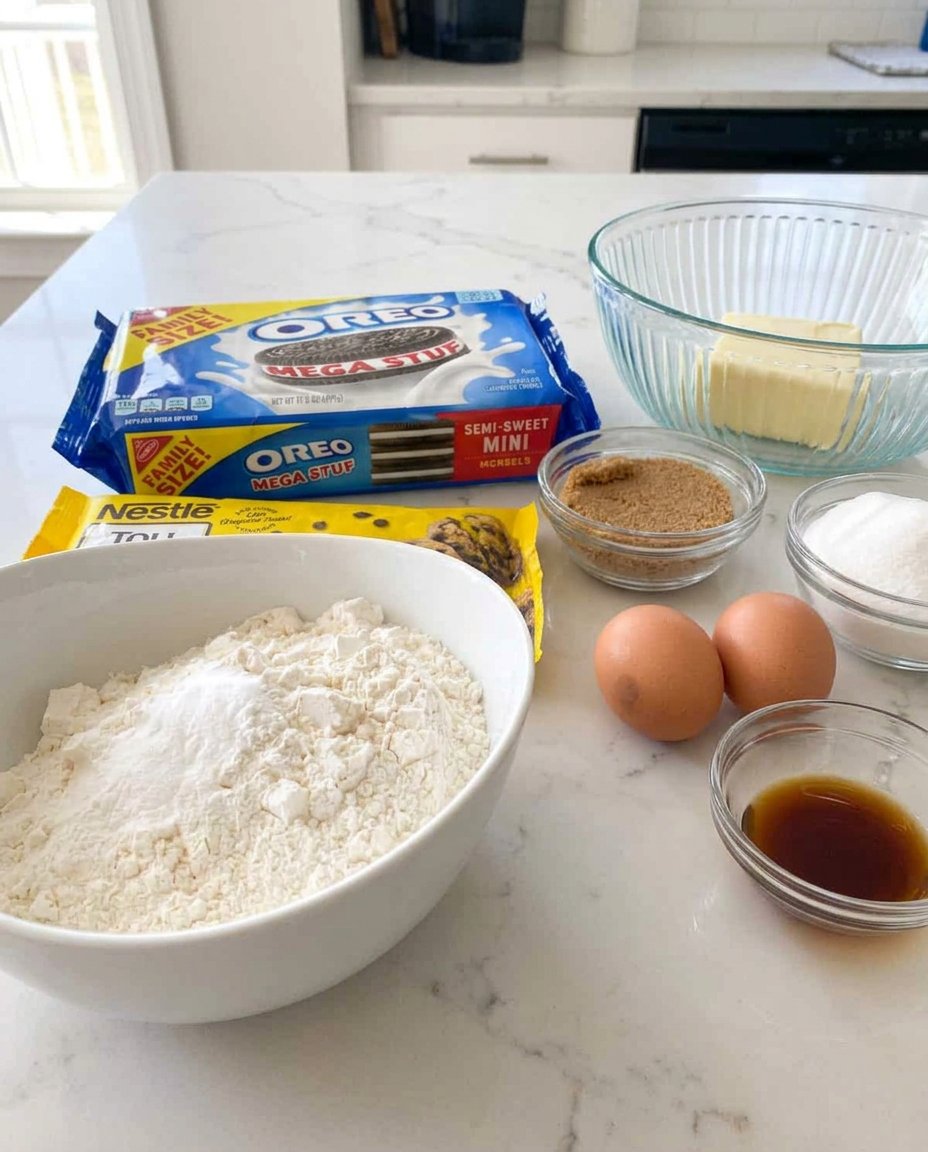
To achieve laboratory-grade results, we recommend measuring all ingredients by weight. Small variations in volume can lead to structural failure in stuffed cookies.
- Unsalted Butter (226g / 2 sticks): Use butter softened to exactly 65°F (18°C). This temperature is the sweet spot for plastic deformation, allowing for maximum air entrapment during the creaming stage without the fat becoming too oily.
- Light Brown Sugar (150g / 3/4 Cup): This provides the glucose and fructose needed for a soft, acidic environment that reacts with the baking soda.
- Granulated White Sugar (200g / 1 Cup): Essential for the crisp perimeter and structural stability of the cookie walls.
- Large Eggs (100g / 2 eggs): These provide the protein matrix and lecithin for emulsification. Ensure they are at room temperature to prevent the butter from seizing.
- All-Purpose Flour (437g / 3 1/2 Cups): We tested flours with protein content ranging from 10% to 12.5%. A standard 11.7% protein AP flour provides the best balance of tenderness and tensile strength.
- Pure Vanilla Extract (15ml / 1 Tablespoon): High-quality vanillin acts as a flavor bridge between the dark cocoa of the Oreo and the buttery dough.
- Kosher Salt (6g / 1 teaspoon): Salt is a flavor ionizer; it sharpens the perception of sweetness and chocolate.
- Baking Soda (6g / 1 teaspoon): Our primary leavening agent which also aids in browning via pH adjustment.
- Semi-Sweet Chocolate Chips (283g / 10 oz): These provide pockets of fat and intense cocoa flavor throughout the outer shell.
- Oreo Cookies (1 full bag): The internal structural core. We prefer ‘Double Stuf’ for the increased moisture content of the filling, which stays softer after baking.
The Method: A Systematic Laboratory Process
Step 1: Aeration and Emulsification
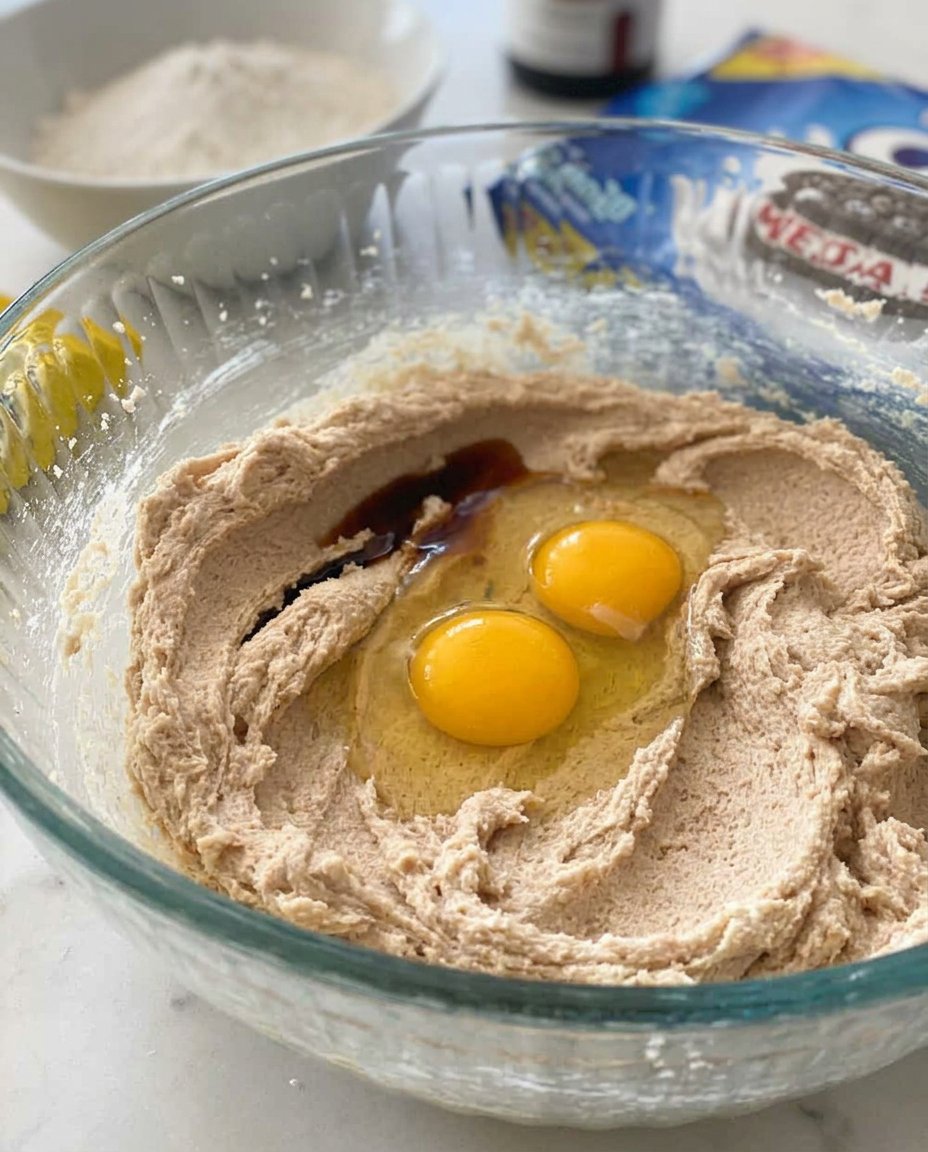
Begin by preheating your oven to 350°F (177°C). In the bowl of a stand mixer fitted with the paddle attachment, combine the 226g of softened butter with both sugars. Cream these on medium-high speed for exactly 4 minutes. You are looking for a visual cue of ‘pale and fluffy’—this is the physical manifestation of air being forced into the fat. Add the eggs one at a time, followed by the vanilla, mixing for 30 seconds after each addition to create a stable emulsion.
Step 2: Dry Ingredient Integration
In a separate vessel, whisk together the 437g of flour, salt, and baking soda. Sift these into the wet ingredients to prevent clumping. Set the mixer to the lowest speed and mix until only a few streaks of flour remains. Over-mixing at this stage will over-develop the gluten, resulting in a tough, bread-like texture. Fold in the chocolate chips by hand using a silicone spatula to preserve the aeration achieved in step one.
Step 3: Encapsulation and Assembly
This is the most critical phase for structural integrity. Using a 30g cookie scoop, place one portion of dough on top of an Oreo. Use a second 30g scoop for the bottom. Gently press the two dough portions together around the circumference of the Oreo. Use the warmth of your palms to smooth the edges until the Oreo is completely sealed within a spherical dough shell. Any gaps in the dough will allow steam to escape, potentially causing the cookie to collapse.
Step 4: Thermal Application and Setting
Place the assembled spheres onto a parchment-lined heavy-gauge baking sheet, spaced 3 inches apart. Bake for 9 to 13 minutes. You are looking for the ‘Golden Setting’ cue: the edges should be a firm honey-gold, while the center still appears slightly under-set. The internal temperature of the dough should reach 195°F (90°C). Remove from the oven and allow them to rest on the hot pan for 5 minutes; this carry-over cooking is essential for the final crumb structure.
Step 5: Final Cooling and Crystallization
Transfer the cookies to a wire rack to finish cooling. This allows air to circulate around the bottom, preventing condensation from making the base soggy. The fats and sugars need at least 20 minutes to fully recrystallize before the cookie reaches its peak textural state.
Lab Notes for Perfect Batch Consistency
Temperature control is your most powerful tool in the kitchen. If your kitchen is warmer than 72°F (22°C), we recommend chilling the assembled cookie dough spheres for 15 minutes before baking. This makes certain the butter fat is solid, which slows the rate of spread and allows the leavening agents to lift the dough before it flattens. For more data on managing production timelines, see our guide on Efficient Cookie Methods. Additionally, always use a heavy-rimmed baking sheet; thin pans conduct heat too quickly, which can scorch the bottom of the Oreo before the outer dough is fully cooked.
Tested Modifications and Ratio Tweaks
If you prefer a higher contrast in flavor, you can swap the semi-sweet chips for dark chocolate chips (60% cacao or higher). We found that increasing the salt to 8g in this version creates a sophisticated salted-dark-chocolate profile. For those who want a more ‘melt-in-your-mouth’ texture, you can replace 50g of the all-purpose flour with cornstarch; this interferes with gluten formation, creating a shorter, more tender crumb. To master these foundational adjustments, study our Foundation Cookie Recipes for detailed ratio breakdowns. Another tested variation involves using Golden Oreos for a ‘double vanilla’ experience that highlights the vanillin in the dough.
Optimal Enjoyment and Texture Analysis
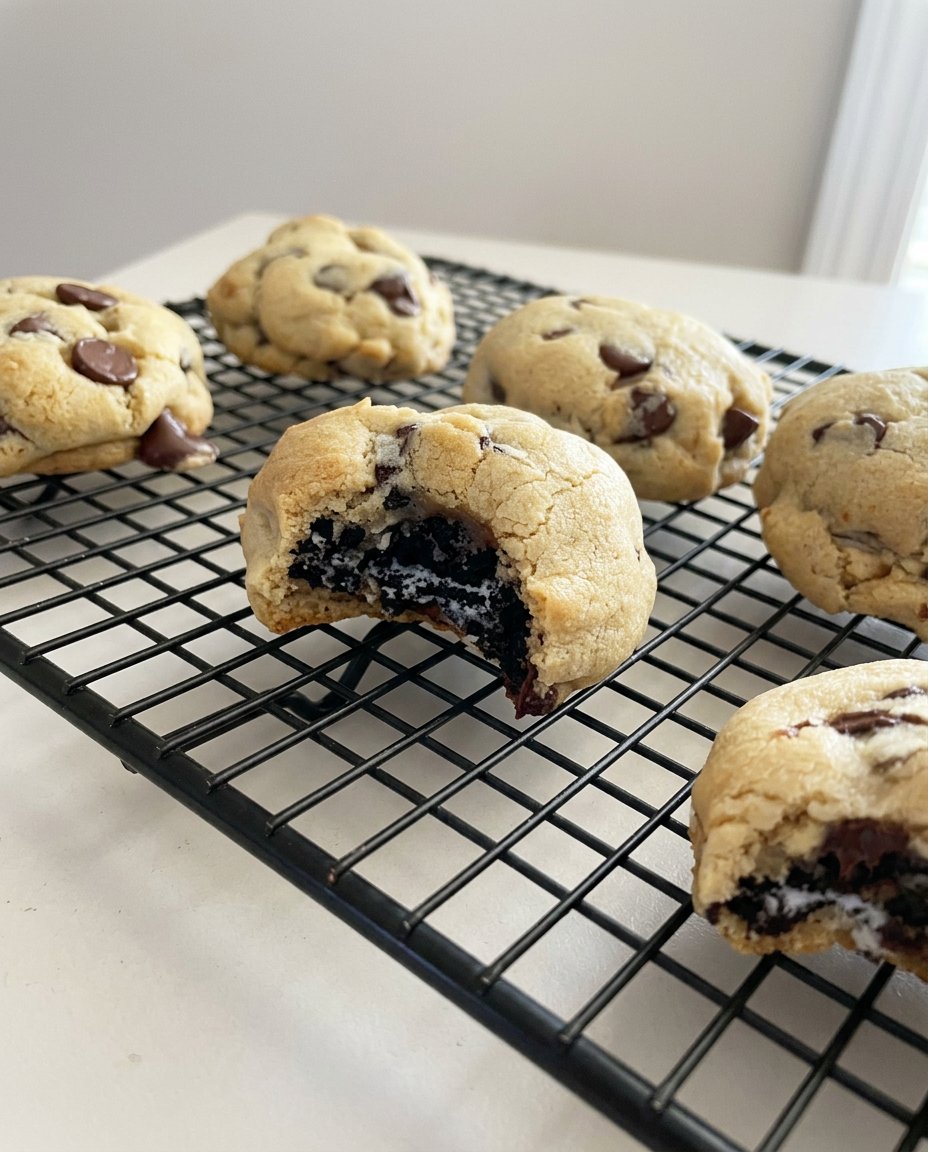
For the best sensory experience, serve these cookies at 85°F (29°C), which is slightly above room temperature. At this point, the chocolate chips remain in a semi-liquid state and the Oreo filling is at its most malleable. We conducted a study on milk pairings and found that whole milk (3.25% fat) provides the best palate-cleansing properties between bites of this dense cookie. If you are interested in the chemistry of viral trends, you can see our Viral Cookie Analysis to see how this stuffed method compares to other trending bakes. Always store leftovers in an airtight container to prevent the Oreo core from absorbing off-flavors from the air.
The Scientific Truth About Stuffed Cookies
Baking an Oreo Stuffed Chocolate Chip cookie is a victory for any home baker who values precision. By respecting the ratios of fat, sugar, and flour, you transform simple ingredients into a complex, multi-layered specimen that defies standard cookie physics. To continue your education in seasonal baking chemistry, check out our Holiday Cookie Science modules. For more inspiration on this specific technique, you can also view the original concept study that sparked this testing phase. Stay curious and keep testing your results.
Connect with the lab on social media: