In the world of sensory chemistry, the relationship between lipids and pecans creates a fascinating aromatic profile. Pecans are rich in monounsaturated fats, specifically oleic acid, which provides a deep, buttery base that works in synergy with the milk solids in high-quality butter. When these two ingredients meet heat, we witness the creation of pyrazines—those roasted, nutty aroma compounds that signal a perfectly baked Pecan Shortbread.

This particular iteration of shortbread focuses on a delicate lipid-to-starch balance to achieve a ‘short’ crumb that shatters upon the first bite. By omitting eggs, we prevent the formation of a strong gluten matrix, allowing the fine particles of the pecans to distribute evenly through the dough. The result is a scientifically sound treat that prioritizes textural complexity and a deep, caramel-like sweetness from the inclusion of brown sugar.
The Scientific Allure of the Short Crumb
Understanding why this Pecan Shortbread works requires a look at the physics of baking. The term ‘short’ in shortbread refers to the shortening of gluten strands. Because this recipe contains a high percentage of fat and no added moisture from eggs, the flour particles are coated in lipids, preventing them from bonding into long, chewy chains. This creates the signature crumbly texture that is technically defined by its fragility and low moisture content.
Pecans bring more to the table than just a satisfying crunch. They are approximately 70% fat, contributing to the overall richness of the dough while introducing tannins that provide a slight astringency to balance the high sugar concentration. This balance is what makes the flavor profile so addictive; it hits multiple taste receptors simultaneously. The inclusion of both granulated and brown sugar is an intentional choice for hygroscopicity—the brown sugar retains just enough moisture to keep the center tender while the granulated sugar aids in crisping the exterior.
Furthermore, this recipe utilizes the ‘slice and bake’ method to maintain a consistent temperature across the dough. By chilling the logs, we make certain that the butter remains solid until it hits the high heat of the oven. This causes a rapid expansion of air pockets before the structure sets, resulting in a cookie that is thick, dense, and remarkably stable. It is a masterclass in how temperature control dictates final geometry in the lab of the kitchen.
Print
Pecan Shortbread
- Total Time: 3 hours 34 mins
- Yield: 24 cookies
- Diet: Vegetarian
Description
These buttery Pecan Shortbread cookies offer a sophisticated balance of rich lipids and toasted nuttiness, resulting in a perfectly fragile, ‘short’ crumb. The slice-and-bake method ensures a consistent texture and an elegant sugar-crusted edge in every bite.
Ingredients
- 1 cup unsalted butter, softened
- 1/2 cup light brown sugar, packed
- 1/4 cup granulated sugar
- 1 teaspoon pure vanilla extract
- 2 cups all-purpose flour
- 1/2 teaspoon ground cinnamon
- 1/2 teaspoon salt
- 1 cup finely chopped pecans
- 1/4 cup coarse sugar
- 1/2 cup additional finely chopped pecans
Instructions
- In a large bowl, cream together the softened butter, brown sugar, and granulated sugar for approximately 2 minutes until the mixture is pale and airy.
- Add the vanilla extract and beat on high speed until thoroughly incorporated and the emulsion is smooth.
- Reduce the mixer speed to low and gradually add the flour, cinnamon, and salt, mixing until a dough forms, then fold in the chopped pecans.
- Divide the dough into two equal portions and shape each into a log about 8 inches long; wrap tightly in plastic and refrigerate for 3 to 4 hours.
- Preheat your oven to 350°F (177°C) and combine the coarse sugar and extra pecans on a plate for the coating.
- Roll the chilled logs in the sugar mixture, slice into 12 even discs per log, and place them 2 inches apart on a lined baking sheet.
- Bake for 12 to 14 minutes until the edges are golden brown, then let rest on the sheet for 5 minutes before transferring to a wire rack to cool.
Notes
To ensure perfectly round cookies, gently rotate the dough log a quarter turn after every few slices to prevent one side from flattening. If you find the dough crumbling while you slice it, let it sit at room temperature for five minutes to slightly soften the fats before continuing. These cookies develop a deeper flavor if the dough is allowed to rest in the refrigerator for the full 5-day limit before baking.
- Prep Time: 20 mins
- Cook Time: 14 mins
- Category: Dessert
- Method: Bake
- Cuisine: American
The Anatomy of Flavor Compounds
Each component in this Pecan Shortbread is selected for its specific chemical contribution to the final taste and texture profile. We do not just add ingredients; we layer compounds to build a robust sensory experience.
- Unsalted Butter: This is the primary fat source and the carrier for all other flavors. Using unsalted butter allows us to control the sodium concentration precisely, which is vital because salt suppresses bitterness and highlights the sweet notes of the nut oils.
- Brown and Granulated Sugars: While granulated sugar provides sweetness and crispness, light brown sugar introduces molasses. Molasses contains minerals that contribute to a more complex Maillard reaction, yielding a deeper color and a toffee-like aroma.
- Pure Vanilla Extract: We include this for the vanillin compounds. Vanillin acts as a flavor bridge, connecting the earthy notes of the pecans with the creamy notes of the butter.
- All-Purpose Flour: This provides the starch backbone. By measuring it carefully, we maintain the correct ratio to the fat, ensuring the cookies do not spread into thin puddles.
- Ground Cinnamon: Cinnamon contains cinnamaldehyde, an aroma compound that mimics warmth. It doesn’t just add spice; it psychologically reinforces the perception of sweetness.
- Chopped Pecans: These are our primary texture agents. Finely chopping them increases the surface area available for toasting during the bake, which intensifies the production of nutty pyrazines.
- Coarse Sugar: Used for rolling, these large crystals provide a secondary textural contrast. They do not dissolve during the short bake time, offering a literal ‘spark’ of sweetness on the tongue.
The Flavor Layering Process
Step 1: Emulsifying the Lipids and Sugars
Begin by placing your softened butter, brown sugar, and granulated sugar into a large mixing bowl. Using a mixer on medium-high speed, you are performing mechanical aeration. The sugar crystals act as microscopic tools, carving air pockets into the butter. This process should take about 2 minutes until the mixture looks creamy and pale. This isn’t just mixing; it is building the foundation for the cookie’s lift.
Step 2: Integrating the Aroma Bridge
Add the vanilla extract and beat on high speed. This ensures the vanillin is thoroughly dispersed throughout the fat phase of the emulsion. Scrape the bowl to make certain no pockets of unmixed butter remain, as consistency in the dough leads to consistency in the bake.
Step 3: Incorporating the Dry Matrix
Reduce the speed to low and add the flour, cinnamon, and salt. Mixing on low speed is critical here to minimize any potential gluten development. The dough may appear crumbly or dry at first, but as the flour particles become coated in the butter, it will eventually coalesce. Fold in the finely chopped pecans, ensuring they are evenly distributed throughout the matrix.
Step 4: Structuring the Logs
Transfer the thick dough onto a lightly floured surface. Divide it into two equal portions and shape them into logs approximately 8 inches long. This physical shaping determines the final diameter of your Pecan Shortbread. Wrap the logs tightly in plastic wrap to prevent the dough from absorbing any refrigerator odors, which can happen due to the high fat content’s ability to attract volatile organic compounds.
Step 5: The Chill Phase for Fat Stabilization
Place the logs in the refrigerator for a minimum of 3 to 4 hours. This step is non-negotiable. Chilling allows the flour to fully hydrate and the butter to return to a solid state. A colder dough results in less spread and a taller, more professional cookie profile. You can leave these for up to 5 days if you are planning ahead.
Step 6: Surface Modification and Slicing
Preheat your oven to 350°F (177°C). On a flat plate, combine your coarse sugar and the remaining chopped pecans. Roll your chilled logs into this mixture, pressing firmly so the particles adhere. This creates a crust that will undergo intense caramelization. Slice the logs into 12 even discs each, placing them on a lined baking sheet with 2 inches of space between them.
Step 7: The Thermal Reaction
Bake for 12 to 14 minutes. Watch for the edges to turn a golden-brown color—this is the visual indicator that the Maillard reaction and sugar caramelization have reached their peak. Let the cookies rest on the hot sheet for 5 minutes to allow the internal structure to set before moving them to a wire rack for final cooling.
Precision Notes for Perfect Results
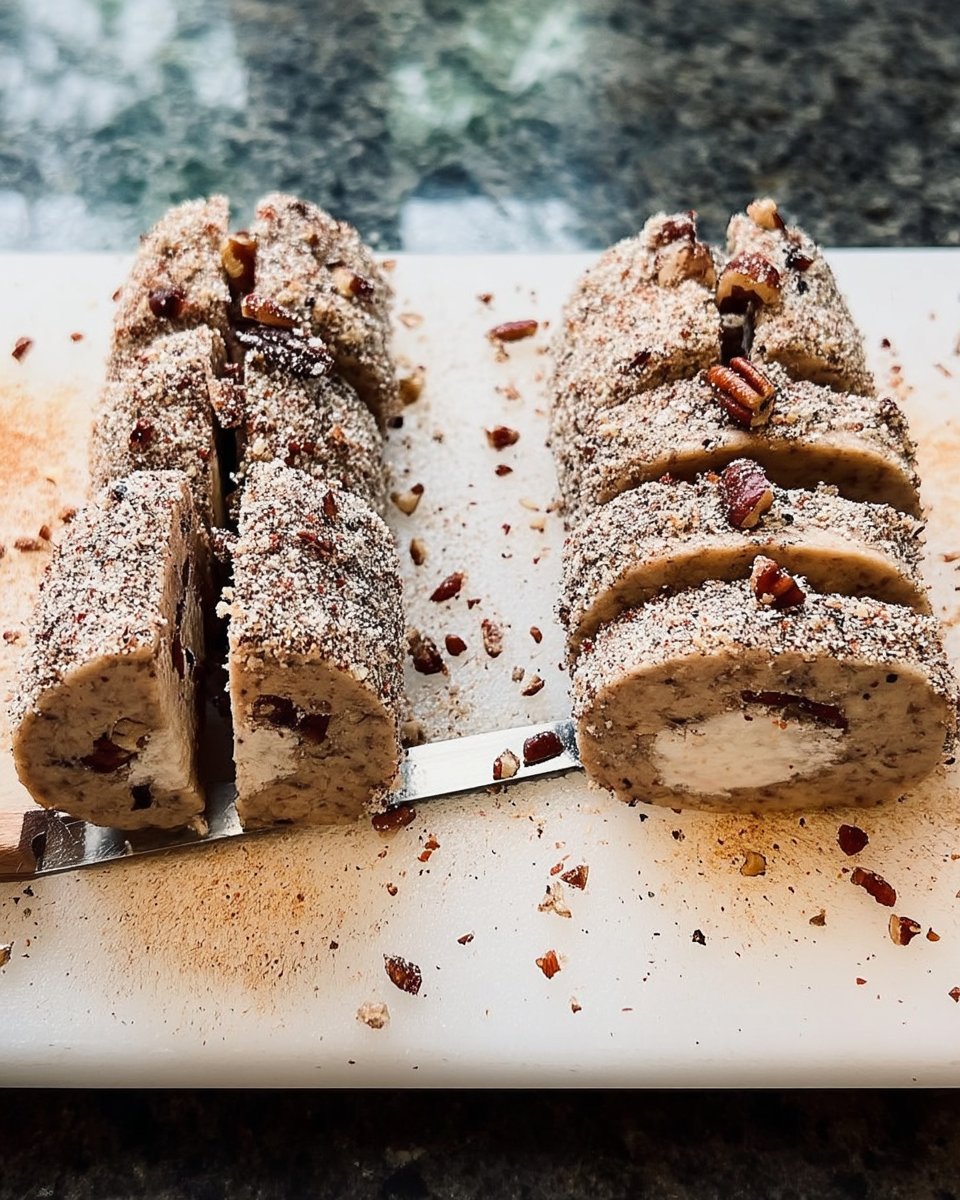
To achieve the most intense flavor profile, consider toasting your pecans lightly before chopping them. This pre-heat treatment initiates the development of pyrazines before the cookie even enters the oven. When you chop them, aim for a very fine consistency; smaller pieces provide a more uniform distribution of oils and ensure the log doesn’t crumble when you slice it. For more insights on building a strong baking base, check out our Foundation Cookie Recipes.
Another scientific secret lies in the salt placement. While we add salt to the dough, a tiny pinch of flaked sea salt on top of the coarse sugar coating can intensify the perception of the butter and pecans. Salt acts as a flavor modifier by suppressing bitterness and increasing the volatility of aromatic compounds. For a similar approach to successful ratios, you might find inspiration in the techniques used by Sally’s Baking Addiction in their classic shortbread variations.
Scientific Flavor Swaps
If you want to experiment with the aromatic profile of your Pecan Shortbread, try adding the zest of one orange to the sugar-butter mixture. Orange zest contains limonene, a terpene that shares chemical similarities with the woodier notes in pecans, creating a bright, citrusy contrast. You can also analyze different fat-to-sugar ratios by visiting our Holiday Cookie Science section for more festive adaptations.
For a deeper, more savory version, replace the cinnamon with a touch of ground cardamom. Cardamom contains cineole, which provides a cooling sensation that cuts through the richness of the butter. If you prefer a more traditional ‘Scottish’ style, you can replace the brown sugar entirely with granulated sugar, though this will result in a paler cookie with a crisper, less chewy texture.
Ideal Flavor Pairings
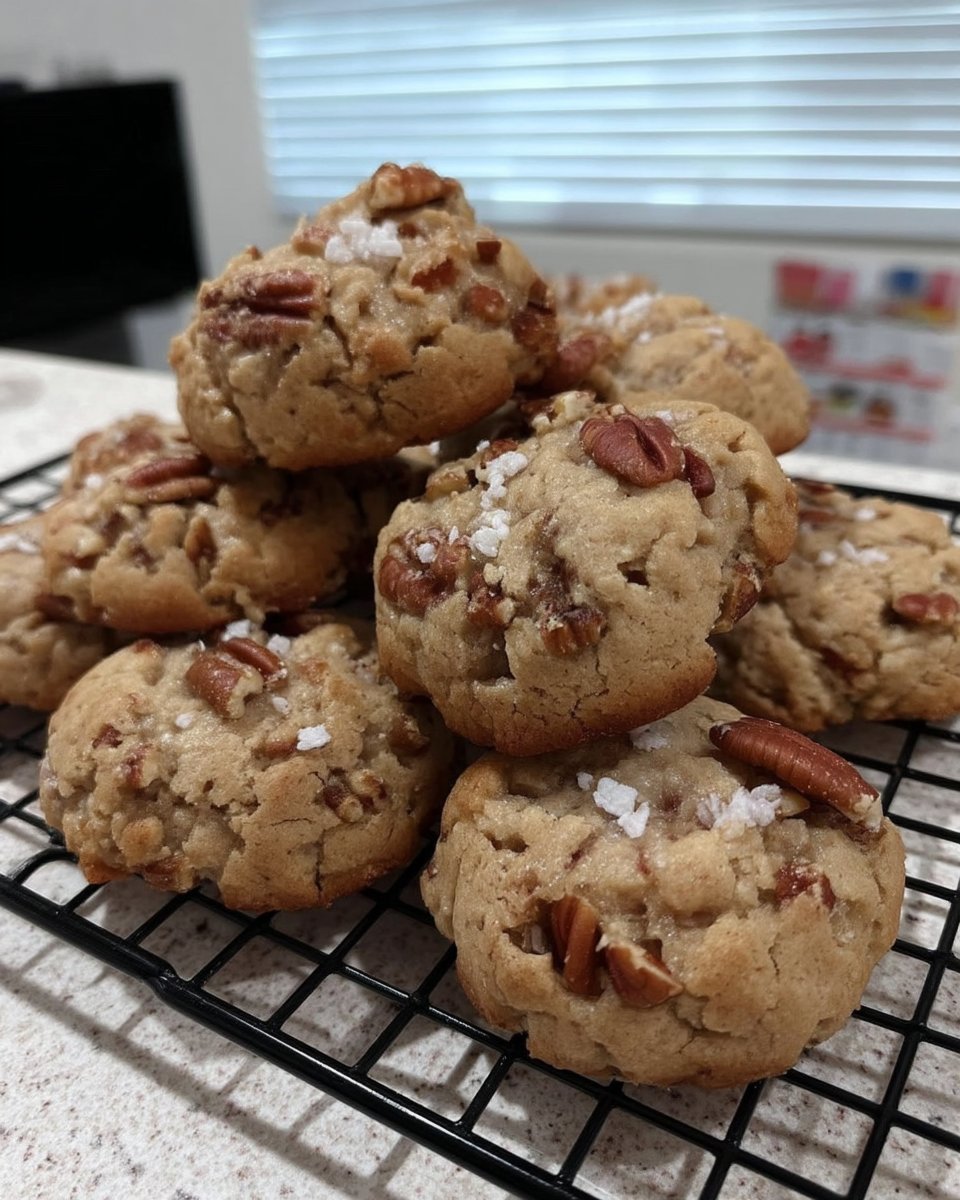
To fully appreciate the molecular complexity of these cookies, serve them alongside a medium-roast coffee. Coffee and pecans share many of the same roasted aroma compounds, and the acidity of the coffee helps cleanse the palate of the heavy butter fats. For those who prefer tea, an Earl Grey is an excellent choice as the bergamot oil provides a floral contrast to the earthy nuts. You can find more advice on efficient baking and serving in our Efficient Cookie Methods guide.
At room temperature, the fats in the cookie provide a smooth mouthfeel, but if you slightly warm the shortbread, the volatile aroma compounds are released more effectively, intensifying the scent of vanilla and toasted pecans. This is a simple way to change the sensory experience of the same recipe.
The Final Flavor Discovery
Mastering the Pecan Shortbread is an exercise in patience and precision. By understanding the chemistry of the short crumb and the aromatic power of pecans, you can create a treat that is far more than the sum of its parts. For a look at how these techniques stack up against modern trends, see our Viral Cookie Analysis. We invite you to share your results and continue your journey into the science of baking with us on Pinterest, Instagram, and Facebook. Happy baking!