These confection-coated spheres share a direct lineage with Viennese crescents and the buttery biscuits of 19th-century Europe. While often categorized alongside Russian Tea Cakes or Mexican Wedding Cookies, the fundamental technique relies on ‘shortness’—a high fat-to-flour ratio that coats flour proteins to inhibit gluten development. Victorian bakers understood this principle intuitively, creating a friable texture that literally melts upon contact with the palate rather than requiring a chew.

This specific formula balances the rich, toasted flavor of pecans with the delicate structure provided by confectioners’ sugar in the dough itself. Unlike granulated sugar, the cornstarch present in confectioners’ sugar aids in tenderness, ensuring the cookie holds its shape while remaining tender. It is a precise exercise in temperature control and gentle handling.
The Science of Melting Texture
What makes this recipe technically superior is the double-coating method combined with a specific baking temperature. By keeping the oven at a moderate 350°F (175°C), we set the structure without caramelizing the sugars too deeply, preserving the pale aesthetic essential to the ‘snowball’ name. The interaction between the warm lipid structure of the cookie and the initial coating of sugar creates a semi-glaze, which then grabs the second coat for that distinct, powdery finish.
- Texture Contrast: A cool, powdery exterior yields to a rich, buttery interior.
- Structural Integrity: The lack of leavening agents (baking powder or soda) means the shape you roll is the shape you bake, provided the butter is properly aerated.
- Flavor Depth: Using real vanilla and high-quality butter provides a neutral canvas that allows the toasted pecan oils to shine.
Pecan Snowballs
- Total Time: 45 mins
- Yield: 24 cookies
- Diet: Vegetarian
Description
Master the art of the perfect holiday cookie with these buttery, melt-in-your-mouth Pecan Snowballs. This recipe leverages a unique double-coating sugar technique to achieve a beautiful snowy finish and a superior delicate texture.
Ingredients
- 1 cup unsalted butter, softened
- 1/2 cup confectioners’ sugar
- 1 teaspoon vanilla extract
- 2 cups all-purpose flour
- 1 cup pecans, finely chopped
- 1/4 teaspoon salt
- 1/3 cup confectioners’ sugar (for rolling)
Instructions
- Preheat your oven to 350 degrees F (175 degrees C).
- Cream the softened butter, 1/2 cup of confectioners’ sugar, and vanilla extract in a large bowl until smooth.
- Slowly add the flour, finely chopped pecans, and salt, mixing until the dough is just combined.
- Roll the dough into small, 1-inch balls and place them on ungreased baking sheets.
- Bake for 12 to 15 minutes, ensuring the tops remain pale while the bottoms turn a light golden brown.
- Let the cookies sit for a few minutes before transferring them to wire racks to cool until warm.
- Roll the warm cookies in the reserved 1/3 cup of confectioners’ sugar to create a base coat.
- Once completely cooled, roll the cookies in the sugar a second time for a thick, snowy appearance.
Notes
To prevent the cookies from spreading, ensure your butter is softened but still cool to the touch rather than oily. If your kitchen is warm, chilling the dough balls for 10 minutes before baking helps maintain their spherical shape. The first roll in sugar should happen while the cookies are warm but not hot to prevent the sugar from melting into a syrup.
- Prep Time: 20 mins
- Cook Time: 15 mins
- Category: Dessert
- Method: Baking
- Cuisine: American
Essential Components for Structure
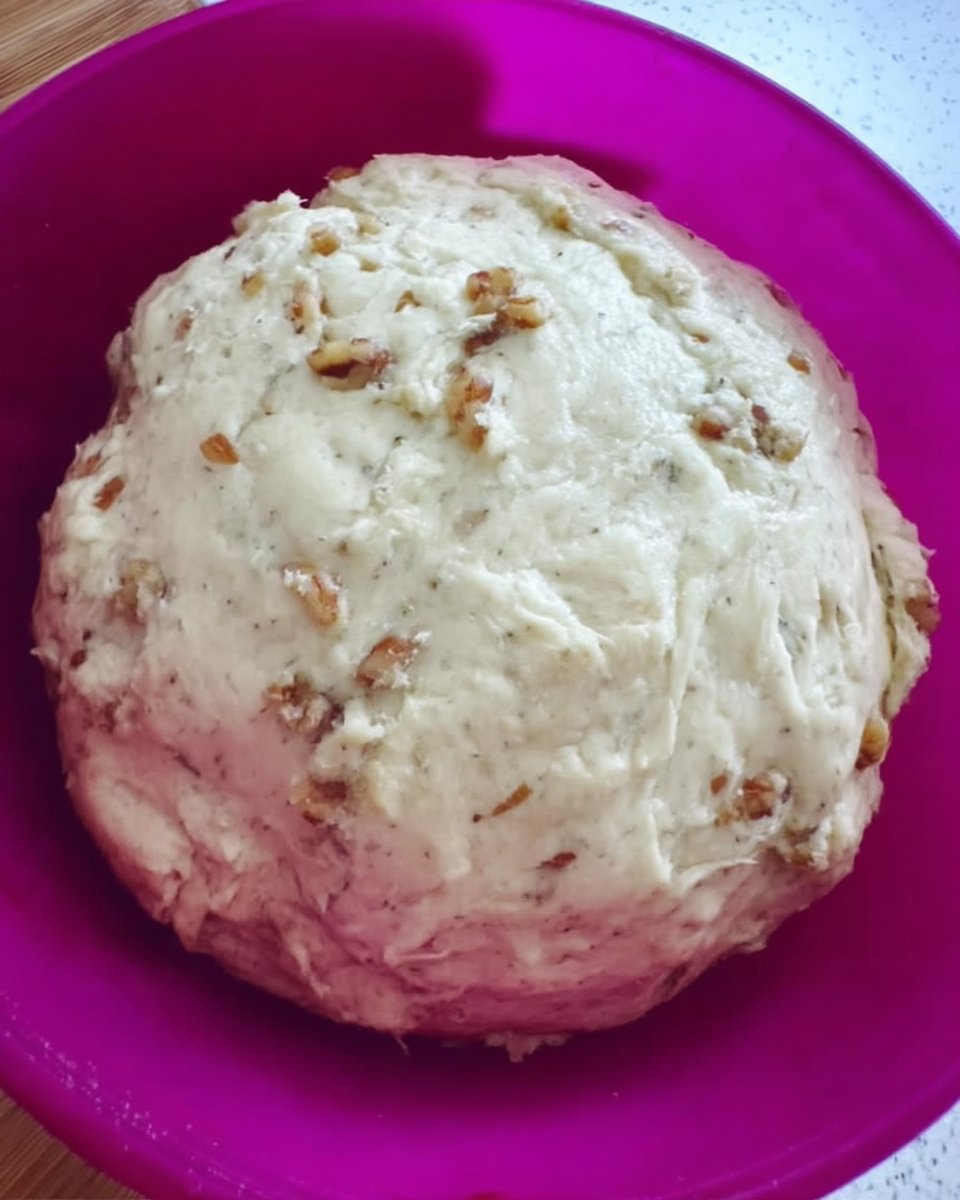
To achieve the correct friability, every ingredient plays a specific chemical role. In my test kitchen, precision here prevents the common issue of cookies spreading into flat puddles.
- Unsalted Butter: You must use softened, unsalted butter. Salted butter varies too much by brand, and we need to control the sodium for flavor balance. The butter provides the liquid phase of the dough.
- Confectioners’ Sugar: Used both inside the dough and for the coating. Inside, it tenderizes; outside, it provides the signature finish. Do not substitute with granulated sugar in the dough, as the crystal size is too large for this dense matrix.
- Vanilla Extract: Essential for bridging the flavor gap between the butter and the nuts.
- All-Purpose Flour: Provides the gluten framework. Because we want a tender cookie, we mix gently to minimize gluten network formation.
- Pecans: Finely chopped is the key instruction here. Large pieces interfere with the dough’s cohesion. The oils in the pecans also contribute to the tenderness.
- Salt: Just a quarter teaspoon sharpens the nutty flavor profile without making the biscuit taste savory.
Methodical Assembly
Step 1: The Creaming Stage
Preheat your oven to 350 degrees F (175 degrees C). In a large bowl, beat the softened butter, 1/2 cup of confectioners’ sugar, and the vanilla extract using an electric mixer. We are looking for a smooth emulsion here—do not over-beat to the point of incorporating excess air, or the cookies may puff and collapse. The mixture should be creamy and uniform.
Step 2: Incorporating Dry Ingredients
Gradually add the all-purpose flour, finely chopped pecans, and salt. Switch to a lower speed or mix by hand at this stage. We want to distribute the flour and nuts evenly without working the dough aggressively. Over-mixing activates gluten, which results in a tough, rubbery texture rather than a tender melt.
Step 3: Forming the Spheres
Roll the dough into walnut-sized balls. Consistency is vital for even heat distribution; if the balls vary in size, smaller ones will dry out before larger ones cook through. Place them 2 inches apart on ungreased baking sheets. The ungreased surface provides friction, helping the cookies maintain their spherical shape.
Step 4: Controlled Baking
Bake in the preheated oven for 12 to 15 minutes. The visual cue is subtle: the bottoms should be light golden brown, but the tops must remain pale. We are baking to set the structure, not to develop a Maillard reaction on the surface. It is scientifically preferable to slightly undercook these than to overcook them, as residual heat will finish the process.
Step 5: The Double-Roll Technique
Allow the cookies to sit on the baking sheets for a few minutes to stabilize, then transfer to wire racks until they are warm—not hot, but not cold. Place the remaining 1/3 cup confectioners’ sugar in a shallow bowl. Roll the warm cookies in the sugar to apply the base coat. Return them to the rack to cool completely. Once cool, roll them a second time. The first coat melts slightly to form a glue; the second coat provides the fluffy, snow-like appearance.
Jordan’s Technical Notes
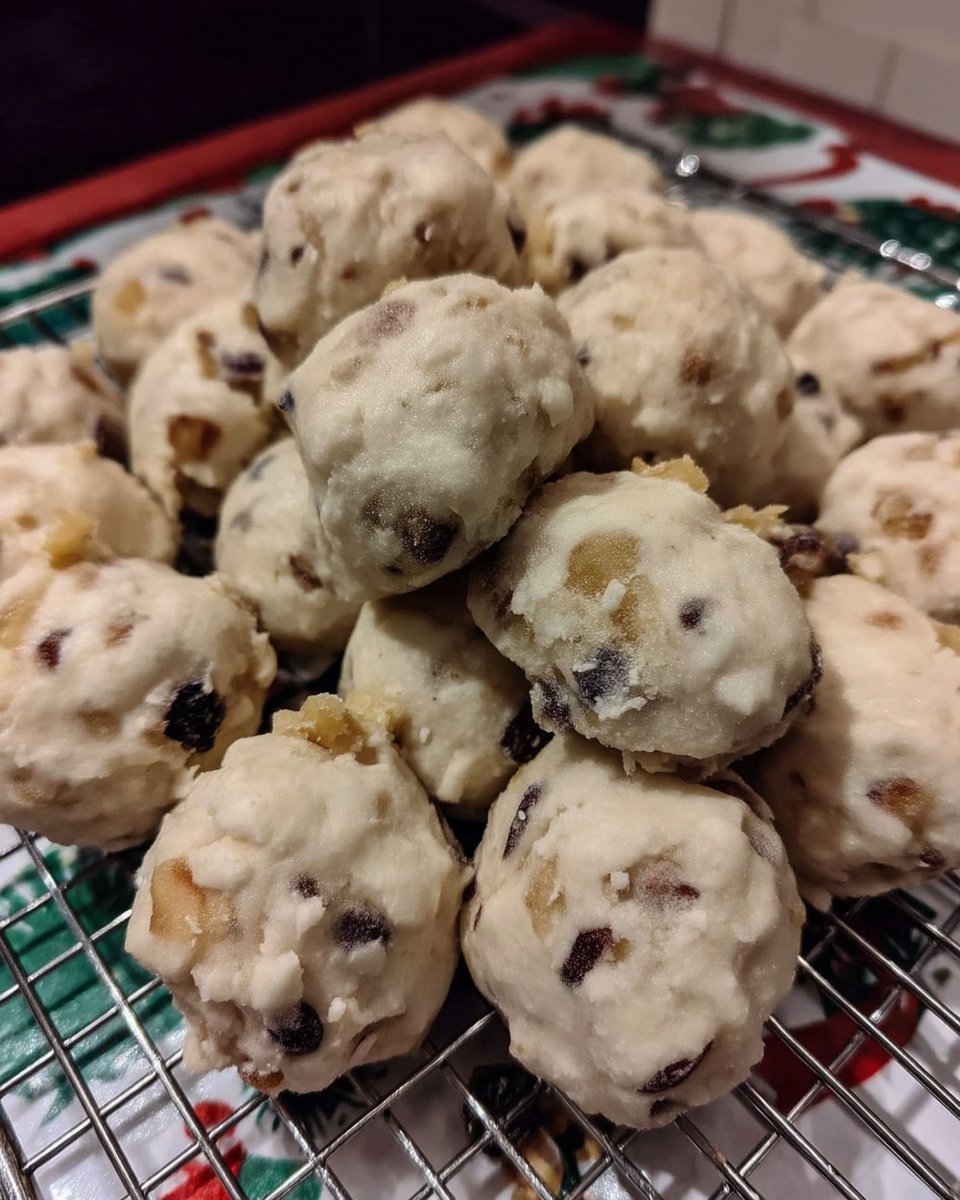
Success with this recipe often comes down to temperature management and ingredient preparation. Through repeated testing, I have found that the state of your pecans matters immensely.
- Toast the Pecans: For a more profound flavor profile, toast your pecans in a dry pan for 3-4 minutes before chopping. Allow them to cool completely before adding to the butter mixture, or they will melt the fat prematurely.
- The Cooling Window: Timing the first sugar roll is critical. If the cookie is too hot, the sugar dissolves into a syrup. If too cold, the sugar won’t adhere. Aim for a temperature where the cookie is comfortable to hold but still radiates warmth.
- Grinding Nuts: Be careful if using a food processor to chop the nuts. Pulse gently. If you go too far, you will create pecan butter, which alters the fat ratios of the dough.
- Storage Science: These cookies improve with age as the moisture equilibrates. Store them in an airtight tin for up to a week. For more insight into how fat ratios affect storage, see my notes on Foundation Cookie Recipes.
Adaptations and Ratios
While the classic pecan snowball is a masterpiece of balance, the formula is robust enough to handle calculated variations.
- Nut Variations: Walnuts or almonds can be substituted 1:1 by weight. Almonds yield a result closer to a traditional Greek Kourabiedes.
- Spiced Interior: Whisk 1/2 teaspoon of cinnamon or cardamom into the flour mixture for a warming, aromatic complexity that pairs well with tea.
- The Holiday Twist: As noted in my lab notes, adding 1/4 cup of finely crushed peppermint candy canes to the final dusting sugar introduces a refreshing textural crunch and flavor contrast.
- Chocolate Finish: For a modern take, add a teaspoon of cocoa powder to the dusting sugar. It changes the aesthetic but adds a bitter note that cuts the sweetness.
For more experiments with seasonal flavors and structural tweaks, explore our Holiday Cookie Science section.
Proper Presentation
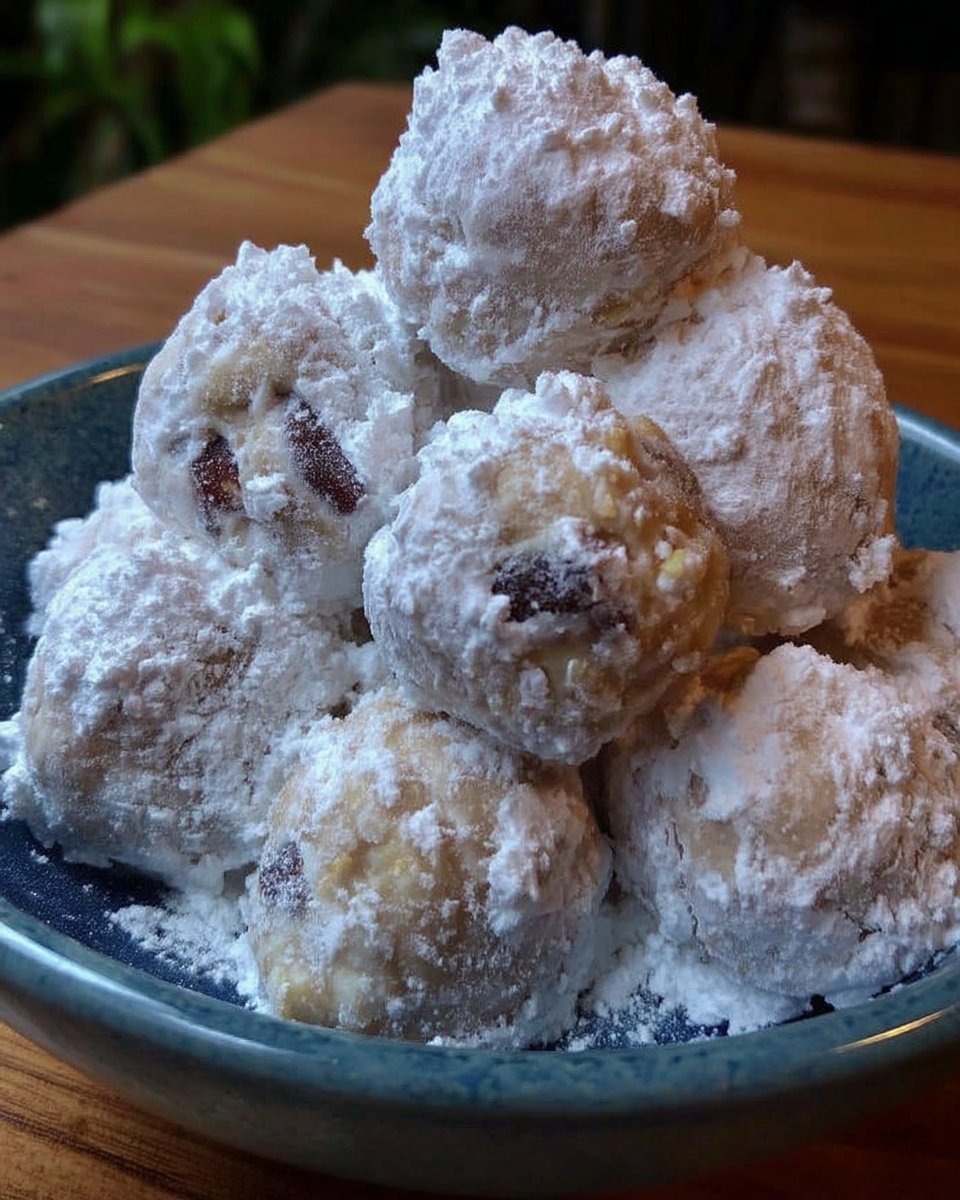
These biscuits are traditionally served as a tea accompaniment or a holiday gift. Their structural fragility requires careful handling during service.
- Tea Time: Serve alongside a black tea like Earl Grey; the bergamot oils cut through the richness of the pecan butter base.
- Gifting: Package these in tins lined with parchment paper. The parchment prevents the butter from spotting the container and keeps the sugar coating pristine. Re-roll in fresh sugar just before gifting for a “fresh snow” look.
- Plating: Pile them in a pyramid formation on a ceramic stand. The height adds visual appeal, resembling a pile of snowballs.
For more ideas on how to present your bakes with professional flair, read about Precision Cookie Decorating.
Final Analysis
The Pecan Snowball is a testament to the power of simple ingredients treated with respect. By understanding the relationship between fat, flour, and sugar, we achieve a texture that is historically revered and scientifically sound. It is not just about mixing ingredients; it is about managing the hydration and temperature to create that perfect melt.
While you might find similar formulas elsewhere, such as the Snowballs II on Allrecipes, sticking to this precise double-roll technique guarantees the superior finish and texture we demand at Cookies Yum. Mastering this allows you to tackle more complex Efficient Cookie Methods with confidence.
Share your results with us on Pinterest, Instagram, Facebook, or X.