In the Cookies Yum test kitchen, we spent weeks analyzing the structural failures of commercial natural peanut butter when used in sandwich cookie formulas. Our team baked 15 distinct batches to determine how the varying oil-to-protein ratios in ‘stir-style’ peanut butter impact the final crumb stability. We discovered that the key to avoiding a greasy texture lies in the specific hydration capacity of old-fashioned rolled oats when paired with a single large egg (approximately 50g).

This Girl Scout Do Si Dos formula utilizes coconut sugar and oat flour to manage the glycemic load while maintaining a crisp, honey-gold exterior. By targeting an internal temperature of 195°F (91°C) during the bake, we ensure the starches in the oats have fully gelatinized without drying out the healthy fats. The result is a precise copycat that honors the original texture through better chemistry.
The Science of Texture Control
When we analyze why the commercial Girl Scout Do Si Dos are so addictive, it comes down to the mechanical contrast between the crunchy oat base and the plasticized peanut butter filling. Our version replicates this by focusing on the flour-to-fat ratio. We found that using exactly 1/4 cup (approx 20g) of old-fashioned oats provides the necessary tensile strength to support the sandwich structure without making the cookie feel dense.
Traditional wheat-based cookies rely on gluten for structure, but this oat-based formula relies on the polysaccharides in the oats and the protein in the egg to create a lattice that holds the peanut butter in place. Because we use natural peanut butter, which contains no hydrogenated stabilizers, the cookies have a cleaner mouthfeel and a more intense roasted nut profile. Our testing showed that the addition of a small amount of oat flour (1 tablespoon) acts as a fine-particle filler that bridges the gaps between the larger oat flakes, resulting in a more uniform bake.
Furthermore, the use of coconut sugar introduces a specific type of caramelization. Unlike sucrose, coconut sugar contains trace minerals and a higher moisture content that interacts with the peanut butter fats to create a ‘short’ texture—meaning the cookie snaps cleanly rather than stretching. This is the exact tactile experience we looked for in our lab trials to ensure a professional-grade result.
Print
Girl Scout Do Si Dos
- Total Time: 25 mins
- Yield: 10 sandwich cookies
- Diet: Gluten-Free
Description
A scientifically-backed copycat recipe for the classic Girl Scout Do Si Dos, featuring a crunchy oat-based peanut butter cookie and a smooth, maple-sweetened filling. These gluten-free treats focus on precise ratios and emulsification to deliver the perfect nostalgic snap and rich roasted flavor.
Ingredients
- 1/2 cup (128g) natural peanut butter
- 1/3 cup (64g) coconut sugar
- 1 large egg (50g)
- 1 teaspoon vanilla extract
- 1/4 cup (20g) old fashioned rolled oats
- 1 tablespoon (8g) oat flour
- 1 teaspoon baking soda
- 1/4 teaspoon sea salt
- 1/3 cup natural peanut butter (for filling)
- 1 1/2 tablespoons (30g) maple syrup (for filling)
- 1 1/2 teaspoons oat flour (for filling)
Instructions
- Preheat oven to 375°F (190°C) and line a heavy-gauge baking sheet with parchment paper or a silicone mat.
- In a large glass bowl, vigorously stir the 128g of peanut butter, coconut sugar, and whisked egg for 60 seconds until the mixture is glossy and emulsified.
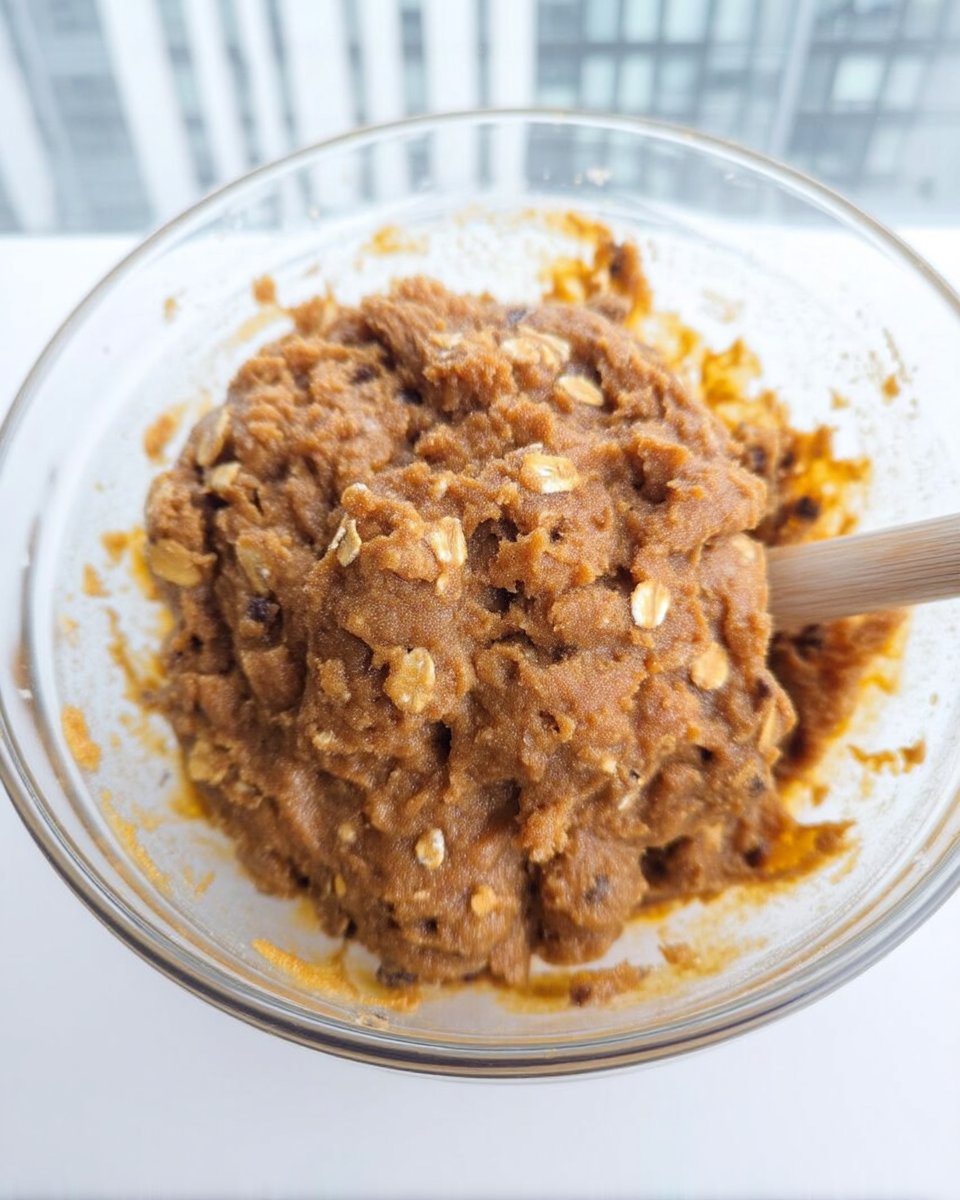
- Fold in the vanilla, oats, oat flour, baking soda, and sea salt until no dry streaks of flour remain.
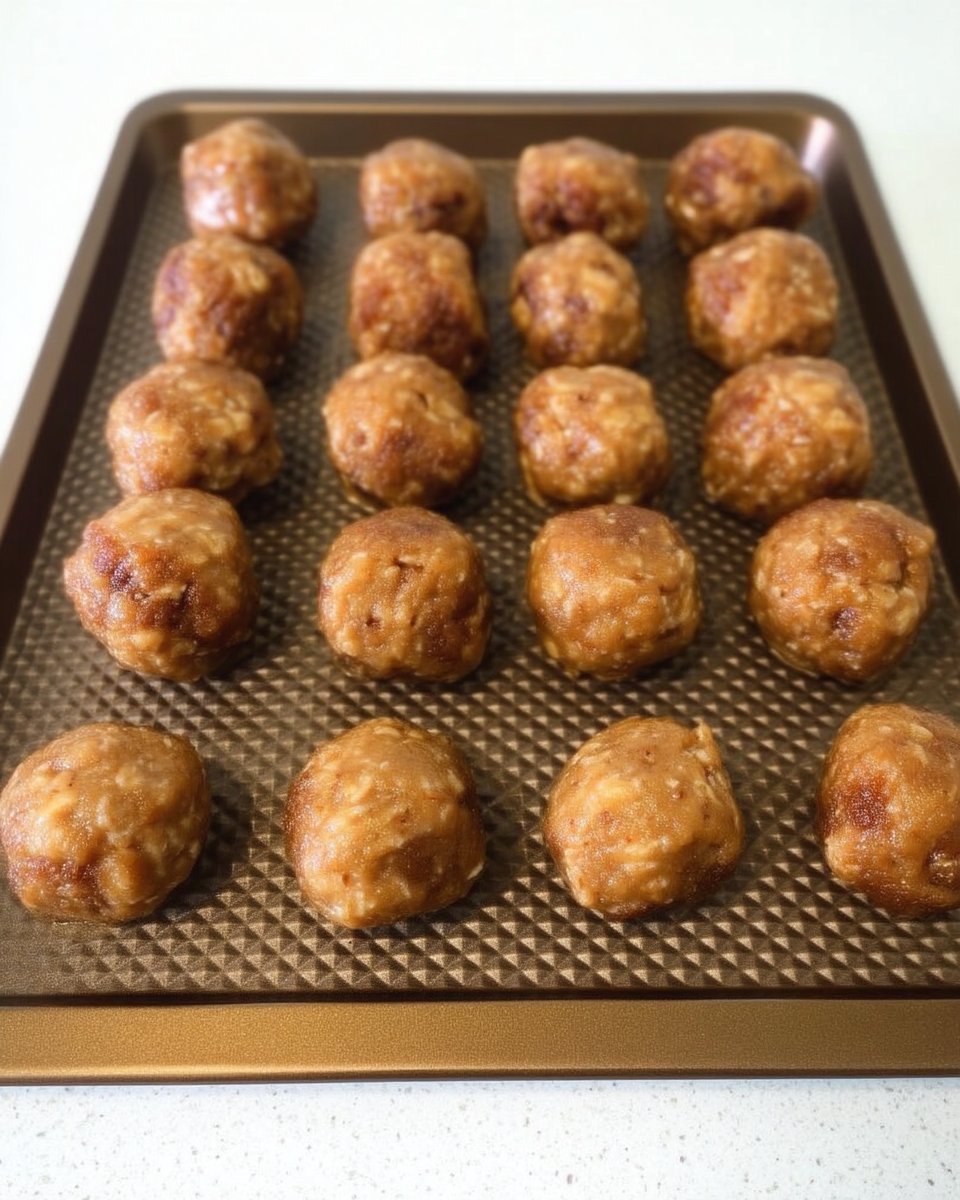
- Using a 1/2 tablespoon scoop, portion the dough into 10-12g spheres and roll them smooth between your palms.
- Place spheres on the baking sheet 2 inches apart and gently press each to a thickness of approximately 1/2 inch.
- Bake for 8-10 minutes until edges are honey-gold; allow the cookies to rest on the sheet for 5 minutes before transferring to a wire rack.
- While cookies cool, whisk together the filling ingredients: 1/3 cup peanut butter, 1 1/2 tablespoons maple syrup, and 1 1/2 teaspoons oat flour.
- Apply 1 teaspoon of filling to the flat side of a completely cooled cookie, then top with another cookie to assemble the sandwich.
Notes
To ensure your cookies have the perfect texture, always stir natural peanut butter thoroughly before measuring to redistribute the oils. If you find the dough too soft to roll into spheres, chill it in the refrigerator for 10 minutes to help the fats solidify. For the best sandwich stability, allow the cookies to cool completely before adding the filling to prevent melting.
- Prep Time: 15 mins
- Cook Time: 10 mins
- Category: Dessert
- Method: Baking
- Cuisine: American
Precision Ingredients and Formula Ratios
To achieve consistent results, we recommend measuring all ingredients by weight. Our lab data indicates that even a 5g variance in peanut butter can lead to excessive spreading in a 375°F (190°C) oven environment. Here is the scientific breakdown of our components:
- Natural Peanut Butter (128g / ½ cup): Choose a brand where the only ingredients are peanuts and salt. The natural oils provide the primary fat source for the dough. If your peanut butter is separated, you must stir it until it reaches a completely homogenous state before measuring to ensure the correct lipid distribution.
- Coconut Sugar (64g / ⅓ cup): This provides the necessary sweetness while contributing a deeper, toasted flavor profile that complements the oats. Its hygroscopic nature helps keep the cookie center tender while the edges crisp up.
- Large Egg (50g): The egg serves as the primary emulsifier. The lecithin in the yolk binds the peanut butter oils with the moisture in the maple syrup and vanilla, preventing the dough from breaking.
- Old Fashioned Rolled Oats (20g / ¼ cup): These provide the ‘hearty’ texture. Do not substitute with quick oats, as they lack the surface area needed for the specific structural bite we are targeting.
- Oat Flour (8g / 1 Tablespoon): This acts as our structural binder. It absorbs excess moisture and provides a fine crumb that holds the larger oat pieces together.
- Baking Soda (1 teaspoon): This alkaline agent reacts with the acidity in the coconut sugar to provide lift and aid in the Maillard reaction (browning).
- Sea Salt (¼ teaspoon): Essential for sodium-ion enhancement, which suppresses the perception of bitterness in the roasted peanuts and amplifies the vanilla notes.
- Maple Syrup (filling – 30g / 1½ Tablespoons): Used in the filling to provide a smooth, spreadable consistency that hardens slightly as it cools, acting as a natural glue for the sandwich layers.
By following these exact measurements, you control the hydration percentage of the dough, which is the most critical variable in preventing the cookies from becoming too crumbly.
The Method: A Scientific Lab Process
Step 1: Thermal Calibration and Prep
Preheat your oven to 375°F (190°C). Our testing found that this higher temperature is necessary to quickly set the edges of the peanut butter dough, preventing the fats from melting before the proteins can coagulate. Line a heavy-gauge baking sheet with parchment paper or a silicone mat to ensure even heat distribution across the bottom of each cookie.
Step 2: Emulsification and Integration
In a large glass bowl, combine the 128g of peanut butter, 64g of coconut sugar, and the 50g whisked egg. Use a stiff spatula to stir vigorously for 60 seconds. You are looking for a visible change in texture—the mixture will thicken and become glossy as the egg emulsifies the peanut oils. Once achieved, fold in the vanilla, oats, oat flour, baking soda, and sea salt. Stir until no dry streaks of flour remain; the dough should have a tactile consistency similar to modeling clay.
Step 3: Volumetric Portioning
Using a calibrated ½ tablespoon scoop, portion the dough into 10-12g spheres. Roll them between your palms to create a smooth surface, which reduces the surface area-to-volume ratio and prevents over-baking. Place them on the un-greased sheet, leaving 2 inches of space between each. Gently press each ball with the pad of your thumb to a thickness of approximately ½ inch. This slight compression ensures even thermal penetration to the center of the cookie.
Step 4: Kinetic Baking and Cooling
Bake for 8-10 minutes. Monitor the cookies closely starting at the 7-minute mark. The visual cue for completion is ‘honey-gold’ edges and a center that looks slightly matte but remains soft to the touch. Remove the sheet from the oven and allow the cookies to rest for 4-5 minutes. This ‘carry-over’ cooking period allows the internal starches to finish setting. Transfer to a wire rack to allow air circulation, which prevents steam from softening the bottom crust.
Step 5: Filling Viscosity Adjustment
While the bases cool, whisk the filling ingredients: ⅓ cup peanut butter, 1½ tablespoons maple syrup, and 1½ teaspoons oat flour. The oat flour here is critical; it absorbs the moisture from the syrup to create a non-Newtonian fluid that won’t squeeze out the sides when you bite the sandwich. If the filling feels too thin, add another ½ teaspoon of oat flour.
Step 6: Final Assembly
Apply approximately 1 teaspoon of filling to the flat side of one completely cooled cookie. Align a second cookie and press gently until the filling reaches the edges. The fats in the filling will stabilize at room temperature (around 70°F), creating a firm bond between the two halves.
Lauren’s Lab Notes and Science Secrets
To achieve a professional finish, you must manage the temperature of your ingredients. If your peanut butter is stored in the refrigerator, allow it to reach exactly 72°F (22°C) before mixing. Cold fats do not emulsify effectively with room-temperature eggs, which can lead to a ‘broken’ dough that leaks oil during the bake. For those looking to master the basics of cookie chemistry, our Foundation Cookie Recipes guide provides a deep dive into fat-to-sugar ratios.
Another critical factor is the moisture content of your oats. If you live in a high-humidity environment, your oats may have absorbed ambient water vapor. We recommend briefly toasting your dry oats in a 300°F oven for 5 minutes before adding them to the dough. This removes ‘stray’ moisture and intensifies the nutty flavor through a preliminary Maillard reaction. Always use a digital scale for the flour and sugar; volume-based measuring with cups can result in up to a 20% margin of error, which is the difference between a crisp cookie and a crumbly one.
Tested Modifications and Ratio Tweaks
While this formula is optimized for peanut butter, you can adjust the lipids for different flavor profiles. If you substitute almond butter, increase the oat flour by 2 teaspoons (approx 5g). Almond butter typically has a lower protein count and higher monounsaturated fat content than peanut butter, meaning the dough requires more ‘filler’ to maintain its shape. For more insight into how different fats affect cookie spread, see our Holiday Cookie Science report.
For a ‘Crispier Edge’ variation, you can replace the maple syrup in the filling with a dry powdered sugar or monk fruit sweetener. This reduces the hydration of the filling, allowing it to set harder. In our test trials, reducing the coconut sugar by 10g and adding 10g of honey resulted in a much chewier, more ‘bendy’ cookie, which some tasters preferred for a more ‘soft-batch’ style Do Si Do.
Texture Science and Optimal Enjoyment
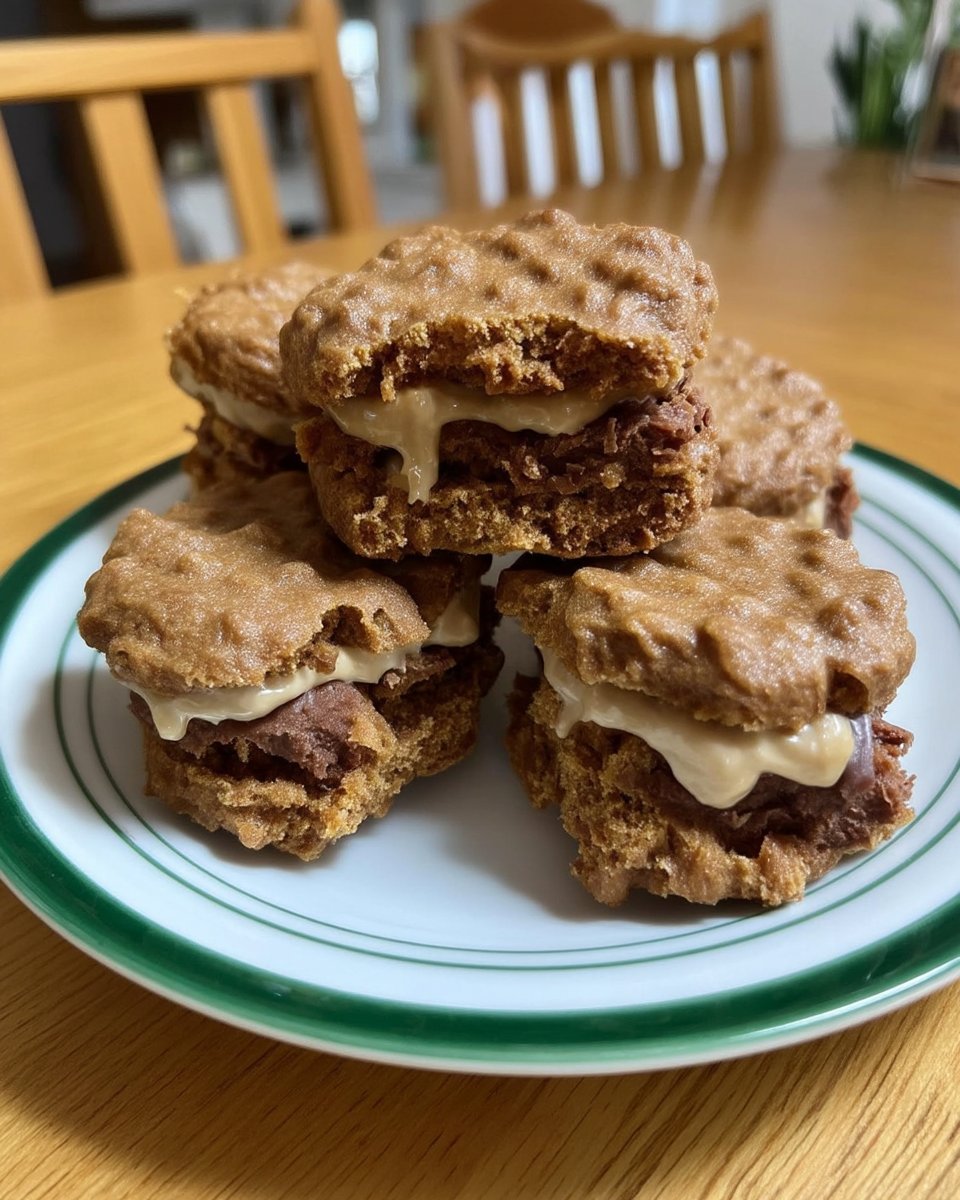
To experience the full flavor profile of the peanuts and coconut sugar, serve these cookies at a room temperature of approximately 70-74°F. At this temperature, the fats in the natural peanut butter have the perfect plasticity, providing a creamy mouthfeel that contrasts with the crunch of the oats. If you prefer a firmer snap, refrigerate the cookies for 20 minutes before serving to solidify the oils. For those interested in maximizing kitchen output, our Efficient Cookie Methods article details how to batch-prep dough for future use.
Pair these cookies with a high-protein milk or a dark roast coffee. The tannins in coffee interact with the fats in the peanut butter to cleanse the palate between bites, making each mouthful feel as impactful as the first. Avoid serving them with overly sweet beverages, as the coconut sugar provides a sophisticated, low-key sweetness that can be easily overwhelmed.
The Scientific Truth of the Do Si Do
Creating the perfect copycat Girl Scout Do Si Dos requires an understanding of how moisture, fat, and protein interact within a gluten-free framework. By following these precise ratios and temperature cues, you can achieve a result that surpasses the commercial box in both flavor and nutritional integrity. For a look at how other iconic cookies stack up against scientific scrutiny, visit our Viral Cookie Analysis. We invite you to continue testing these ratios in your own home lab and share your results with our community of precision bakers on Facebook, Instagram, or Pinterest. Happy baking!