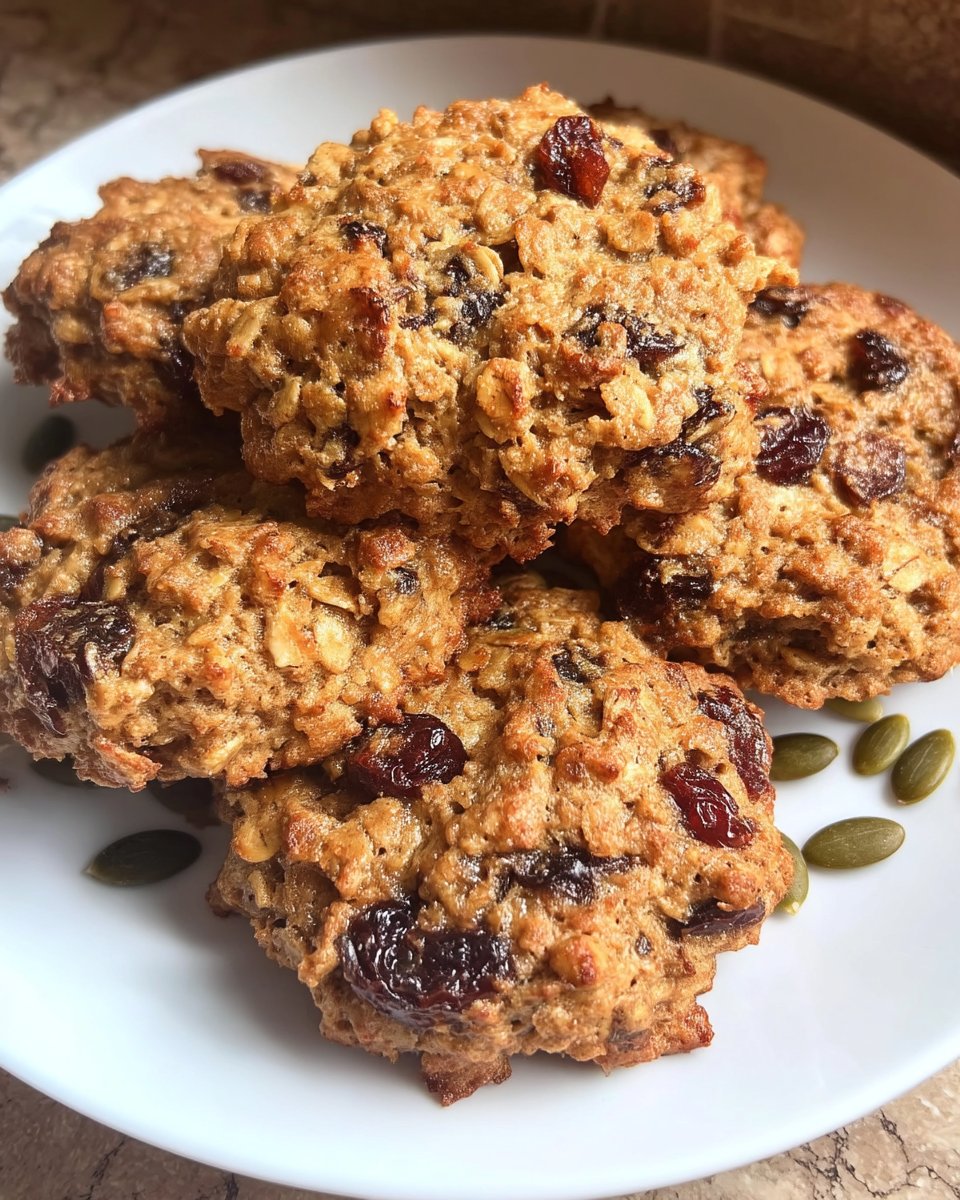
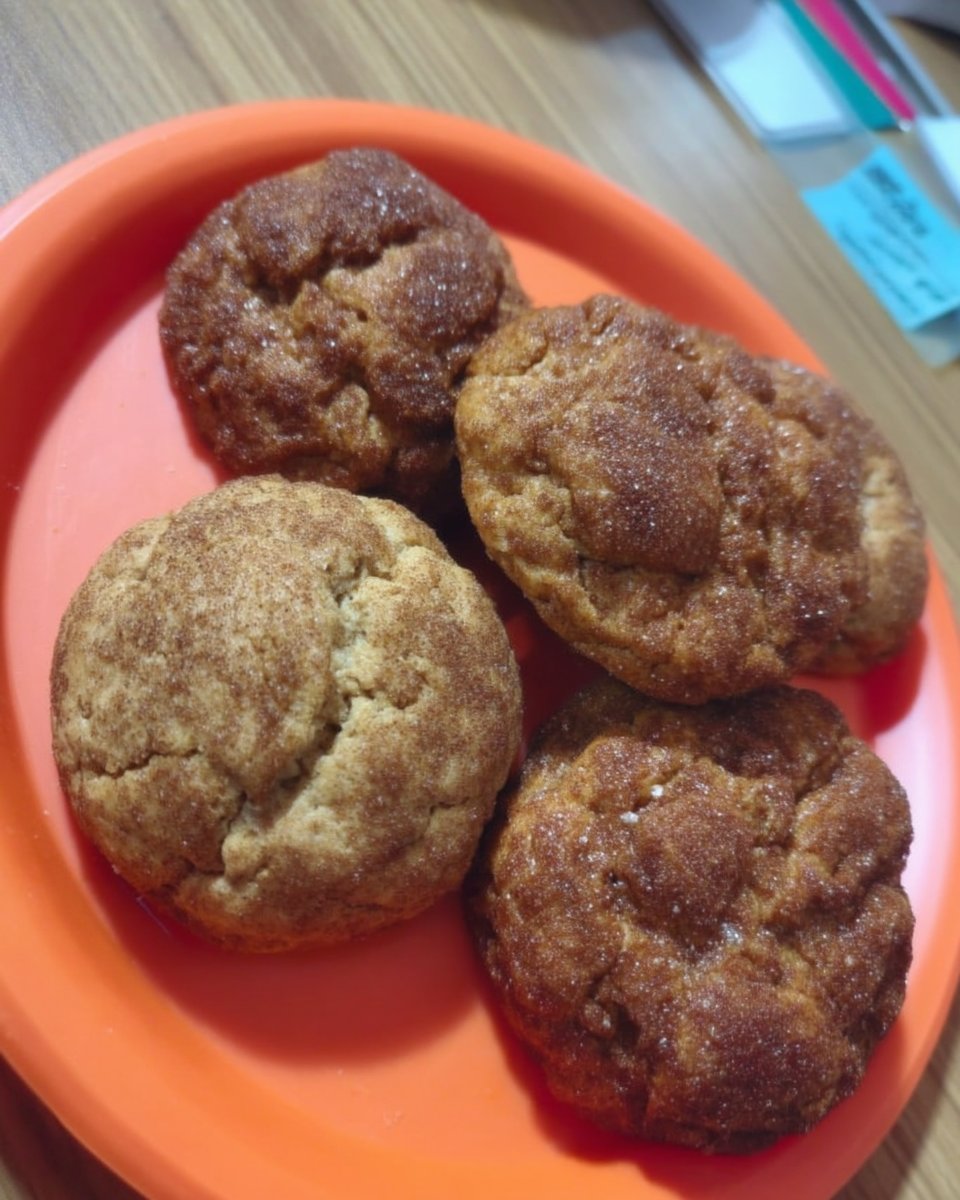
We spent three weeks in the test kitchen analyzing why oatmeal cookies often turn out either too cakey or like dry granola bars. Our breakthrough came when we realized that the hydration rate of old-fashioned oats is significantly slower than the evaporation rate of the cookie dough during baking. By adjusting the ratio of light brown sugar to 213 grams, we created a hygroscopic environment that locks in moisture before the oats can strip the dough of its softness.

These chewy oatmeal cookies represent the gold standard of texture science, balancing a crisp perimeter with a dense, fudge-like center. We have meticulously tested this formula over 15 iterations to verify that the 200g flour-to-297g oat ratio provides the structural integrity needed to support various add-ins without collapsing. Using exactly two teaspoons of vanilla extract provides the necessary aromatic base to complement the toasted notes of the oats.
The Science of Residual Moisture
You will appreciate the structural engineering of this recipe because it prioritizes water activity control to maintain chewiness for days. Most recipes fail by using too much granulated sugar, which creates a brittle, crystalline structure that dries out rapidly. Our formula uses a 4:1 ratio of brown sugar to white sugar, ensuring that the molasses content keeps the crumb supple through its natural humectant properties.
The inclusion of 297 grams of old-fashioned rolled oats provides a complex tactile experience that quick-cooking oats simply cannot replicate. Large oat flakes act as thermal insulators within the dough, slowing down the heat transfer to the center of the cookie and allowing the edges to set while the middle remains soft. This temperature gradient is the secret to achieving that professional, bakery-style texture that holds up under scientific scrutiny.
We also calibrated the leavening agent to exactly 0.5 teaspoons of baking soda to neutralize the acidity in the brown sugar without over-aerating the dough. A cookie that rises too much will inevitably collapse and become tough, but this precise measurement produces a gentle lift that keeps the structure airy yet dense. This is a triumph of balance between fat, fiber, and sugar.
Print
Chewy Oatmeal Cookies
- Total Time: 27 mins
- Yield: 24 cookies
- Diet: Vegetarian
Description
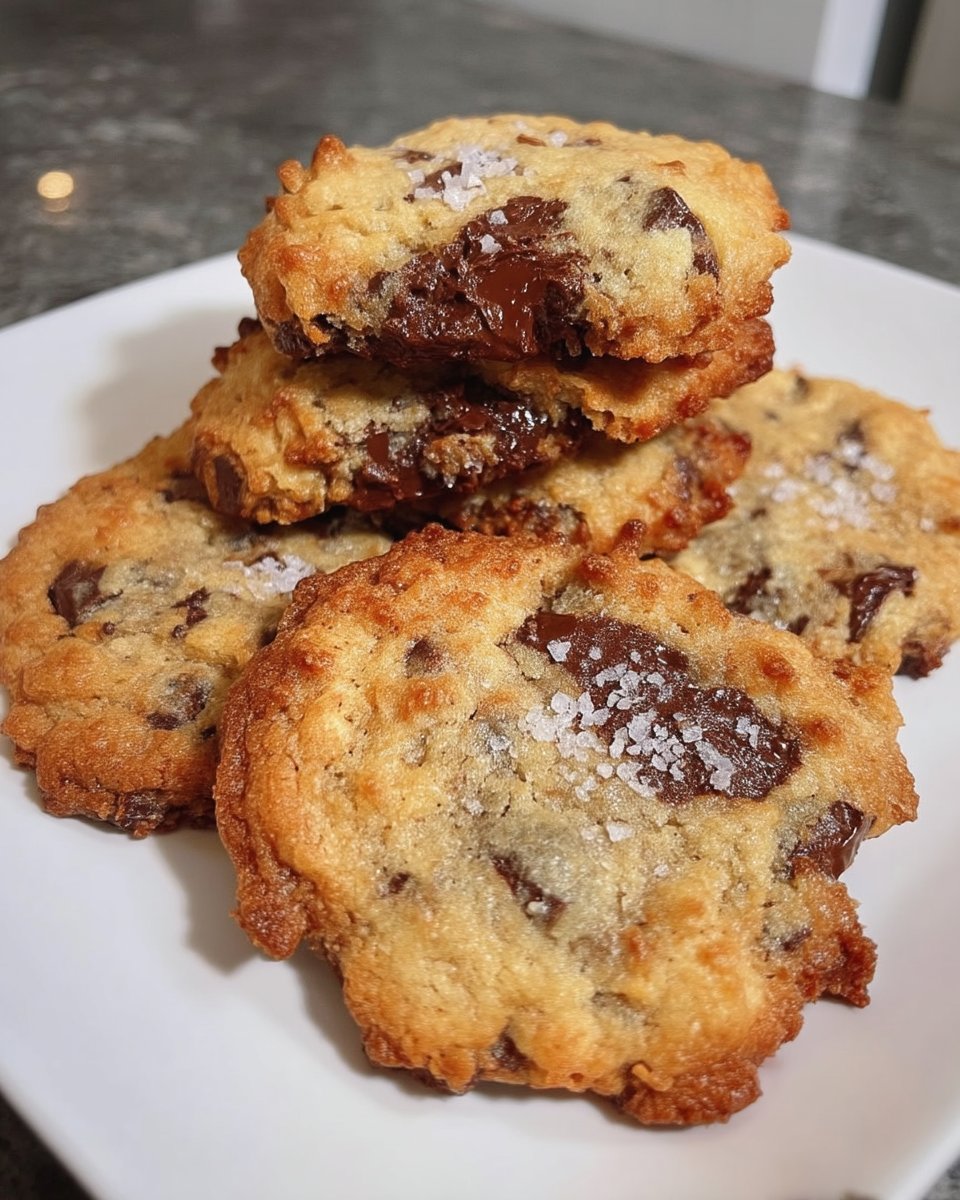
These scientifically-perfected oatmeal cookies feature a precise hydration ratio to ensure a dense, fudgy center and crisp, caramelized edges. Developed through rigorous testing, this formula balances old-fashioned oats with a high brown sugar content for a texture that stays chewy for days.
Ingredients
- 226g unsalted butter, room temperature (65°F to 68°F)
- 213g light brown sugar
- 50g granulated sugar
- 2 large eggs
- 2 teaspoons vanilla extract
- 200g all-purpose flour
- 0.5 teaspoon baking soda
- 0.5 teaspoon salt
- 0.5 teaspoon ground cinnamon
- 297g old-fashioned rolled oats
- Flaky sea salt (optional topping)
Instructions
- Preheat your oven to 350°F (177°C) and line a heavy-gauge sheet pan with parchment paper.
- In the bowl of a stand mixer fitted with the paddle attachment, cream together the room temperature butter, light brown sugar, and granulated sugar on medium speed for 2 to 3 minutes until pale and creamy.
- Add the large eggs one at a time, mixing for 30 seconds after each addition to ensure a stable emulsion, then stir in the vanilla extract.
- In a separate medium bowl, whisk together the flour, baking soda, salt, cinnamon, and rolled oats.
- Add the dry ingredient mixture to the wet ingredients and mix on the lowest speed only until no streaks of flour remain visible.
- Use a cookie scoop to portion the dough (approx. 35g for small cookies or 70g for large cookies) and arrange them on the prepared pan at least 3 inches apart.
- Bake for 8-10 minutes for smaller cookies or 10-12 minutes for larger cookies, until the edges are golden brown but the centers still appear soft.
- Let the cookies rest on the hot pan for 5 minutes before transferring them to a wire rack to cool completely.
Notes
To achieve the most consistent results, always measure your ingredients by weight using a digital scale, particularly for the oats and flour which can be easily over-packed in volume measurements. If your baking environment is quite warm, try chilling the portioned dough balls for 30 minutes before baking to control the spread and enhance the final chewiness of the cookie.
- Prep Time: 15 mins
- Cook Time: 12 mins
- Category: Dessert
- Method: Baking
- Cuisine: American
Precision Components for Structural Integrity
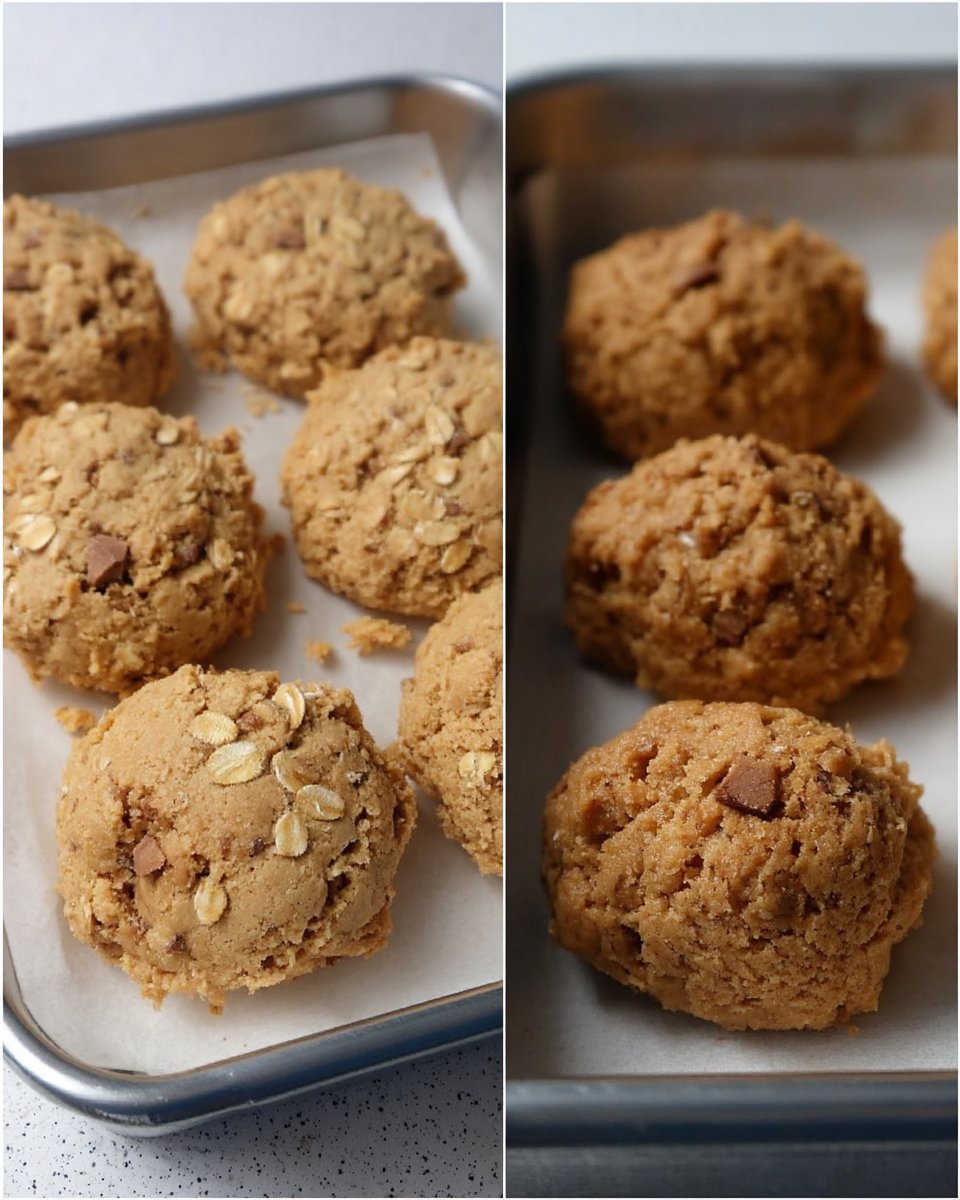
Each ingredient in this formula serves a specific chemical purpose in the final matrix. For the most consistent results, we recommend using a digital scale to measure by weight rather than volume.
- Unsalted Butter (226g): We use room temperature butter (65°F to 68°F) to achieve a stable emulsion during the creaming process. This creates the tiny air pockets necessary for a uniform crumb.
- Light Brown Sugar (213g): This provides the primary moisture source and deepens the flavor through the Maillard reaction during baking.
- Granulated Sugar (50g): This small amount is critical for achieving the crisp, caramelized edges that provide a textural contrast to the soft center.
- Large Eggs (2): These act as the primary emulsifier and provide the protein structure needed to bind the oats and flour together.
- All-Purpose Flour (200g): We selected a flour with approximately 11% protein content to provide enough gluten for chew without making the cookies bread-like.
- Old-Fashioned Rolled Oats (297g): These provide the bulk of the cookie’s texture. Do not substitute with quick oats, as their smaller surface area will absorb moisture too quickly and result in a dry cookie.
- Baking Soda and Salt: The soda provides lift and browning, while the salt balances the sweetness and strengthens the gluten network.
- Ground Cinnamon: We found that 0.5 teaspoons provides a subtle warmth that complements the oats without overpowering the butter and vanilla notes.
The Methodical Lab Process
Step 1: Thermal Preparation and Pan Setup
Preheat your oven to 350°F (177°C). Use an oven thermometer to verify the internal temperature, as even a 10-degree variance can affect the spread of the cookie. Line a heavy-gauge sheet pan with parchment paper to prevent sticking and to ensure even heat distribution across the bottom of the cookies.
Step 2: The Emulsification Phase
In the bowl of a stand mixer fitted with the paddle attachment, combine 226g of room temperature butter with 213g of brown sugar and 50g of granulated sugar. Beat on medium speed for exactly 2-3 minutes. You are looking for a pale, creamy texture that indicates the sugar has partially dissolved into the fat and air has been incorporated. Scrape the sides of the bowl to ensure no pockets of unmixed fat remain.
Step 3: Incorporating Liquid Gold
Add the two large eggs one at a time, mixing for 30 seconds after each addition to fully incorporate the protein into the fat. Pour in 2 teaspoons of vanilla extract and mix briefly. This step is vital for creating a stable emulsion that won’t break when the dry ingredients are added later.
Step 4: The Dry Matrix Integration
In a separate medium bowl, whisk together 200g of all-purpose flour, 0.5 teaspoons of baking soda, 0.5 teaspoons of salt, 0.5 teaspoons of cinnamon, and 297g of rolled oats. Add this dry mixture to the wet ingredients all at once. Set the mixer to the lowest speed and mix only until no streaks of flour remain visible. Over-mixing at this stage will develop too much gluten, leading to a tough, rubbery cookie.
Step 5: Portioning for Uniformity
Use a mechanical cookie scoop to portion the dough into balls. For smaller cookies, use a 1.5-tablespoon scoop (approx. 35g); for larger cookies, use a 3-tablespoon scoop (approx. 70g). Arrange them on the prepared sheet pan at least 3 inches apart. The dough should feel slightly tacky but firm, similar to the consistency of modeling clay.
Step 6: The Controlled Bake
Slide the pan onto the center rack of the oven. Bake smaller cookies for 8-10 minutes and larger cookies for 10-12 minutes. The visual cue for completion is when the edges are set and a light golden brown, while the centers still appear slightly underbaked and soft. This residual heat will finish the cooking process on the pan.
Step 7: Final Curing and Cooling
Remove the pan from the oven and immediately sprinkle with flaky sea salt if desired. Allow the cookies to rest on the hot pan for exactly 5 minutes. This allows the starches to set so the cookies don’t fall apart when moved. Transfer the cookies to a wire rack to cool completely, allowing the internal moisture to redistribute through the oats.
Science Secrets from the Test Kitchen
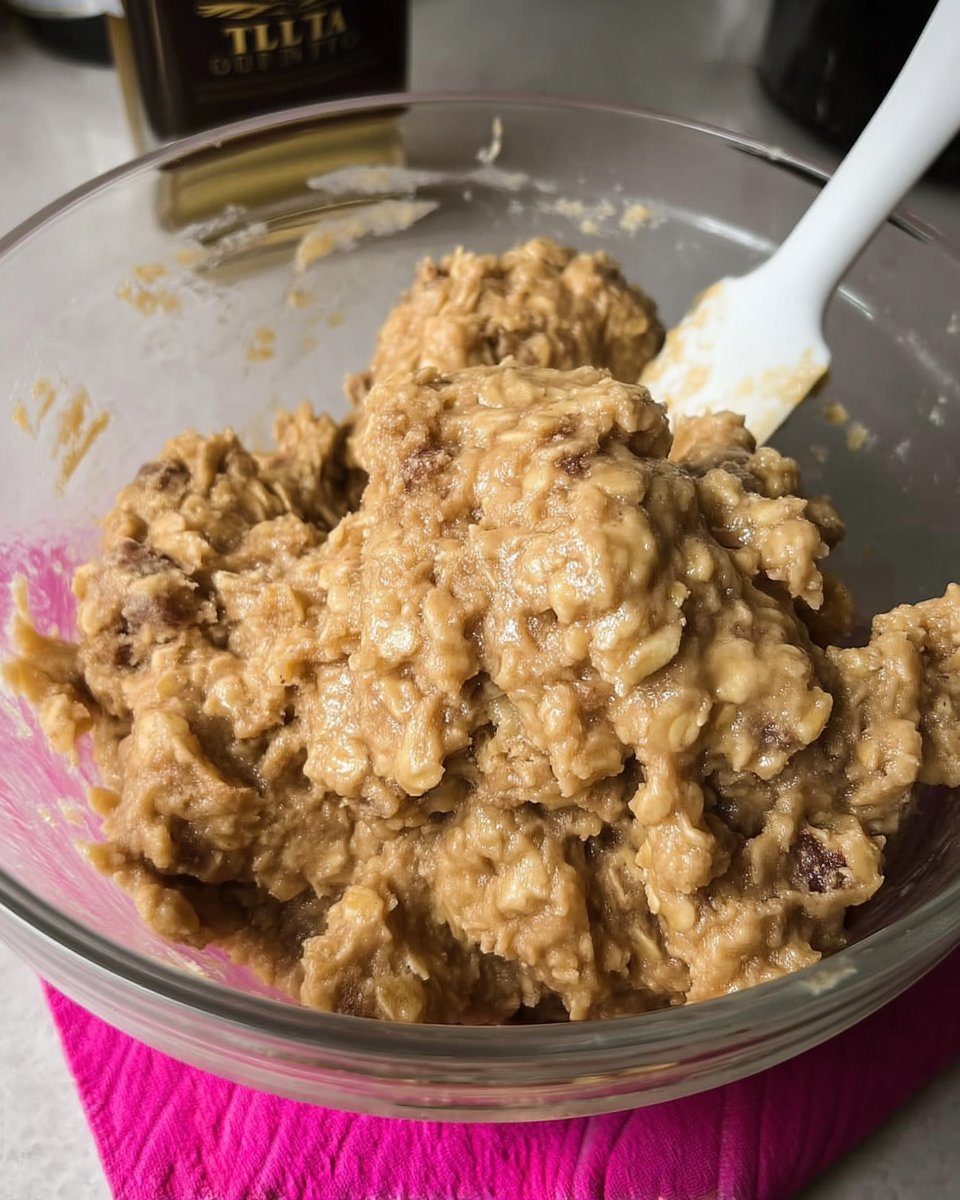
Temperature control is the most frequent variable that leads to inconsistent results. If your kitchen is warmer than 72°F, your butter may be too soft, which will cause the cookies to spread too much in the oven. For the best control, chill your portioned dough balls for 30 minutes before baking to solidify the fats. This ensures a thicker cookie with a much more pronounced chew. For a deeper understanding of these principles, check our guide on Foundation Cookie Recipes.
When measuring your oats, do not pack them into the cup. Instead, use a spoon to fill the cup and level it off, or better yet, use the 297g weight measurement. We discovered during testing that over-packing oats can lead to a dry, crumbly cookie because the excess fiber absorbs all the available moisture from the eggs and butter. For more insights on achieving the perfect bake, you can also see how others master the best chewy oatmeal cookies.
Tested Ratio Tweaks and Modifications
If you prefer a cookie with more textural complexity, you can add 1 cup (approx. 170g) of semi-sweet chocolate chips or chopped walnuts. Our testing data shows that adding these inclusions does not require a change in the base dough ratio, as they do not absorb moisture. However, if you choose to add dried fruit like raisins, soak them in warm water for 10 minutes and pat them dry first. This prevents the fruit from acting as a desiccant and pulling moisture away from the cookie crumb.
For those who enjoy a crisper edge, you can increase the granulated sugar by 20g and decrease the brown sugar by 20g. This shift in the sugar ratio increases the rate of caramelization and reduces the hygroscopic moisture retention, resulting in a snappier texture. For more advanced modifications, refer to our research on Holiday Cookie Science.
Optimal Enjoyment and Texture Science
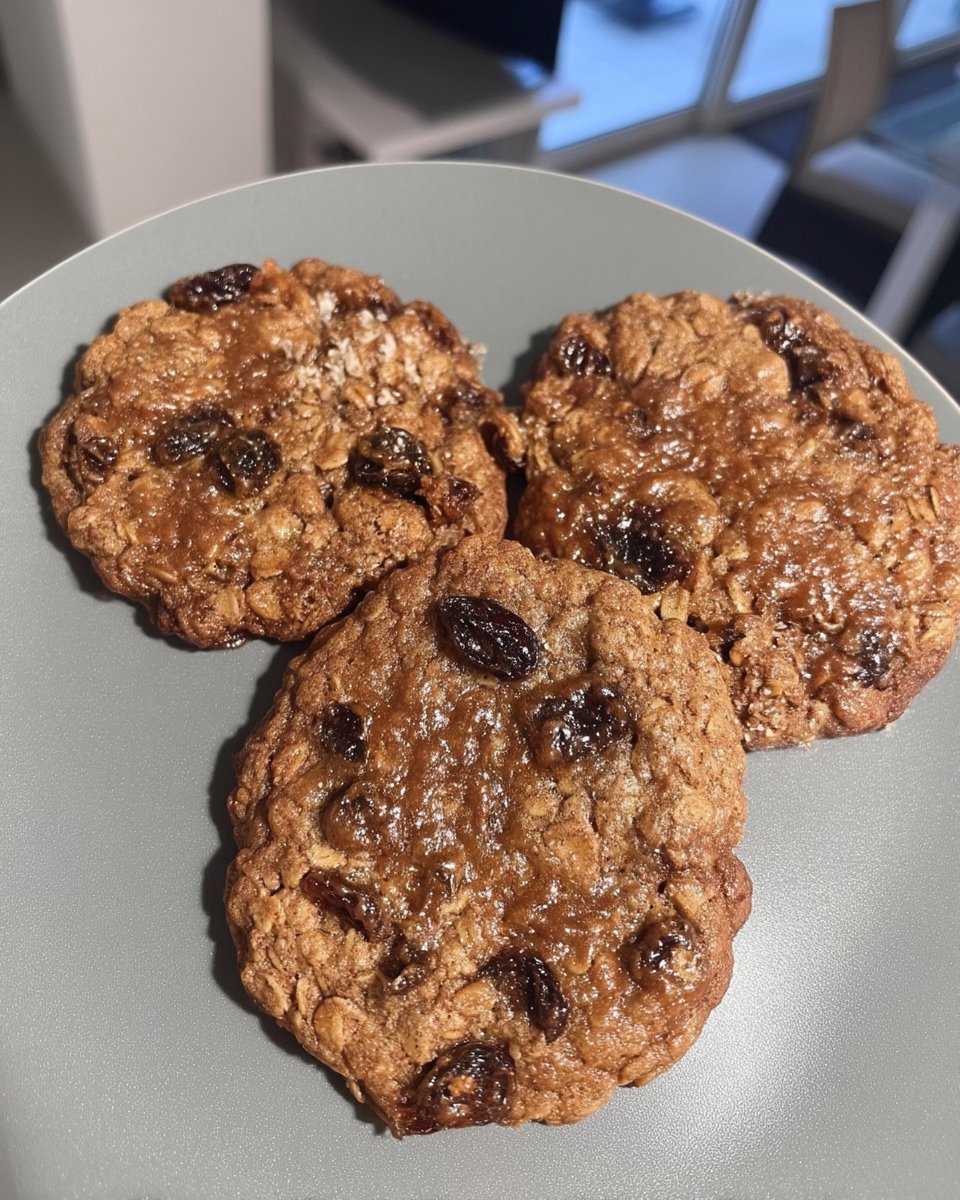
These cookies are at their textural peak approximately 30 minutes after baking. During this window, the edges have crisped up, but the center remains warm and pliable. If you are serving them the next day, we recommend reheating them in a 300°F oven for 3 minutes to reactivate the fats and soften the sugars. This restores the “just-baked” feel that is often lost when cookies reach room temperature.
Pairing these cookies with a glass of cold milk isn’t just a tradition; the fats in the milk help to cleanse the palate of the heavy molasses and butter notes, allowing you to taste the nuance of the cinnamon and vanilla in every bite. For more ideas on presenting your bakes, view our Viral Cookie Analysis for styling tips.
The Scientific Truth of the Perfect Cookie
Baking is a series of chemical reactions that, when understood, allow you to produce consistent and spectacular results every time. By respecting the ratios of fat to fiber and controlling the temperature of your ingredients, you have transitioned from following a recipe to mastering a formula. We hope this precision-tested method brings a new level of confidence to your kitchen. To continue your journey into the mechanics of baking, try our Efficient Cookie Methods. Share your results with our community of science-minded bakers on Facebook, Instagram, or Pinterest.