The distinct aroma of Almond Horns is driven by benzaldehyde, a volatile organic compound that defines the sensory profile of bitter almonds. When we combine high-quality almond paste with finely ground meal, we are essentially building a concentrated flavor matrix that releases these aromatic molecules more intensely during the baking process. I remember my first encounter with this chemistry in a small European bakery, where the scent of toasting nuts felt like a physical embrace, sparking my curiosity about the synergy between lipids and protein in gluten-free structures.

Commonly known as *Mandelhörnchen* in Germany, these cookies represent a fascinating study in texture engineering. We use a high ratio of almond solids to create a dense, moisture-retentive core that contrasts sharply with the Maillard-transformed sliced almonds on the exterior. This recipe focuses on creating a stable emulsion of sugar and nut fats to produce a cookie that remains soft for weeks without the need for traditional flour stabilizers.
The Flavor Science of Almond Horns
There is a remarkable chemical reason why Almond Horns are so satisfying to the palate. The combination of almond paste and egg whites creates a protein-rich scaffold that traps moisture effectively, resulting in a unique mouthfeel that sits comfortably between a macaroon and a dense shortbread. Because almonds are high in monounsaturated fats, specifically oleic acid, they provide a rich, coating sensation on the tongue that carries the sweet notes of the powdered sugar more efficiently than butter-based cookies.
We also leverage the power of salt to act as a bitterness suppressor. Almonds inherently contain slight bitter notes from their skins and natural compounds; by adding a precise amount of sea salt, we chemically block those bitter receptors on the tongue, allowing the perception of sweetness and the floral notes of the almond extract to shine through. This intentional layering of taste profiles ensures each bite is balanced and remarkably complex.
Print
Almond Horns
- Total Time: 35 mins
- Yield: 14 cookies
- Diet: Gluten-Free
Description
These elegant German-style almond horns feature a chewy, marzipan-like interior encased in a crunchy shell of toasted sliced almonds. Dipped in smooth dark chocolate, they offer a sophisticated balance of textures and a rich nut flavor that is naturally gluten-free.
Ingredients
- 7 oz almond paste, broken into chunks
- 1 cup blanched almond flour
- 1 cup powdered sugar
- 2 large egg whites, divided
- 1 teaspoon almond extract
- 1 teaspoon vanilla extract
- 1/4 teaspoon sea salt
- 1 cup sliced almonds
- 4 oz semi-sweet chocolate, chopped
- 1 teaspoon coconut oil
Instructions
- Preheat your oven to 350°F (175°C) and line a heavy-gauge baking sheet with parchment paper.
- In a food processor, combine the almond paste chunks, almond flour, powdered sugar, one egg white, almond extract, vanilla extract, and salt; pulse until a cohesive, sticky dough forms.
- Divide the dough into balls approximately 1.5 inches in diameter and roll each ball into a small log shape.
- Lightly beat the remaining egg white and brush a thin layer over the surface of each log to act as an adhesive.
- Press each log firmly into the sliced almonds until densely coated, then bend the logs into a crescent shape and place on the prepared baking sheet.
- Bake for 14–15 minutes until the sliced almonds are honey-gold, then let cool on the pan for 5 minutes before transferring to a wire rack.
- Melt the semi-sweet chocolate and coconut oil together, then dip the ends of the completely cooled cookies into the mixture and allow to set until firm.
Notes
For the best results, ensure you are using pure almond paste rather than almond filling, as the latter contains too much moisture and will prevent the cookies from holding their shape. If the dough is difficult to handle, refrigerate it for 20 minutes to allow the fats to firm up, making the shaping process much cleaner and easier.
- Prep Time: 20 mins
- Cook Time: 15 mins
- Category: Dessert
- Method: Baking
- Cuisine: German
The Anatomy of Almond Flavor
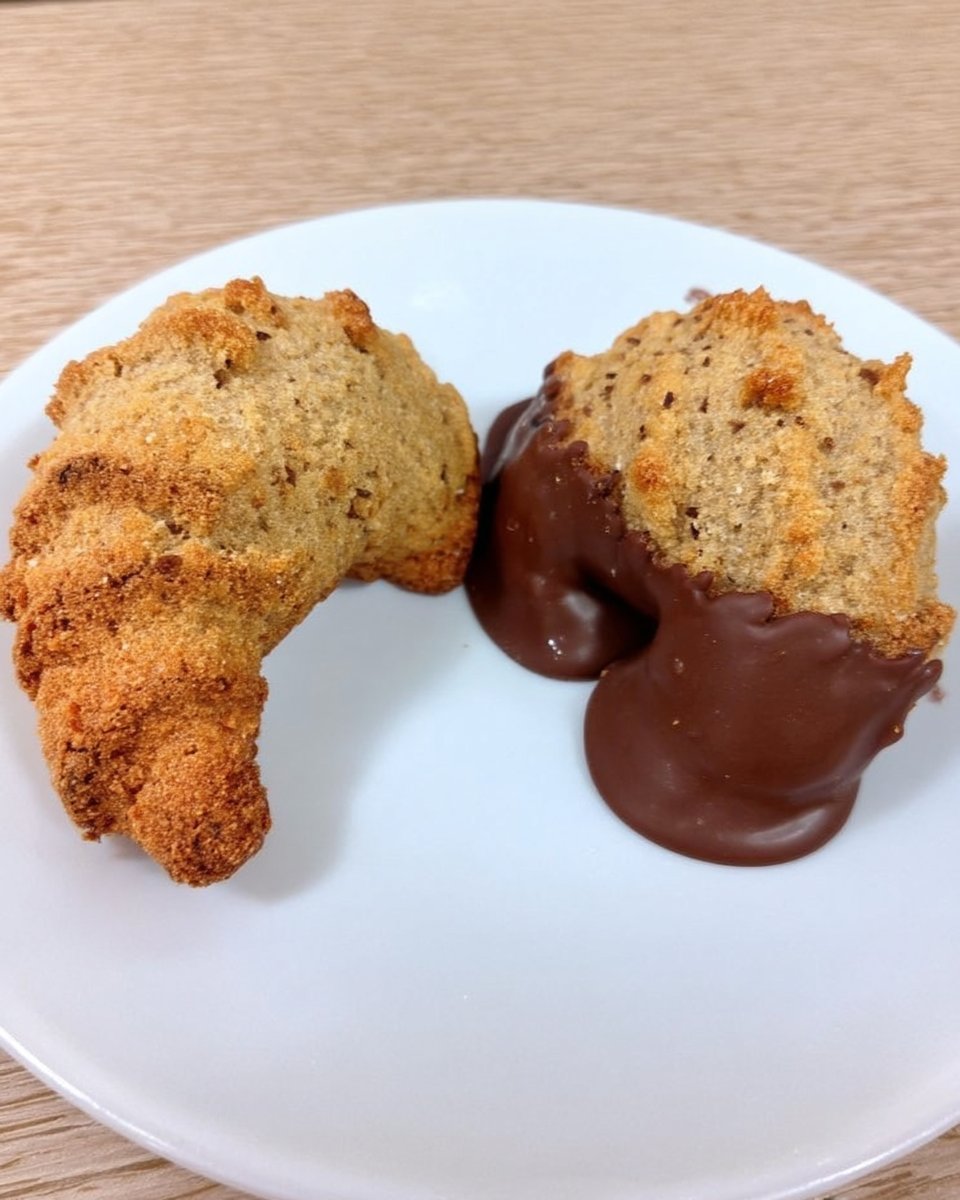
Building the perfect Almond Horns requires an understanding of how each component contributes to the final aromatic and structural result. We aren’t just mixing ingredients; we are assembling a flavor system designed for maximum impact.
- Almond Paste (7 oz): This is the foundation of our emulsion. High-quality paste provides a concentrated source of benzaldehyde and serves as the primary fat source, ensuring a moist crumb.
- Blanched Almond Flour (1 cup): By using finely ground, skinless almonds, we increase the surface area for the egg whites to bind, creating a smooth, cohesive dough without the grit of unblanched meal.
- Powdered Sugar (1 cup): The fine particle size of sucrose here is vital. It dissolves rapidly into the almond oils, creating a stable syrup that hardens into a chewy matrix once cooled.
- Large Egg Whites: The proteins in egg whites provide the structural integrity. Unlike whole eggs, the absence of yolk prevents the cookies from becoming too cake-like, maintaining that signature density.
- Almond and Vanilla Extracts: We use vanilla to add vanillin, which acts as a flavor bridge, while the almond extract amplifies the natural nutty aroma to a sensory peak.
- Sliced Almonds (1 cup): These provide the necessary surface area for the Maillard reaction—the chemical reaction between amino acids and reducing sugars that gives the cookies their golden color and roasted flavor.
- Semi-Sweet Chocolate and Coconut Oil: The chocolate provides a bitter-sweet finish that complements the almond notes, while the coconut oil lowers the surface tension of the chocolate for a smoother, professional-looking dip.
The Flavor Engineering Process
Step 1: Thermal Preparation and Substrate Setup
Preheat your oven to 350°F (175°C). This specific temperature is high enough to trigger the Maillard reaction on the exterior almonds while the internal density of the dough prevents the center from drying out. Line a heavy-gauge baking sheet with parchment paper to provide a non-reactive surface for the cookies to rest.
Step 2: Emulsifying the Dough Matrix
Break the almond paste into 2-inch chunks to increase the surface area for the food processor blades. Add the almond flour, vanilla, almond extract, powdered sugar, egg white, and salt. Pulse the mixture until a cohesive, sticky dough forms. This mechanical energy helps integrate the powdered sugar into the almond fats, creating a preliminary emulsion that will stabilize during baking.
Step 3: Shaping for Geometric Crunch
Divide the dough into balls approximately 1.5 inches in diameter (about 20-24 grams). Roll each ball into a log. The log shape is scientifically intentional; it maximizes the exterior surface area, allowing more sliced almonds to adhere. More almonds mean more roasted flavor compounds (pyrazines) per bite.
Step 4: Applying the Protein Adhesive
Lightly beat the second egg white. Use a pastry brush to apply a thin layer of this protein-rich wash over each log. The egg white acts as a biological glue, creating strong hydrogen bonds between the dough and the sliced almond fragments.
Step 5: Increasing the Surface Complexity
Place the sliced almonds in a bowl and press each log firmly into the nuts. Ensure the coating is dense. Once coated, bend the log into the traditional crescent or “horn” shape. This curvature allows for even heat distribution, as the air can circulate more effectively around the cookie during the bake.
Step 6: Thermal Transformation
Bake for 14-15 minutes. Watch for the sliced almonds to turn a honey-gold hue. This color change indicates that the sugars and proteins have successfully reacted to create complex new flavor molecules. Let the cookies stabilize on the pan for five minutes before moving them to a wire rack. This allows the sugar matrix to set without breaking the delicate protein bonds.
Step 7: Final Lipid Coating
Melt the semi-sweet chocolate with the coconut oil using a double boiler or microwave. Once the cookies are completely cool and the sugar has crystallized, dip the ends of each horn into the chocolate. The coconut oil ensures the chocolate sets with a snap, providing a textural contrast to the soft, chewy interior.
Precision Secrets for Intense Aroma
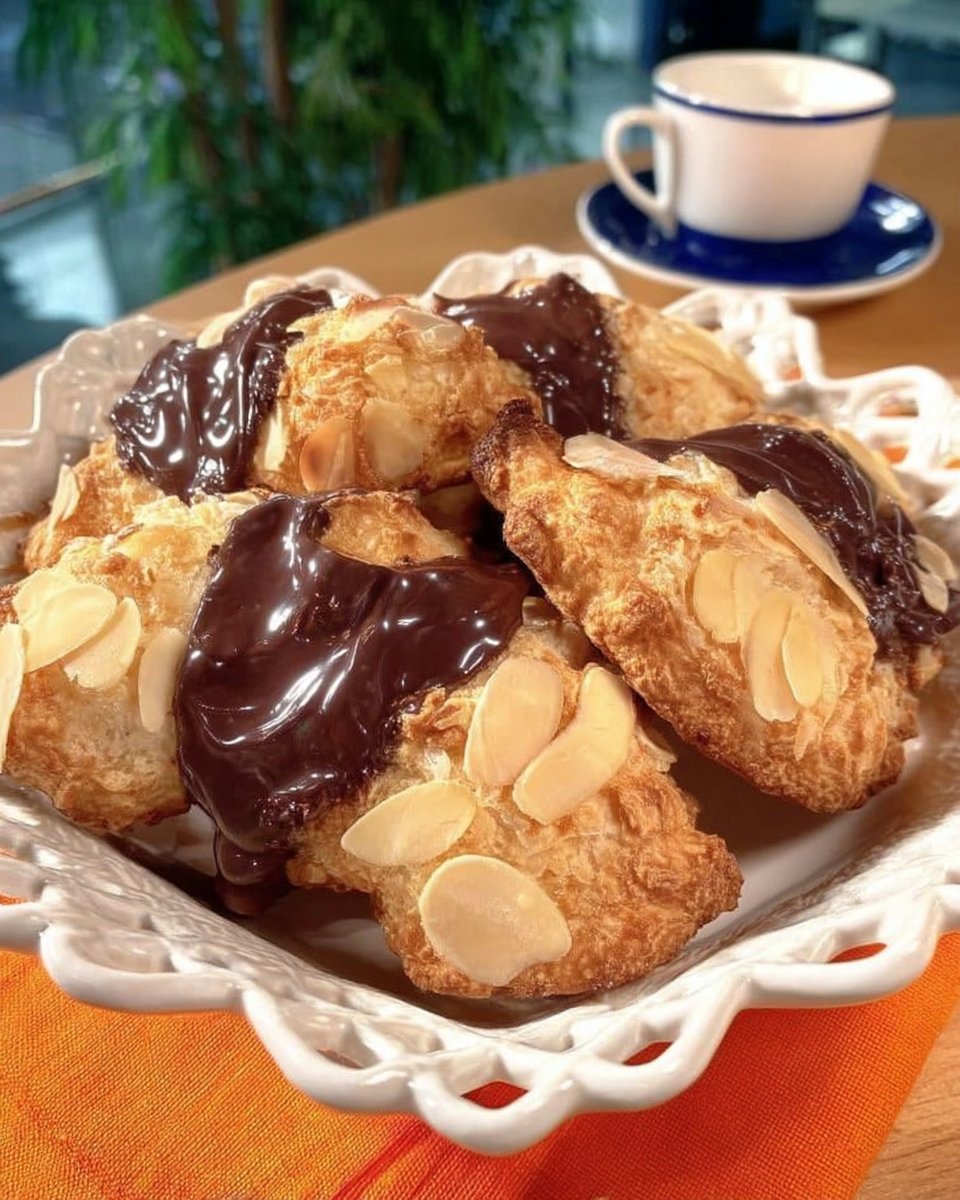
To maximize the aromatic potential of your Almond Horns, I recommend toasting your almond flour slightly before mixing it into the dough. This preliminary heat treatment starts the development of nutty pyrazines before the cookie even enters the oven. Furthermore, pay close attention to the placement of your salt. Adding a tiny pinch of flaky sea salt directly onto the wet chocolate tips can create a fascinating taste contrast that amplifies the perception of the cocoa’s depth.
Understanding moisture migration is also key. If you find your dough is too sticky to handle, chill it for 20 minutes; this allows the proteins in the egg white to hydrate and the fats to firm up. For more insights into how temperature affects your baking results, you might find our guide on Holiday Cookie Science particularly useful for your next kitchen session.
Alternative Flavor Matrices
While the traditional Almond Horns are perfect in their simplicity, you can manipulate the flavor compounds to create entirely different sensory experiences. If you prefer a brighter profile, adding orange zest to the dough introduces limonene, a terpene that shares a natural affinity with almond and chocolate molecules. For those following specific dietary protocols, you can swap the powdered sugar for a finely ground coconut sugar to create a paleo-friendly version with a deeper, caramel-like undertone.
For those interested in a vegan approach, ground chia seeds mixed with water can replace the egg whites. The mucilage in the chia seeds provides a similar binding capacity to the egg proteins, though the final texture will be slightly more fragile. If you are looking to master the basics of cookie structures before experimenting, check out our Foundation Cookie Recipes to see how different fats and binders interact in the oven.
Optimizing the Sensory Experience
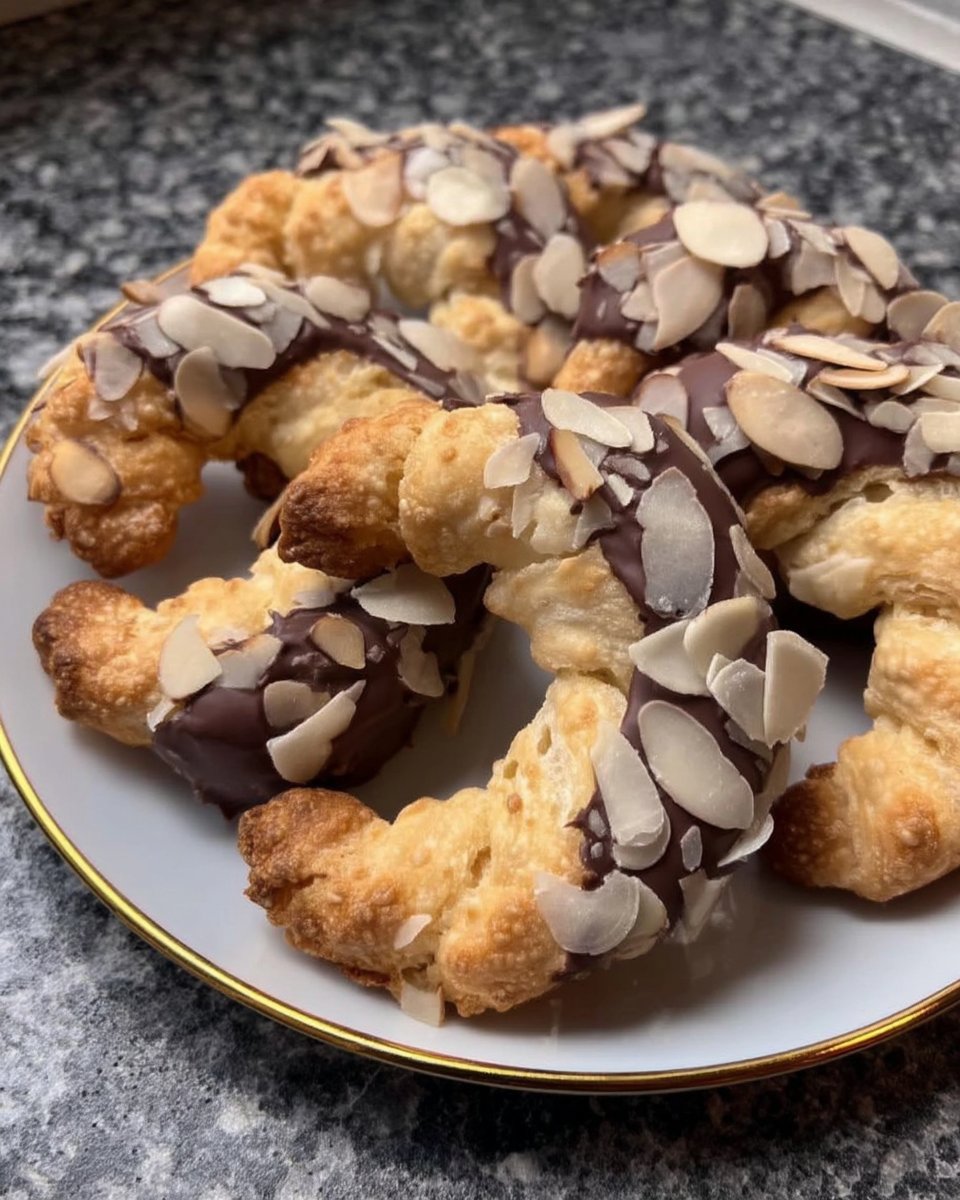
To truly appreciate the complexity of Almond Horns, serve them at a slight room temperature, around 72°F. This allows the fats in the almond paste to soften, which in turn facilitates the release of volatile aromas as you eat. Pairing these cookies with a dark roast espresso is a classic move in flavor science; the roasted bitterness of the coffee compounds acts as a bridge to the toasted almonds and dark chocolate, creating a synergistic effect that makes both taste more intense.
If you are hosting a gathering, consider arranging these on a marble slab to keep the chocolate tips crisp. For those who enjoy a more intricate presentation, you can look into our Precision Cookie Decorating techniques to learn how to add gold leaf or tempered chocolate patterns to your bakes for a stunning visual impact.
The Science of a Classic
Mastering Almond Horns is more than just a baking project; it is an investigation into the beautiful balance of nut fats and protein structures. By understanding how benzaldehyde and the Maillard reaction work together, you can create a cookie that is scientifically superior in both taste and texture. I encourage you to experiment with these ratios and see how the flavor profile shifts with different types of chocolate or almond paste. For more efficient ways to manage your holiday baking schedule, take a look at our Efficient Cookie Methods.
If you enjoyed this scientific look at a classic, please share your results with the community. You can find more inspiration and variations at Almond Paste Cookies. Join our growing community of flavor-focused bakers on Pinterest, Instagram, and Facebook to share your latest kitchen breakthroughs.